Read More
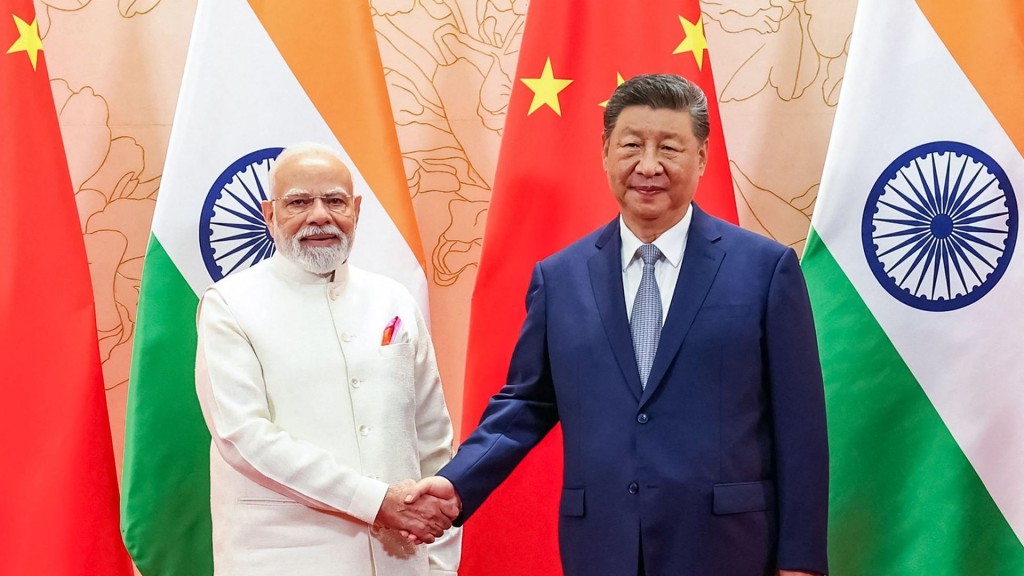
In the grand chessboard of global politics, a tentative but profound shift is underway. The two demographic titans of the East, China and India – representing a combined population of 2.88 billion people and a fusion of ancient civilizations with futuristic tech ambitions – are navigating a complex path toward improved relations. This potential partnership, born not merely from mutual interest but from shared external pressure, is poised to redraw the geopolitical map of the 21st century. However, the path to a stable alliance is fraught with historical baggage and strategic mistrust.
ADVERTISEMENT
SCROLL TO CONTINUE WITH CONTENT
A legacy of distrust: the Himalayan shadow
Any discussion of Sino-Indian cooperation must first acknowledge the formidable obstacle that stands in its way: a long and contentious border. The specter of conflicts, from the 1962 war to recent bloody skirmishes in the Galwan Valley, looms large. For decades, the Line of Actual Control has been less a border and more a tinderbox, a constant reminder of deep-seated territorial disputes and nationalistic pride.
This history of conflict has conditioned both nations to view each other with suspicion. India has long been wary of China’s strategic encirclement through its “String of Pearls” strategy and its unwavering partnership with Pakistan. China, conversely, views India’s growing closeness with the United States and its membership in the Quadrilateral Security Dialogue, as a containment strategy. For years, this mutual distrust made a genuine partnership seem like a distant dream.
The unlikely catalyst: a common adversary in Washington
The catalyst for the recent thaw may not have originated in Beijing or New Delhi, but in Washington. The trajectory of US foreign policy over recent administrations has served as a powerful, if unintended, unifying force for the two Asian giants.
India, once seen as a natural democratic counterweight to China and a key US partner in the Indo-Pacific, found itself facing the blunt instrument of American economic policy.
The threat of significant tariffs, a tool used aggressively against both nations, did not discriminate between friend and rival. Similarly, when the US-led West imposed sanctions on Russia following its invasion of Ukraine, the pressure on both China and India to cease buying cheap Russian oil and arms was immense.
This coercive diplomacy backfired. It highlighted a simple, stark reality for both Beijing and New Delhi: their economic stability and strategic autonomy were non-negotiable.
This shared act of defiance was a watershed moment, demonstrating that when their core national interests align, they can present a formidable front against external demands.
Forging a new Asian axis: beyond the border
The improved Sino-Indian relationship, therefore, is not a simple friendship. It is a pragmatic realignment. It is a recognition that together, they represent an economic and demographic force that can dictate terms, rather than just accept them. Their collaboration within the BRICS consortium and the Shanghai Cooperation Organisation offers a platform to challenge Western-dominated financial and political institutions.
The potential is staggering. A collaborative China and India could create a self-sufficient Asian supply chain, from Chinese manufacturing to Indian software and services. They could set technological standards, drive infrastructure development across the Global South, and become the undisputed center of gravity for the global economy.
A fragile, formidable Future
The Sino-Indian rapprochement remains fragile. The border issue is a wound that has not fully healed, and strategic competition for influence in the Indian Ocean and Southeast Asia persists. However, the landscape has irrevocably changed. The US, in its attempt to isolate its adversaries, may have inadvertently pushed the world’s two most populous nations closer together.
The message to the world is clear: Asia’s future will increasingly be written in Beijing and New Delhi. Their relationship, a complex tapestry woven with threads of conflict and cooperation, is no longer a regional sidebar but the main event in the unfolding drama of the 21st century. Whether this becomes a stable partnership or an uneasy detente, its impact will be felt across the globe, creating a powerful, multipolar axis that truly cannot be ignored.