
Read More
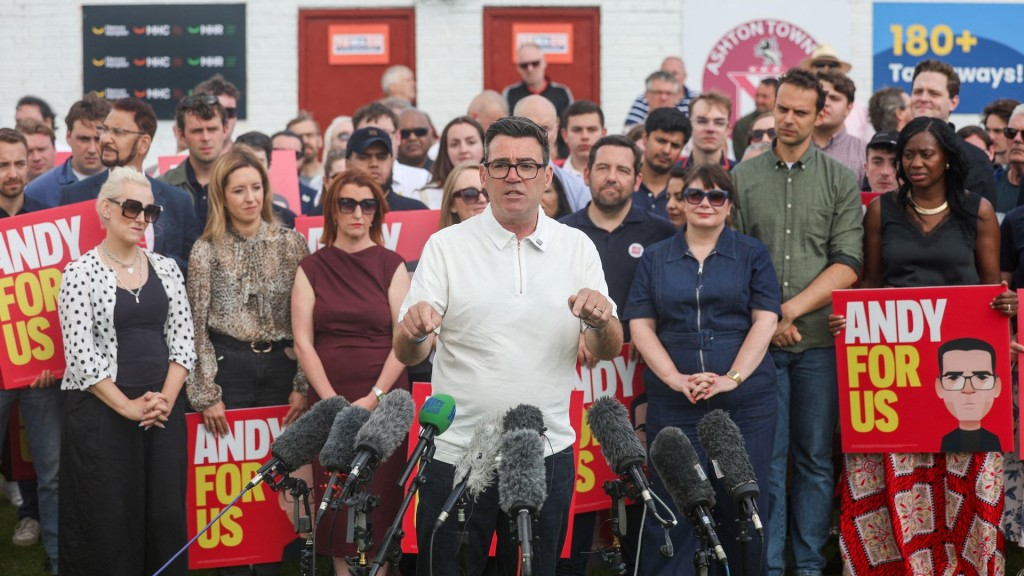
Former Greater Manchester mayor Andy Burnham is now just one step away from Number 10. Following his victory in the Makerfield parliamentary by-election, Burnham has entered the House of Commons, making him officially eligible to challenge Prime Minister Keir Starmer for the leadership of the Labour Party – and, by extension, the premiership of the United Kingdom.
ADVERTISEMENT
SCROLL TO CONTINUE WITH CONTENT
Reports indicate that Burnham has already secured the backing of over 200 members of parliament. Concurrently, Starmer is facing mounting pressure from within his own cabinet to set a definitive date for his departure, with several senior figures pushing for an orderly transition rather than a protracted, divisive leadership contest.
However, avoiding a robust contest could repeat the strategic mistake made by the US Democratic Party during the 2024 presidential election, where Kamala Harris was effectively coronated by party elites to replace Joe Biden without a primary, leaving her untested on the national debate stage. Though Burnham is well-known, an open leadership race would provide him with a critical national platform to road-test his policy vision before the wider British electorate.
Reclaiming the Red Wall
Burnham’s political platform – frequently dubbed “Manchesterism” or “business-friendly socialism” – presents a distinct alternative to Starmer’s cautious centrism. His agenda advocates for the nationalization of key public services, a massive expansion of social housing, and the exploration of a wealth tax, balanced alongside tax cuts for small businesses. Crucially, his platform champions radical devolution to local governments and reforming the UK’s first-past-the-post voting system into a proportional representation model.
These constitutional and economic reforms are designed to directly alleviate the deep-seated resentment from those who have long felt neglected by the London-centric political and economic establishment. Furthermore, his ambitious social policies aim to win back traditional, post-industrial “Red Wall” seats, where working-class voters have increasingly defected to the right-wing Reform UK party.
Shadow of transatlantic meddling
Despite the populist appeal of Manchesterism, any incoming leader faces the UK’s grim, structural economic realities: stagnant labor productivity and low GDP growth, coupled with historically high living costs, heavy tax burdens on working families, soaring welfare expenditures, and elevated borrowing costs. A massive expansion of state spending risks spooking the financial markets and the Bank of England, potentially triggering a spike in interest rates.
Internally, a sharp lurch to the left will inevitably trigger fierce resistance from center-right moderates within Labour, risking a rerun of the intra-party warfare seen during Jeremy Corbyn’s leadership – a factional divide that ultimately paved the way for Boris Johnson’s landslide victory in 2019.
Beyond domestic borders, the international landscape presents severe complications. Across the Atlantic, US President Donald Trump is engaged in a highly public dispute with Italian Prime Minister Giorgia Meloni over European resistance to US military strategy regarding Iran. This feud has widened the rift between Washington and its European allies, putting immense pressure on London, which traditionally seeks to act as a diplomatic bridge between the two sides.
Simultaneously, American right-wing figures, including vice president JD Vance and billionaire Elon Musk, have increasingly intervened in UK domestic discourse by vocalizing support for populist, anti-immigration movements. Should Burnham secure the premiership, his ultimate test will be safeguarding British sovereignty against foreign political meddling, like what Meloni did for Italy. Yet, given deep-seated ideological fractures, entrenched financial resistance to a larger state, and deep US political influence, navigating Britain away from these strategic liabilities remains a formidable challenge.