Read More


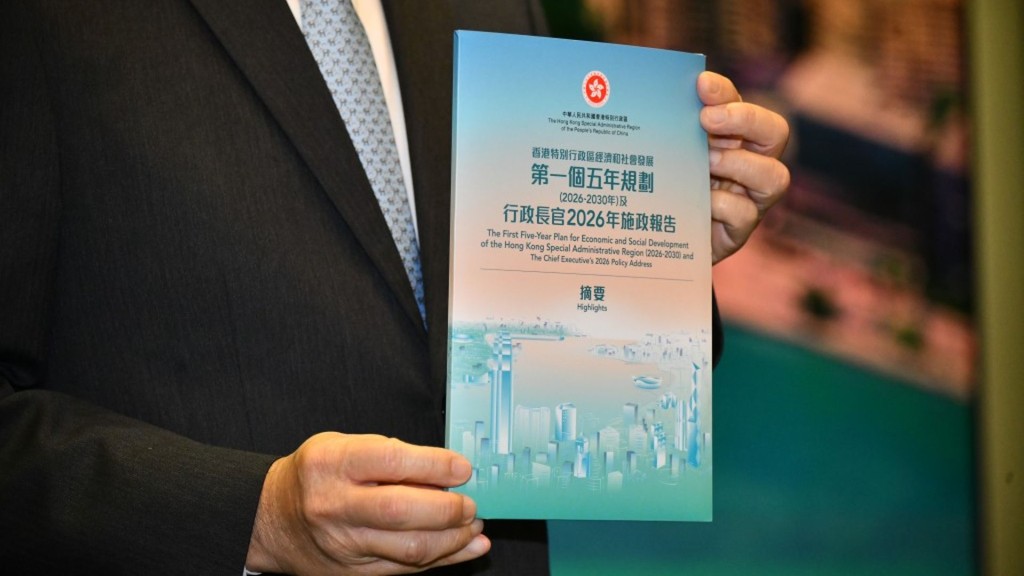



As the Hong Kong government actively gathers public input on its inaugural Five-Year Plan to carve out a new strategic economic blueprint, the city is being urged to boldly prioritize niche, high-value industries.
This approach merges emerging tech frontiers with traditional financial strengths through two pillars: aerospace financing and satellite insurance, alongside advanced maritime risk management and marine insurance – all to secure the SAR’s long-term competitive edge.
In a compelling policy pitch, it has been highlighted that Hong Kong remains the only city within China possessing the highly market-oriented, capitalist corporate ecosystem required to replicate and finance mega-scale ventures like the recent initial public offering of US aerospace giant SpaceX.
The city must quickly position itself as an Asian hub capable of pooling international capital, tech talent, and underwriting capacity to feed into commercial space ventures, satellite operations, and aerospace financing.
This vision arrives alongside an unprecedented commercial space boom across mainland China, where neighboring jurisdictions like Guangdong and Hainan are rapidly scaling up rocket manufacturing and satellite deployment.
However, a significant gap remains. Compared to established European hubs like London – which boasts a 60-year head start in pricing and calculating extra-atmospheric risk – Hong Kong fundamentally lacks localized, specialized talent proficient in aerospace engineering and rocket risk modeling.
Cultivating this sophisticated labor pool will be a long-term endeavor that demands a highly structured regulatory framework.
While aerospace remains an emerging frontier, high-end maritime services offer a much more immediate and familiar path to victory.
Utilizing its solid common law system and status as a trusted global financial center, Hong Kong launched a dedicated Marine War Risks Insurance Pool in November 2025.
This specialized pool offers up to US$130 million (HK$1 billion) in coverage per policy, specifically designed to protect Chinese and Asian merchant vessels transiting highly volatile maritime corridors.
This proactive state policy bore fruit remarkably quickly when escalating geopolitical frictions in the Middle East disrupted traditional shipping routes through the Strait of Hormuz. Because the localized pool provides faster risk assessment and more competitive coverage than European firms – which heavily restricted coverage or dramatically hiked rates – demand shifted heavily toward local underwriting.
Consequently, marine insurance premiums written in Hong Kong surged by an impressive 33 percent year on year in the initial months following the rollout.
Complementing this, the government’s parallel focus on building a premier regional yacht and luxury vessel servicing industry aims to establish a comprehensive “one-stop shop” for maritime legal, risk, and asset experts.
Beyond purely commercial metrics, the proposal also emphasizes the vital importance of expanding Hong Kong’s overseas philanthropy and civil diplomacy.
As the city looks to anchor new economic trade corridors in regions like Central Asia, private enterprises, non-governmental organizations, and media outlets must actively build deep people-to-people ties.
Fostering localized goodwill and social trust will prove essential for Hong Kong businesses attempting to smoothly navigate non-traditional markets and defuse deep-seated ideological friction.