Read More
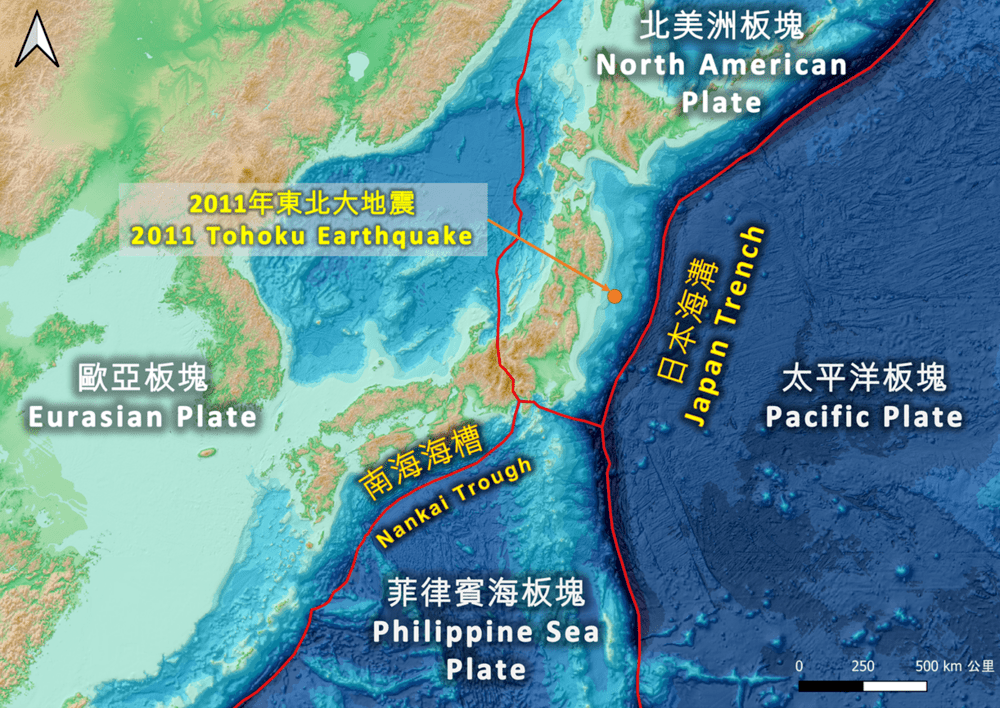
The Hong Kong Observatory (HKO) indicated that in the event of an earthquake occurring along the Nankai Trough, situated in the southern seas of Japan, it is anticipated that tsunami waves might reach the southeastern waters of Hong Kong after around six hours.
ADVERTISEMENT
SCROLL TO CONTINUE WITH CONTENT
The comment came after the weather watchdog recently published an article analyzing the potential impact of the significant earthquake risk at Nakan Trough.
The Japan Earthquake Research Committee's (JERC) latest assessment indicates an 82 percent chance that a magnitude 8 to 9 earthquake could occur along the Nankai Trough in the next 30 years.
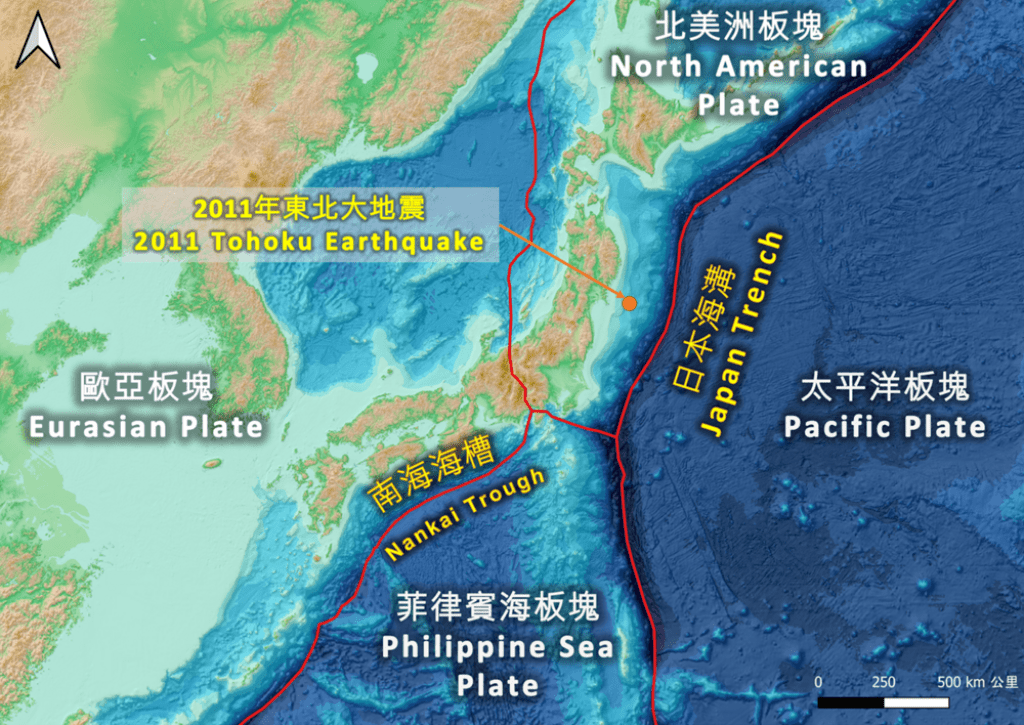
The Nankai Trough, part of the convergent plate boundary between the Philippine Sea Plate and the Eurasian Plate, extends roughly 700 kilometers from Suruga Bay to Hyuga-nada in Japan's southern waters.
As the tectonic stress accumulates when the Philippine Sea Plate subducts beneath the Eurasian Plate at a rate of about 5 cm per year, it is anticipated the earthquake along the Nankai Trough could occur anytime.
HKO said that Hong Kong was not situated at the plate boundary, with about 600 km away from the closest seismic belt, making it unlikely to be impacted by a great earthquake.
It noted that some major factors could influence the actual amplitude of tsunami waves reaching Hong Kong -- the hypocentre location and earthquake magnitude, earthquake rupture process, geological structure near the source as well as the nearshore and seabed topography.
The tsunami simulation indicated a shallow M9.1 earthquake along the Nankai Trough could send a significant tsunami to the city, while an M8.0 earthquake would likely only cause slight water level fluctuations that might not be apparent.
However, the watchdog highlighted the city has experienced slight sea level anomalies caused by earthquakes in the South China Sea or the Pacific Ocean, citing the earthquake in Honshu, Japan that led to a 0.2 m sea level anomaly.
It stated that tsunami simulations will be conducted based on seismic parameters to evaluate potential water anomalies if an earthquake occurs in the South China Sea or the Pacific Ocean.
A Tsunami Warning will also be issued if the earthquake is expected to generate a significant tsunami in the city within three hours.
Conversely, if the tsunami is expected to be minor or arrive more than three hours later, a Tsunami Information Bulletin will be released.