Read More







Staff reporter
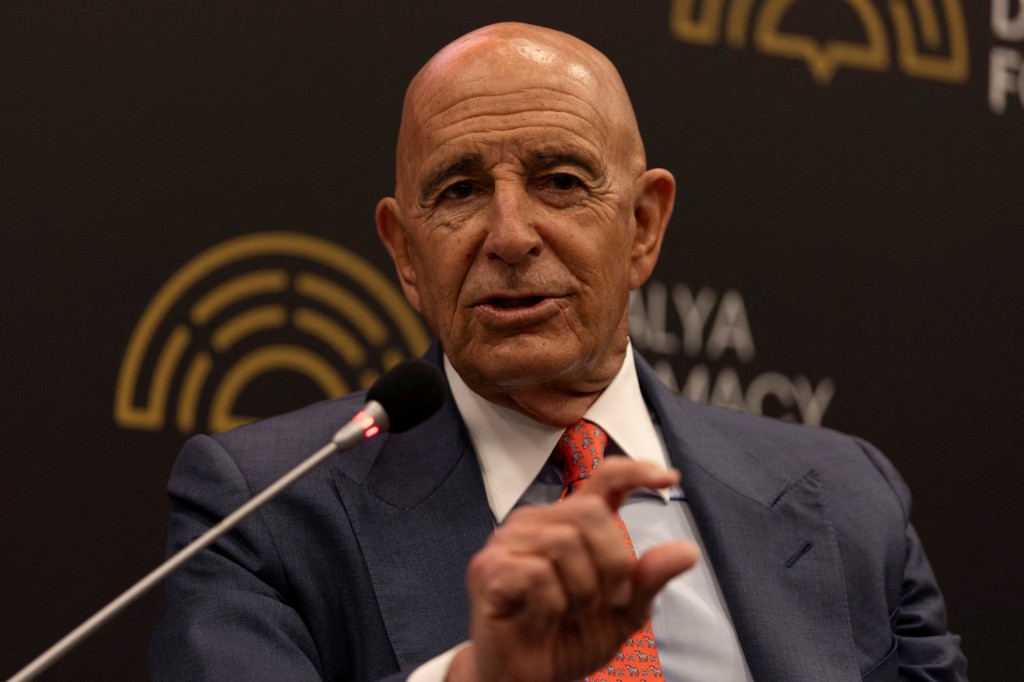
Decades of American interventions aimed at regime change—encompassing 23 instances involving US influence—have consistently failed to produce lasting stability in the broader Middle East, according to Tom Barrack, US Ambassador to Turkey and Special Presidential Envoy for Syria and Iraq.
Speaking at the Global Security Forum in Doha, the senior aide to President Donald Trump outlined a major shift in Washington's strategy. As reported by Al Arabiya English on October 20, the United States is redefining its approach by moving away from direct intervention and instead urging regional partners to assume greater responsibility for their own security.
Barrack noted growing domestic skepticism regarding the cost of American lives in foreign conflicts, which has driven a new US strategy establishing clearer limits on its involvement. However, he clarified that Washington is not abandoning the Middle East. "The bargain is not to own, not to control, but to tend, not to leave," he stated, emphasizing that the US will maintain its partnerships while reducing its direct military footprint in local conflicts.
As part of this transition, Washington expects regional governments to forge their own security alignments rather than relying entirely on US military protection. Barrack pointed to ongoing discussions among nations like Saudi Arabia, Turkey, Pakistan, and potentially Egypt as models for these new stability frameworks.
Addressing the situation with Iran, the envoy noted that Trump remains open to a peaceful diplomatic settlement despite recent escalations. Barrack called for a ceasefire, the reopening of the Strait of Hormuz, and measures to ease the economic burden on the Iranian people, though he stressed that any resolution would require significant compromise.
While acknowledging that the transition to this new regional order is "complicated and difficult," Barrack reiterated that the US is not retreating, but rather empowering its allies to shape their own political and security futures.