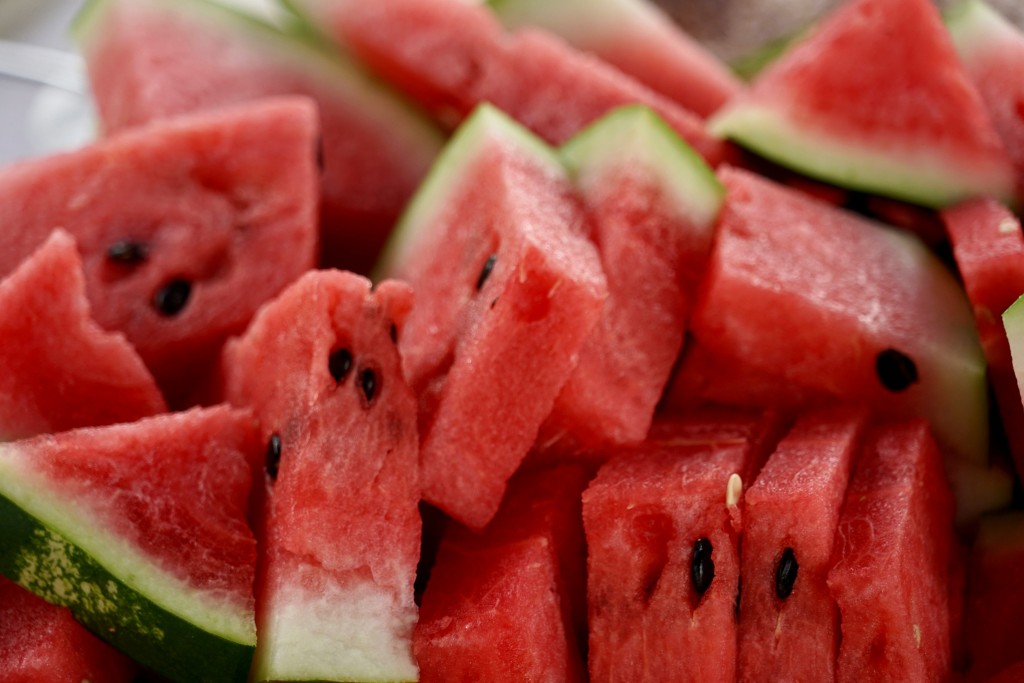
In the sweltering summer heat, watermelon is a refreshing treat. With popular varieties like 8424, Kanmi, and Black Beauty on the market, how do you choose the best one? Sing Tao Headline compiles online information, along with advice from nutritionists and Chinese medicine practitioners, to help you identify different types, master selection techniques, and remind high-risk groups to avoid overindulging – ensuring you enjoy it safely and happily.
How to Choose Between 8424, Kanmi, Shuaitong, Huabao, and Black Beauty Watermelons?
The market offers many watermelon varieties. What are the differences between the recent favorites "8424," "Kanmi," and the classic "Black Beauty"? Based on compiled online information, here's a breakdown of 5 varieties, each with distinct texture and sweetness:
- 8424 Watermelon (also known as Kirin Melon): Developed using Hami melon cultivation techniques. Features thin skin, reddish flesh, and is seedless. Sugar content can reach 14-15 degrees. The authentic product is usually tagged with a red "8424" label.
- Black Beauty: Elongated oval shape. Dark green-black skin with faint stripes. Weighs about 2.5-3.5 kg. Deep red, crisp, and juicy flesh. Sugar content around 12-14 degrees; excellent quality.
- Kanmi Watermelon: Elongated oval shape. Thin skin, no black seeds, reddish flesh. Excellent texture, very crisp and thirst-quenching. Sugar content exceeds 15%.
- Shuaitong Watermelon: Green skin with tooth-like stripes and waxy bloom; tough rind. Red flesh, seedless or with very few white, shriveled seeds. Center sugar content around 11.8%, edge around 9.2%; good flavor.
- Huabao (Large Watermelon): Long oval shape. Pale green skin with netted patterns. Crisp and tender flesh. Very large, weighing 12-17 kg.
6 Tips for Choosing a Watermelon: A Yellow Bottom Means It's Ripe – Avoid Overripe Fruit
Do you only know how to tap and listen? According to the website "Health Talks," nutritionist Liao Jia-yin from the Nutrition Therapy Department at Fengshan Hospital in Kaohsiung, Taiwan, points out that beyond the common tapping method, careful observation of various parts can easily help you pick a ripe, delicious watermelon:
- Observe the Shape: Choose fruit with uniform size (head and tail) and a round, smooth appearance. If it's shaped like a pomelo (small head, large tail) or has indentation like grooves, the flavor is usually inferior.
- Observe the Stripes: For small watermelons (like "Xiao Yu" – small variety), dark green stripes are more distinct. Look for wide vertical stripes and closely spaced horizontal stripes. For large watermelons, dark stripes are less obvious but can still be used as a secondary guide.
- Observe the Color: A ripe watermelon should display a beautiful bright green color. However, the bottom part (where it rests on the ground) gets less sun. If that spot is yellow or pale yellow, it's ripe. If it's faded to pale green, it may be overripe.
- Observe the Stem: A curved stem (attached to the vine) indicates the fruit grew on a main branch, receiving better nutrients and water – superior quality compared to straight stems. Also, a slight inward depression at the base of the stem indicates ripeness.
- Observe the Bottom (Navel): The small circle at the bottom should be small, narrow, intact, and springy when pressed. If it's cracked, there may be pest damage – avoid it.
- Tap and Listen: Gently tap the side of the watermelon. A low, deep "thud" sound with slight vibration indicates good water content. A crisp, hollow sound means less moisture.
4 Groups Who Should Limit Watermelon Intake
Although watermelon is rich in fat-soluble vitamins, not everyone should eat it freely. According to the "Health Medical Network" website, Dr. You Ming-qian, Head of the Chinese Medicine Department at Taipei Tzu Chi Hospital, warns that watermelon is cold in nature. The maximum portion should be about the size of a hand. He specifically names the following 4 high-risk groups who should limit intake:
- People Prone to Diarrhea: Watermelon is cold and sweet in nature. Those with a cold constitution, weak digestion, tendency to cough, diarrhea, loose stools, or sensitive bowels shouldn't eat too much. Cold watermelon can easily trigger diarrhea. These individuals aren't completely forbidden, but must strictly monitor portion sizes and their symptom stability.
- Diabetics: Diabetics must strictly control watermelon portions to avoid rapid blood sugar spikes. Watermelon has about 35 kcal per 100g – seemingly low, but eating a large plate after a meal can easily add 100-200 kcal, equivalent to a bowl of rice. Large consumption post-meal can severely destabilize blood sugar control. Limit intake to about a hand's size maximum, and prioritize high-fiber fruits to avoid rapid sugar rises.
- Kidney Patients & Those on Fluid Restriction: Watermelon is 93% water. While hydrating, it poses a significant risk for patients on fluid restriction (e.g., dialysis patients, those with renal insufficiency, chronic kidney disease, or heart failure). It can worsen shortness of breath or cause fluid retention. Portion control is critical.
- Those with Asthma or Respiratory Illnesses: Children with asthma are particularly prone to coughing after eating melons. Clinically, about 1 in 5 people may be allergic to watermelon. For those with respiratory issues, asthma, or allergies, if coughing occurs after eating watermelon, reduce intake to small amounts.
You advises moderation. For optimal nutrition and stomach protection, he recommends eating watermelon after meals, as its fat-soluble vitamins require fat for absorption. Also, avoid eating it straight from the refrigerator – let it warm to room temperature first to prevent stomach sensitivity. If you experience discomfort after eating, adjust the portion size accordingly.