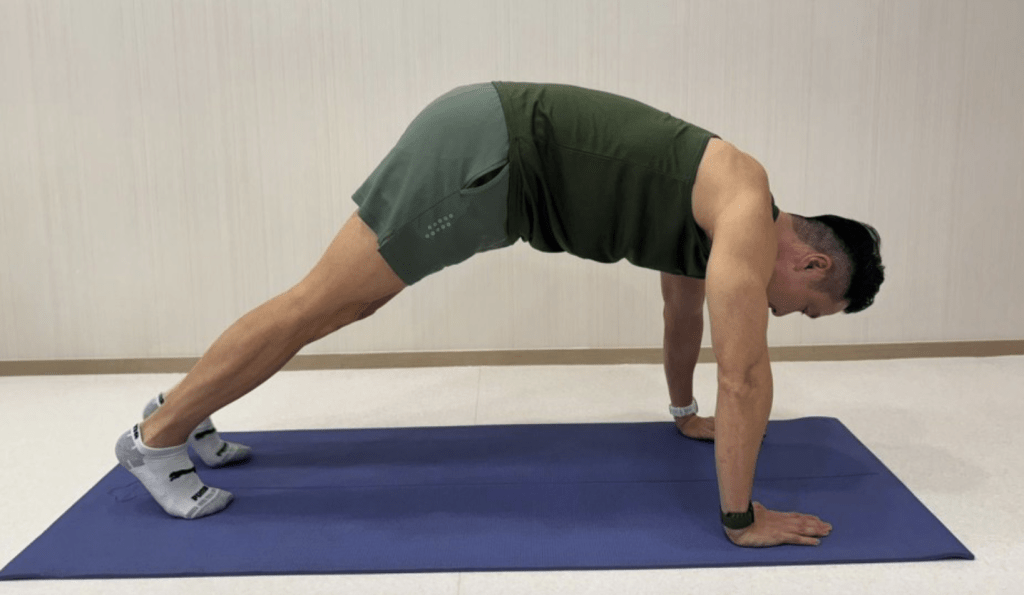
In recent years, the fitness trend has boomed, with many people doing weight training at gyms or following videos to strengthen their core muscles. However, while focusing on exertion, many overlook a critical detail: breathing. Many may unconsciously "hold their breath" during heavy lifts, squats, or sit-ups. This action is medically known as the Valsalva maneuver, and if used improperly, it can pose potential risks to the body. Dr.Chung Wai-man, a physical therapist, breaks down the details.
What is the Valsalva Maneuver?
Chung explains that the Valsalva maneuver involves exerting force while holding your breath, causing a sharp increase in pressure within the chest and abdominal cavities. "Simply put, it's holding your breath while straining." When you close your mouth and nose, tighten your abdominal muscles, and exert force, internal pressure spikes, affecting blood return to the heart and causing blood pressure changes.
In professional sports, some weightlifters briefly use this technique to stabilize their core. However, for the general public, frequent use without awareness or proper control can increase health risks.
Why Can Holding Your Breath Be Dangerous?
When pressure inside the chest suddenly rises, the return of venous blood to the heart is temporarily reduced, followed by dramatic blood pressure fluctuations. Some people may experience dizziness, seeing stars, or even brief fainting spells. For those with pre-existing conditions like high blood pressure, heart disease, or cerebrovascular disease, this may increase the risk of stroke or cardiac arrhythmias.
Additionally, prolonged breath-holding increases abdominal pressure, potentially worsening issues like inguinal hernias, hemorrhoids, or pelvic floor muscle damage. For middle-aged and older adults, these effects are particularly concerning.
Why Does This Happen During Exercise?
When performing weight training exercises like deadlifts, squats, or presses, the body naturally wants to tighten the core to stabilize the torso. Many people unconsciously hold their breath at the moment of greatest exertion. Especially when a coach emphasizes "brace hard," beginners may easily misinterpret "stabilizing the core" as "hold your breath and strain."
In fact, stabilizing the core does not mean stopping breathing. The correct approach is to coordinate your breathing with the movement rhythm, not to completely hold your breath.
How to Breathe Safely During Exercise? 3 Steps for Proper Kettlebell Training
Chung reminds us of the general principle: "Exhale during exertion, inhale during relaxation." Using squats and presses as examples:
- Squat: Inhale slowly during the easier phase (lowering down); exhale steadily while exerting force (standing up).
- Press: Exhale while pressing the weight up; inhale while lowering it back down.
For beginners, intentionally slow down the movement rhythm and silently count your breathing beats, such as "Inhale one, two; exhale three, four," to help establish a breathing habit. Furthermore, do not force yourself to hold your breath to complete a lift just to chase heavier weights. If you experience dizziness, tinnitus, chest tightness, or similar symptoms, stop exercising immediately and rest.
Kettlebell Training Example (3 Steps described by Chung):
- Step 1: When preparing to lift the kettlebell, inhale while squatting down and engage your core muscles.
- Step 2: Exhale steadily as you exert force to stand up.
- Step 3: Complete the exhale as you fully stand up, then begin to inhale and start lowering slowly . Repeat the steps.
When Is It Acceptable to Use the Valsalva Maneuver?
It's worth noting that the Valsalva maneuver is not absolutely forbidden. In professional weightlifting or high-intensity strength training, trained athletes may use this technique for a very brief moment to increase intra-abdominal pressure and stabilize the spine. However, this should only be done under professional guidance and after a health assessment; it is not a daily necessity for the average gym-goer.
Breathing is the most basic yet most important action. Exercise often emphasizes posture, weight, and reps, but frequently overlooks the fundamental element of breathing. In fact, breathing is not just about supplying oxygen; it is a crucial mechanism for regulating blood pressure and protecting the body.
Fitness is not simply about straining with all your might; it is a long-term process of cooperating with your body. The next time you're about to lift a weight, ask yourself first: "Am I breathing?" Don't let a held breath become a hidden risk to your health.