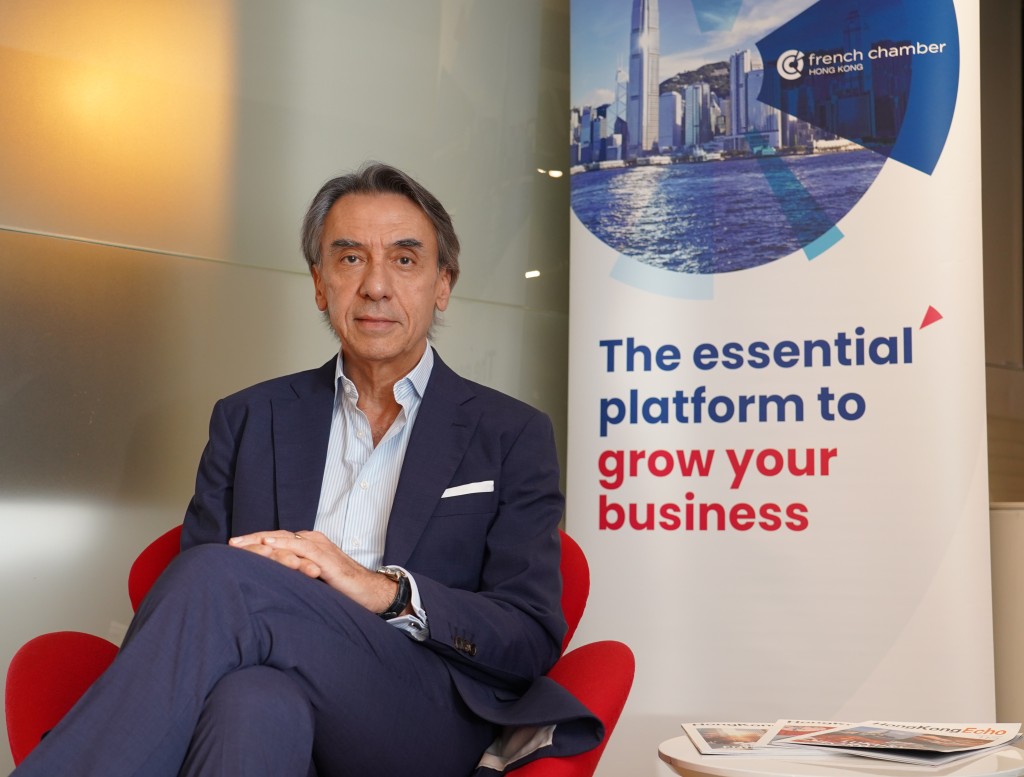
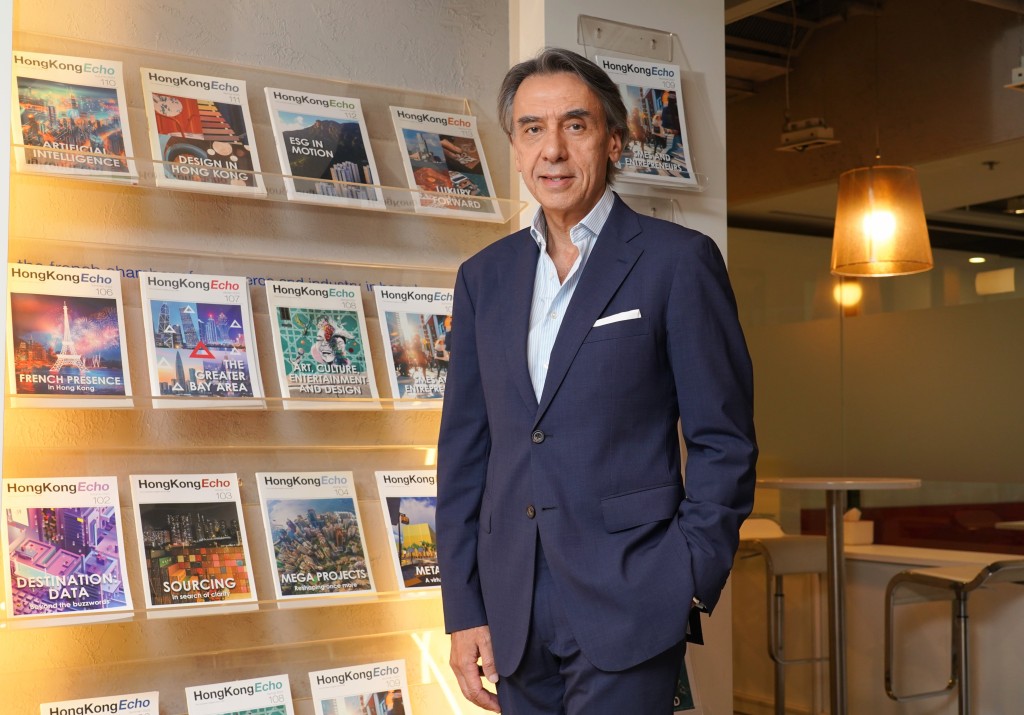
Hong Kong is a conduit in bridging the Chinese mainland with global capital markets, legal frameworks, and trade, said Alain Li, the president of the French Chamber of Commerce and Industry in Hong Kong.
“I know people use the term ‘super connector’, but to me, it’s a conduit. Because connecting is one thing, but conduit is when things flow,” Li said.
He commended Hong Kong’s well-developed legal and financial systems, which have fostered a robust business ecosystem – the largest free port in the world, with a very favorable tax environment. The city is also a very good place in terms of finding multinational and multicultural talent, he added.
As of last year, 90 French companies had their regional headquarters in Hong Kong. Li said Hong Kong has been a very good platform for French companies, whether large corporations or small and medium enterprises, to establish themselves here with ambitions to develop throughout Asia.
He highlighted the city’s unique advantages, including convenient access to the mainland market, especially its role as a global offshore yuan hub that facilitates cross-border trade and investment between the Chinese mainland and the rest of the world. Additionally, it gives Hong Kong a competitive edge over other financial hubs by offering unique access to China’s domestic markets, while operating under Hong Kong’s more familiar legal and regulatory framework.
“We have one member that recently celebrated their 10th anniversary. They started here in Hong Kong and now they have business in China, Korea, the Middle East and Australia,” he said. “Because Hong Kong provides a wonderful platform to do business within the region and do it in a very efficient way.”
Li said many chamber members have expressed interest in developing in the Greater Bay Area and the Northern Metropolis project, servicing bigger markets through the GBA with Hong Kong serving as a base in infrastructure, construction, and insurance.
As the chamber celebrates its 40th year in Hong Kong, its community has grown significantly, now boasting over 700 members from almost every business sector. Li pointed out that French talent has been incorporated into many of Hong Kong’s infrastructure projects, contributing to the development of sustainable solutions that make the city greener.
For example, under the banner of La French Tech, France has defined its global reputation as a hub of innovation and creativity. Li said one of the chamber members, Veolia, has been a leader in resource management, electricity services, and environmental solutions in Hong Kong since the 1990s, operating over 20 facilities, including landfills and restored landfills at the South-East New Territories Landfill Extension, as well as the Building Energy Services at the Digital Realty Hong Kong Data Center in Tseung Kwan O.
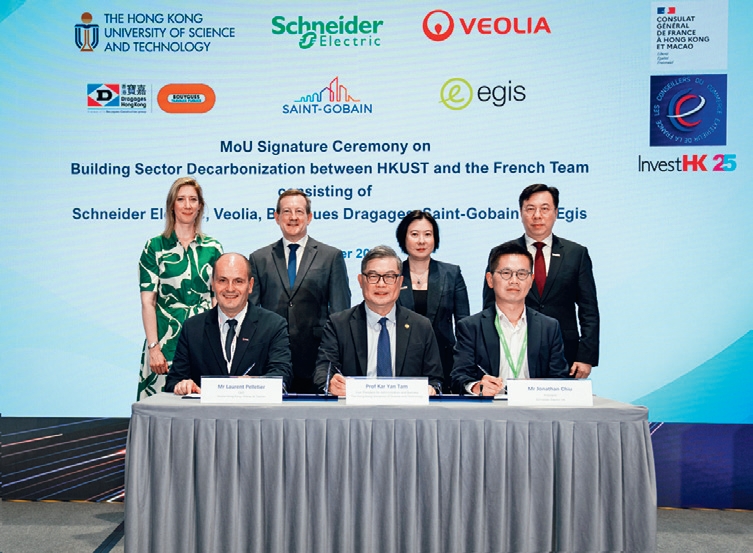
As France showcased its green technology and decarbonization at the Paris Olympics, Li said the chamber has simultaneously supported four reputable French green technology companies in a pilot project at the University of Science and Technology. The initiative supports the government’s objective of achieving carbon neutrality by 2050, allowing chamber members to retrofit an existing building with French technologies.
The project was initiated after the chamber assisted its members Schneider Electric, Veolia, Bouygues, and Saint-Gobain in submitting a white paper to the government almost two years ago, in collaboration with the French Consulate and the French Foreign Trade Advisors, or CCE.
“Hopefully it will lead to more opportunities for French companies to be involved in the government’s decarbonization plan,” Li said.
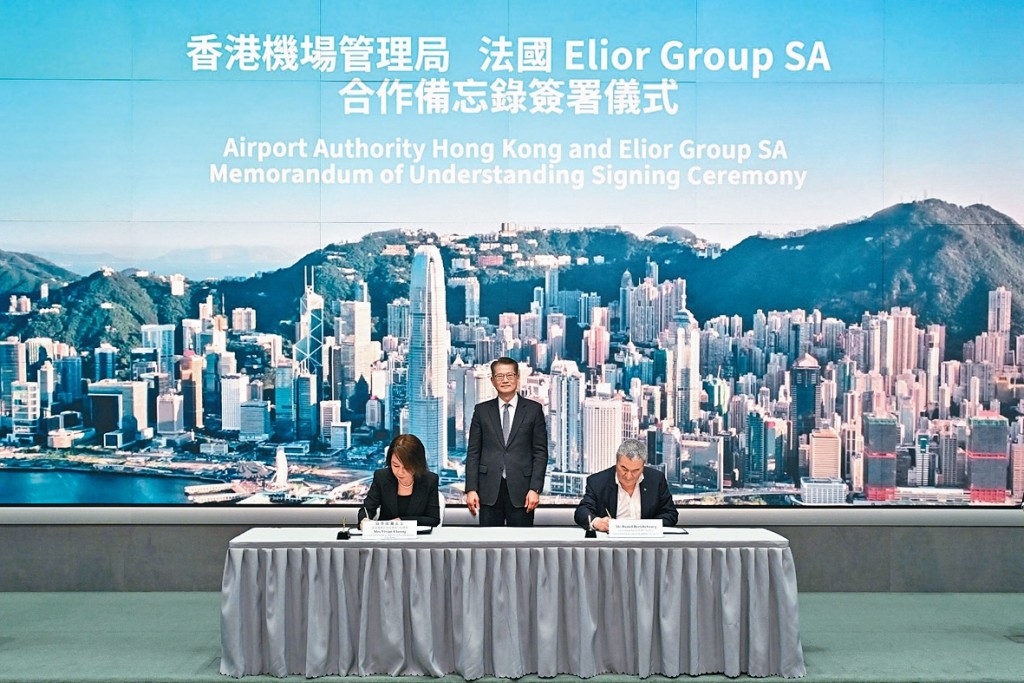
The French Elior Group, a leading French aeronautics services company, designated Hong Kong as Asia’s first aircraft component processing and trading center. Last December, the company established an aircraft engineering training center in partnership with the Hong Kong International Aviation Academy.
Li said the collaboration raises Hong Kong’s competitiveness in attracting aviation technology investments to promote further sustainability practices, including aircraft dismantling and parts recycling.
Other than technology, Li said the chamber has also seen more entrepreneurs from the fintech and medical industries set up businesses in Hong Kong, beyond traditional banking, hospitality and luxury retail. He said the chamber comprises 13 committees specializing in different sectors, enabling members to exchange ideas and better understand the opportunities Hong Kong offers.
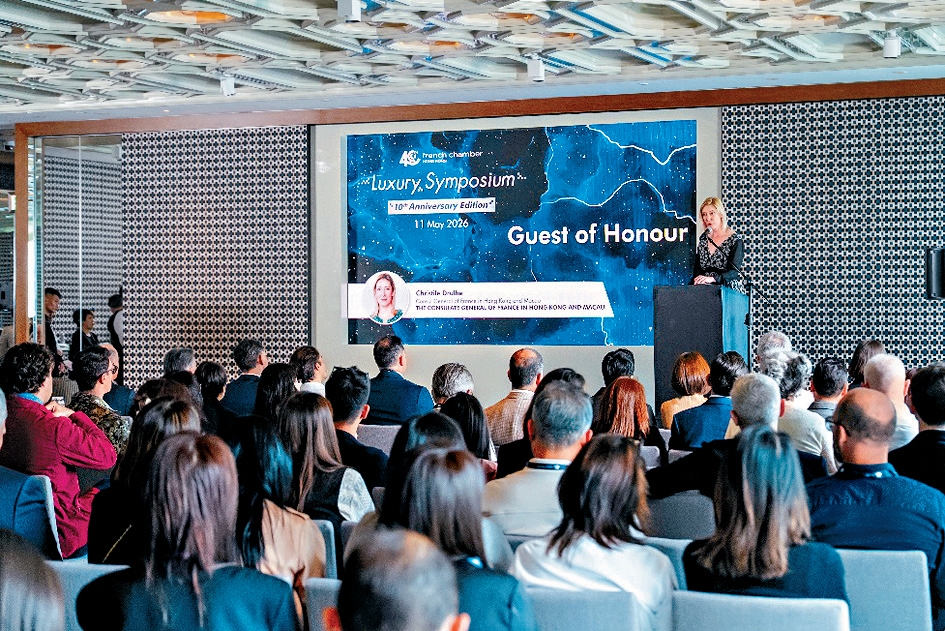
To help connect French enterprises with the Hong Kong community, the chamber regularly hosts networking events and provides corporate and recruitment services. The chamber hosted the Luxury Symposium on May 11th to explore the evolution of luxury and promote tourism, which Li pointed out was one of its key events.
Apart from large-scale events, Li said the chamber also hosts events targeting SMEs, such as the recent Entrepreneur Day, which explained how various government departments and related bodies, such as Invest Hong Kong and the Hong Kong Trade Development Council, can help them develop their businesses.
Li emphasized building connections by cohosting events with other chambers and partnering with public, private, and government bodies. This includes working with China’s Ministry of Foreign Affairs to gather feedback from chambers and members on what they need to grow in Hong Kong and expand into the Chinese mainland and Asia.
Hong Kong a 'true convergence' of diverse cultures, nationalities
Hong Kong remains a premier destination for shoppers from around the world, Alain Li said, describing the city as a true convergence of cultures and nationalities.
He said the city’s geographic location, free port status, and world-class infrastructure make it a unique place, enabling it to tap into the latest trends from Europe and the West, as well as from the rest of Asia.
“We are a five-hour flight from 50 percent of the world’s population,” he noted, pointing out that Hong Kong International Airport was recently crowned the world’s top airport at the Global Travel Awards 2026, positioning the city as a favorable trading hub and travel destination.
While traditional luxury brands remain strong, Li observed that Hong Kong’s retail landscape is becoming increasingly diverse, now encompassing Chinese, Korean, and Japanese brands. This diversity, he believes, benefits everyone.
“For a lot of our members who are involved in luxury and retail, they continue to see that Hong Kong – through everything it has to offer in terms of tourism – continues to be a place that attracts shoppers from all over the world,” he said.
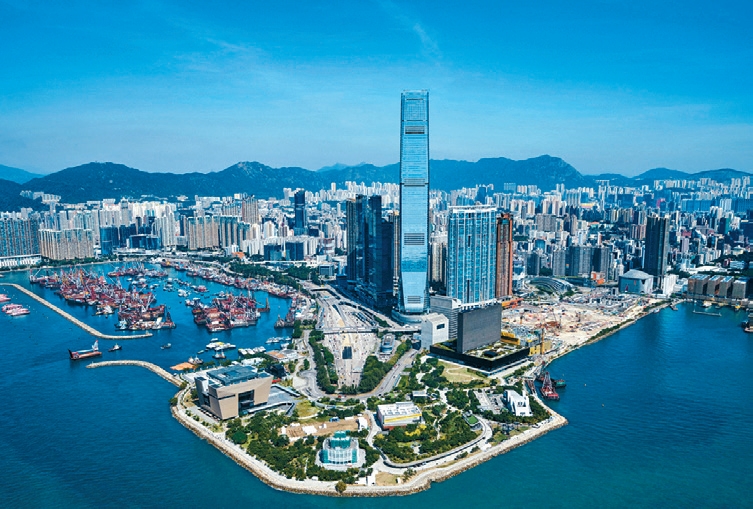
Li emphasized that Hong Kong’s appeal to tourists now extends far beyond retail therapy. The city has also invested heavily in cultural tourism, he noted, with two world-class museums – M+ and the Palace Museum – the soon-to-open Performing Arts Centre at the West Kowloon Cultural District, and major events like Art Basel Hong Kong and French May drawing international visitors.
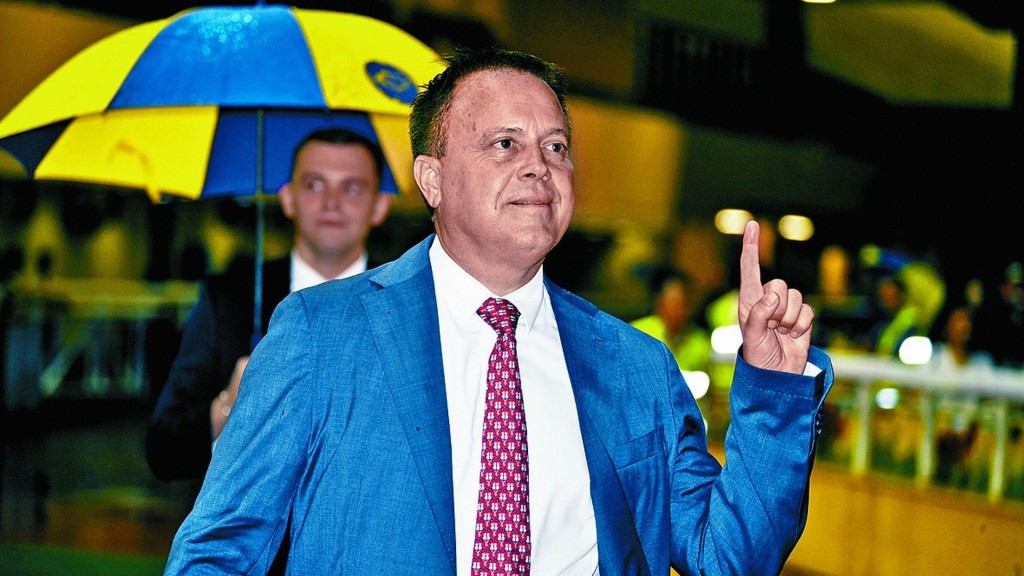
He added that many visitors come to Hong Kong for its world-class horse racing, noting that during French May, every Wednesday features a French-themed race night.
The French community, he said, has played a significant role in developing art and culture in Hong Kong.
“Our members are very happy to see that the Hong Kong government and tourism board are really putting a lot of investment into promoting the art and cultural aspects of Hong Kong,” he said.
He also noted that many members of the French community first came to Hong Kong as visitors and are now residing in the city, calling it their home.
East-meets-West figure connects French community, local businesses
Born in France and raised in Hong Kong, Li embodies the city’s unique East-meets-West identity.
For him and the French Chamber of Commerce, the old adage is never a cliche, but what truly represents them. Having attended a local primary school and being half-Chinese, half-French, Li speaks fluent Cantonese and calls Hong Kong his home.
Alain Li embodies Hong Kong’s unique East-meetsWest identity.
After primary school, Li continued his studies in Switzerland and the United Kingdom. Even while living in London he remained connected to his roots, joining the Hong Kong Executives Club, where fellow Hongkongers gathered to discuss affairs in both Hong Kong and the UK.
In the 1990s, he began building a wealth of corporate experience across Europe, Africa, and the Far East, working in sectors including luxury retail, high fashion, wine and spirits, pharmaceuticals and technology.
Then in 2001, Hong Kong called. Li accepted a role as chief financial officer and executive director at IDT International Limited, a Hong Kong-listed consumer electronics company, and moved back with his family. And 25 years have since passed.
Following contributions to several multinational corporations, including the luxury group Richemont, Li has been appointed president of the chamber since 2022. Now retired from his professional career, he remains active in connecting the French community with the local business scene. In addition to his chamber work, he sits on several listed company boards.
Over the years, Li has witnessed the ups and downs of Hong Kong, from the 2008 financial crisis to the 2020 Covid-19 pandemic, but he believes the city’s vibrancy never fades.
He noted that the beauty of Hong Kong is that the city encourages open dialogue and the sharing of ideas. He added that even during difficult times, people will generally try to adopt a positive mindset and improve things.
“One of the things that I hear back from our members, and also friends of mine who come here for the first time, is they feel that Hong Kong has very much a ‘can-do’ attitude –always looking for solutions to do things better,” he said.