Read More



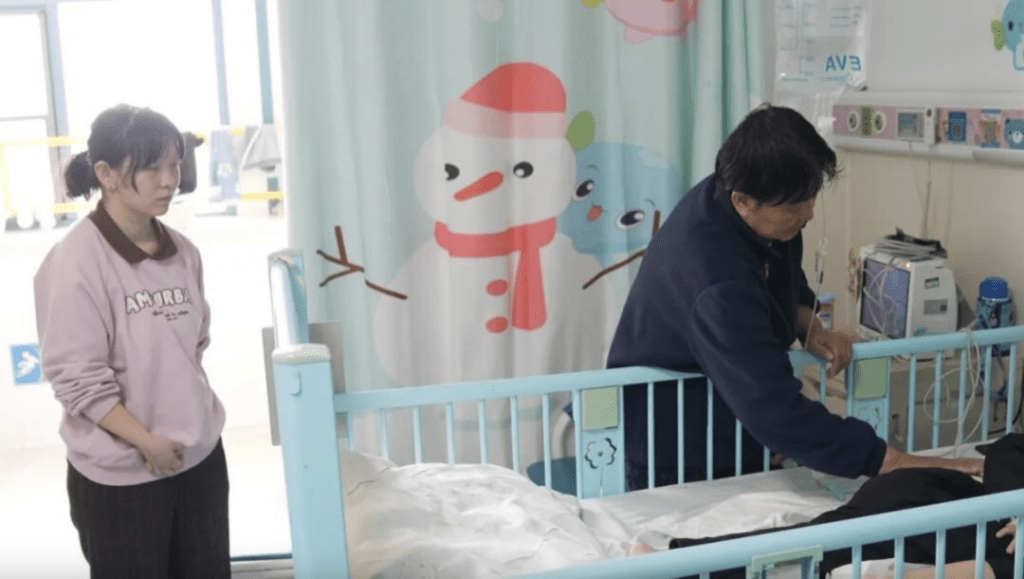
A four-year-old boy in Shandong, China, drenched in sweat from the pain of his illness, weakly held his mother's hand and said, "Mom, lie down with me." The young child had just been diagnosed with neuroblastoma – a malignant tumor known in the medical community as the "king of childhood cancers."
According to a report by Lightning News, a four-year-old boy named Shuo Shuo was taken to Jinan Children's Hospital due to foot pain, where he was tragically diagnosed with neuroblastoma. This diagnosis would be a heavy blow to any family. For Shuo Shuo's family, misfortune came in waves. His mother has limited use of one hand and is unable to work. His grandmother suffered a cerebral infarction (stroke) last year and is still recovering, unable to help care for the child. This has made an already struggling family even more vulnerable.
After mainland Chinese media shared the family's story, a flood of donations poured in – from just a few yuan to several hundred, each gift carrying the care of a stranger. Among the many donations, the largest single amount was 13,333 yuan (approximately US$1,850). The donor did not leave their name, only a message:
"13,333 symbolizes 'a lifetime of living, living, living.' We hope they won't give up. The child will get better."
The power of compassion did not stop with private citizens. After the report gained attention, local government agencies – including the Civil Affairs Bureau and the Disabled Persons' Federation – proactively contacted Shuo Shuo's family, promising appropriate assistance based on existing policies. "Treating the child is the top priority. We will do our best," one staff member pledged.
Shuo Shuo's father's company also donated over 4,000 yuan, with many of his colleagues who have disabilities contributing. From anonymous internet users to fellow workers with disabilities, kindness has created a safety net for this vulnerable family. Shuo Shuo's treatment has just begun, and the road ahead remains difficult. But at the very least, this family is no longer fighting alone.
According to information from the Children's Cancer Foundation, neuroblastoma is one of the more common tumors in childhood. It originates from undifferentiated sympathetic ganglion cells, so primary tumors can appear anywhere in the body where embryonic sympathetic ganglion cells are present. Most tumors arise in the adrenal gland in the abdomen, but they can also grow in the neck and pelvic region. The tumor grows rapidly and may spread early. About half of all patients are diagnosed before the age of two.
Because neuroblastoma grows rapidly, often spreads early, and can originate in multiple locations, the symptoms patients present with vary from person to person. Common symptoms include:
Other symptoms include:
Tumors originating in the abdomen: A mass may be palpable in the abdomen, causing abdominal pain, vomiting, and constipation.
Tumors originating in the chest: The tumor may compress the trachea, causing cough and difficulty breathing. If it compresses a major vein, it may lead to swelling of the face and neck. If the sympathetic nerves are damaged, the patient may develop Horner's syndrome (sympathetic nerve palsy).
Because this tumor often spreads early, and skull destruction by cancer cells is common, patients may experience bleeding and swelling within the eye sockets (orbital ecchymosis and proptosis). Cancer cells may also spread to bones throughout the body.