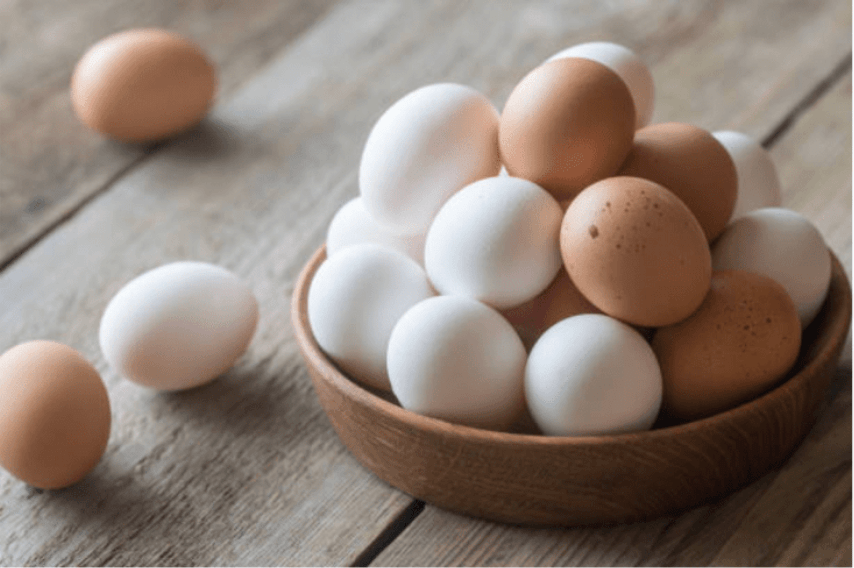
Do you often find the egg white stubbornly sticking to the shell when peeling a hard-boiled egg? What can you do to fix this? Experts share three simple techniques, including one easy step to do before cooking, that guarantee a perfectly smooth, intact egg white and a shell that slips right off.
Boiling an egg seems straightforward, but peeling it is often the hardest part. Sometimes the shell comes off easily; other times, the white clings to it, leaving you with a pockmarked mess. So, how can you achieve that perfect, smooth, restaurant-quality hard-boiled egg? The Japanese publication grapee asked the Japan Egg Industry Association for answers, and they summarized the following three essential tricks.
3 Secrets to Easier Peeling
- Use Slightly Older Eggs: For hard-boiled eggs that are easier to peel, use eggs that have been stored for a few days rather than ultra-fresh ones. Fresh eggs contain more carbon dioxide in the egg white, leaving almost no gap between the white and the inner shell membrane. The carbon dioxide is released about one week after the egg is laid. At this point, a small gap forms between the white and the membrane, making the egg much easier to peel and improving its texture.
- Poke a Tiny Hole Before Boiling: Using a thumbtack or a safety pin, gently pierce a small hole in the rounder, wider end of the egg before cooking. This simple step allows water to seep in between the shell membrane and the egg white during boiling, helping them separate more easily. The result? A shell that comes off much more smoothly.
- Plunge into an Ice Bath Immediately After Cooking: Immediately after boiling, transfer the eggs into a bowl of ice-cold water. This rapid cooling causes the egg white to contract slightly, creating a clearer gap between the white and the shell membrane. This makes the peeling process effortless.
How Long Do Hard-Boiled Eggs Last?
The same report, citing the book Eggs: Chemistry and Processing Technology published by Korin Co., Ltd. in Japan, notes that the shelf life of hard-boiled eggs depends heavily on storage conditions.
- Under strictly controlled laboratory conditions, in-shell hard-boiled eggs can be stored at 5°C (41°F) for 2–3 months, at 10°C (50°F) for about 3 weeks, but at room temperature above 25°C (77°F) for only 3–7 days.
- Important: Home storage environments are less controlled than labs, so shelf life will be shorter.
- For eggs with intact, crack-free shells, store them in the refrigerator at around 10°C (50°F) for 3–4 days. If you're unsure when a crack appeared, it's safest to avoid eating the egg.
- Once the shell has been removed, peeled hard-boiled eggs should be eaten within the same day.