Running is well-known for aiding weight loss and improving cardiovascular health. However, poor form can lead to back pain, and in severe cases, ankle injuries. A fitness coach now shares how to practice "ultra slow running" at home, revealing three key techniques to protect your spine and knees, along with two simple post-run moves that can double your fat-burning results. He also teaches three resistance band exercises to build muscle, boost metabolism, and enhance heart and lung endurance.
According to fitness coach Chan Siu-wai on the program Health 2.0, lower back pain and knee pain while running are mostly caused by poor posture. By mastering the following three techniques, you can easily perform ultra slow running at home and enjoy its full benefits.
3 Key Techniques for a Pain-Free Run
- Keep Your Head Up, Chest Out, and Spine Neutral: The most important rule is to maintain good posture. Imagine a string pulling you up from the top of your head, and tuck your chin in slightly. Running while hunched over puts tremendous pressure on your lumbar spine. Proper alignment allows you to run longer without injury.
- Hands on Hips, Engage Your Core: Start by placing your hands on your hips and marching in place. The key is to keep your pelvis stable without swaying side to side. Many people unconsciously twist their hips, which signals a weak core and actually increases strain on the lower back.
- Beginners: Keep Feet Low to the Ground: If you're new to exercise, start with a "feet-near-the-ground" march. This reduces impact on the lumbar spine and ankle joints. After warming up and moving comfortably for 5–10 minutes, you can progress to a light, alternating run using your toes and heels.
Post-Run Upper Body & Core Workout
After ultra slow running, your lower body has gotten a good workout. Now it's time to train your chest and core muscles. Chan notes that adding just these two moves can significantly boost your fat-burning results.
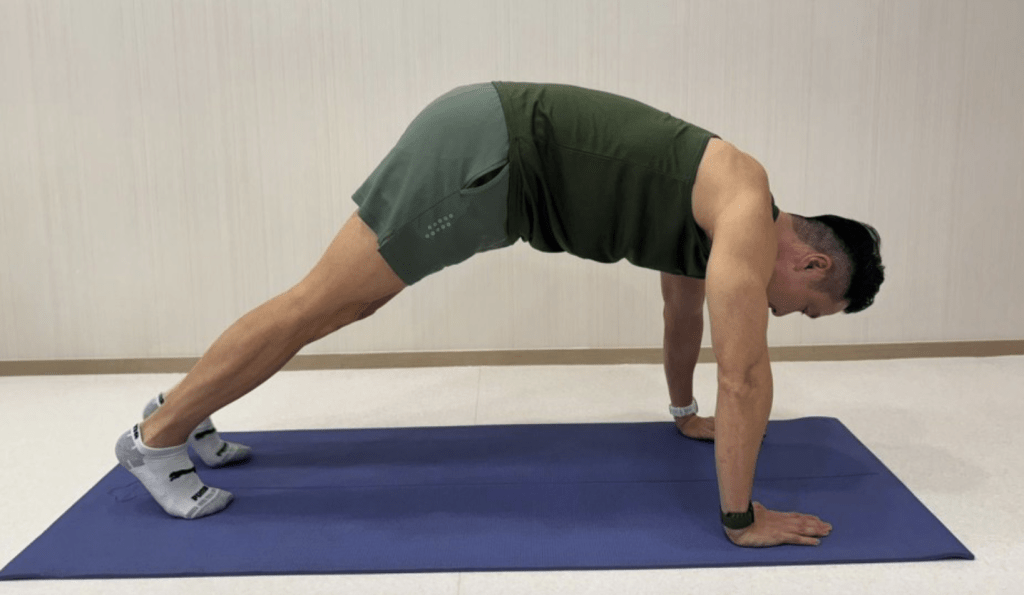
- Bodyweight Quadruped Shoulder Tap: This move effectively targets the core. Start on all fours, tighten your abs, and slowly lift one hand to tap the opposite shoulder. Do not let your body or hips sway—this is essential for true core engagement. For an advanced variation, step your knees back to increase difficulty. Perform 5 taps on each side (10 total).
- Kneeling Push-Up: To build a well-defined chest, start on all fours, then walk your hands forward one step. Lower your hips slightly, engage your core, and once stable, open your hands slightly wider. Lower your chest toward the ground, remembering to go down slowly and push up quickly. This emphasizes the stretch in your pectoral muscles for the best results.
3 Resistance Band Exercises to Build Muscle, Boost Metabolism, and Accelerate Fat Burning
To keep burning calories even after your workout, building muscle and raising your basal metabolic rate is essential. Chan demonstrates how a single resistance band can provide a full-body strength workout, helping you continue torching calories at rest.
- Lunge with Rotation: This move mobilizes the spine and works the obliques and shoulders. Step on one end of the band with your left foot and grab the other end with your right hand. Lower into a lunge, then drive through your leg to stand up, simultaneously rotating your right arm diagonally upward, pulling the band taut.
- Bent-Over Y-Raise: This single exercise targets the back, glutes, and hamstrings. Step firmly on the band, then hinge at your hips as if performing a deadlift, keeping your back straight. Using your back muscles, pull your arms up and out into a Y-shape, squeezing your shoulder blades together.
- Squat to Overhead Press (Band Thruster): This is a full-body, high-efficiency fat-burning move. Step on the band and bring the ends up to shoulder height. Perform a standard squat, then explode up, pressing your hands directly overhead as you stand. Keep your abs braced throughout the movement to prevent lower back strain.