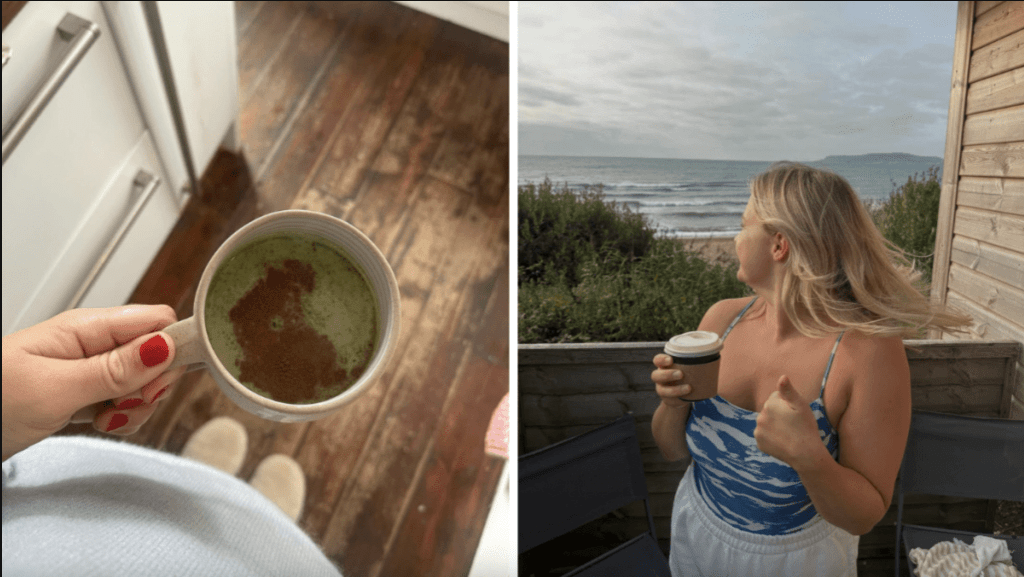
The rich, lingering umami of matcha—whether enjoyed plain, with milk, or in desserts—has gained a devoted following worldwide. Beyond its great taste and appearance, matcha is widely recognized as an antioxidant powerhouse, sparking a recent trend in Western countries where health-conscious individuals are increasingly turning to it. A UK health influencer recently experimented by replacing her morning coffee with matcha. After drinking it for one week, she noticed significant improvements in her mental state.
According to Women's Health, UK freelance journalist and influencer Alice Porter enjoys trying various health trends firsthand. To stay focused on her work, she was accustomed to drinking a cup of coffee around 9 or 10 AM to maintain her energy throughout the morning. Matcha also contains caffeine but additionally contains L-theanine, an amino acid that promotes relaxation and emotional stability. To compare the effects of coffee and matcha, Alice tried drinking matcha instead of her morning coffee for one week. After a week, she observed three significant changes in her health and mental state.
1. Reduced Stress Levels
She previously experienced poor sleep and frequent anxiety. After switching to matcha, she felt calm each morning and could start her day with a more relaxed mindset. She realized that coffee was actually contributing to her morning irritability.
2. Sustained Energy Throughout the Day
Her usual morning coffee only provided enough energy to last until noon, requiring a second cup or a sugary drink to get through the afternoon. However, drinking matcha in the morning allowed her to maintain stable energy levels throughout the entire day.
3. Slower Onset of Effects
She noticed that although matcha also contains caffeine, it doesn't provide the immediate energy surge or sharp mental clarity that coffee does. Instead, it offers a slower but more sustained energy release, although it took her slightly longer to get into a working state compared to when she drank coffee.
Alice described this as a "pretty interesting experiment," acknowledging that both coffee and matcha have their merits. She plans to drink matcha occasionally in the future, especially on mornings when she feels anxious or stressed, or on particularly busy days when she wants to avoid an afternoon energy crash. However, she also follows her mood—if she wakes up craving a hot coffee, she drinks it, finding this the best way to enjoy the benefits of both.
She admitted, however, that she hasn't fully accustomed herself to matcha's inherently strong, slightly bitter, earthy taste and the grainy texture of the powder residue at the bottom of the cup. She often feels the urge to add honey or syrup to balance the bitterness, which would add extra sugar and calories, potentially undermining some of matcha's health benefits.
What Are the Health Benefits of Matcha?
Registered dietitian Sophie Medlin notes that both coffee and matcha contain antioxidants and can boost alertness and focus. However, matcha may offer additional advantages over coffee.
- Antioxidant Power: Because matcha is made from ground whole tea leaves, it contains higher concentrations of nutrients and antioxidants compared to regular green tea made by steeping dried leaves in hot water. This makes it more effective at combating oxidative stress, neutralizing cellular damage, and supporting immune function.
- Slower Caffeine Absorption: Matcha contains L-theanine, which counteracts the effects of caffeine and helps stabilize mood. As a result, compared to other caffeinated beverages, the caffeine in matcha is absorbed more slowly and provides a gradual effect rather than a sudden burst of energy. This gentler effect makes it particularly suitable for individuals who are sensitive to caffeine, helping them avoid feelings of overstimulation or anxiety.
- Less Impact on Blood Pressure: Since caffeine can raise blood pressure, people at risk of hypertension may consider switching to matcha.
How Much Caffeine Can You Consume Daily?
The Consumer Council recommends that a 60kg adult should not consume more than 400mg of caffeine per day, while pregnant and breastfeeding women should limit intake to less than 200mg. Caffeine levels vary depending on the type of coffee bean, roasting method, and brewing technique.
Average caffeine content per cup of coffee:
- Freshly ground coffee: approximately 140mg
- Brewed with ground coffee: approximately 130mg
- Instant coffee: approximately 120mg
- Coffee capsules: approximately 80mg
Additionally, cold brew coffee typically has higher caffeine content than hot brewed coffee because the cold extraction process doesn't release certain compounds that heat does, and cold brew often uses more coffee grounds and involves longer steeping times.