Read More
The Lunar New Year film “The Snowball on a Sunny Day” has surpassed 10 million at the box office. Beneath the comedic chaos lies a heartwarming story. To fulfill their grandmother's dream of winning the Mark Six jackpot, a family stumbles upon an opportunity to spend time together again and mend their relationships. The story's emotional core naturally lies in the grandmother, played by Elaine Chin Yen-ling, who has dementia. She is portrayed as warm and familiar, and deeply concerned about her family. Her nuanced acting skills easily evokes memories of time spent with one's own grandmother. Chin, who so vividly portrays an elderly person with dementia, is in reality a caregiver herself, having spent over 10 years caring for her parents with cancer. Therefore, she deeply understands the worries and difficulties faced by caregivers.
ADVERTISEMENT
SCROLL TO CONTINUE WITH CONTENT
In an interview with Sing Tao Headline, Chin discussed the difficulties faced by dementia patients and their families. "This illness involves many things, not just the patient themselves. They might be completely unaware. Even if they have other physical ailments, they may not understand. They might fall and sit on the ground but 'not feel pain,' and they can't express it. All the pain and burden ultimately falls on the family and caregivers. The patient themselves doesn't really know. The ones who suffer are the ones taking care of them."
Witnessing Susie Wong's Care for Her Mother with Dementia: A Shared Experience
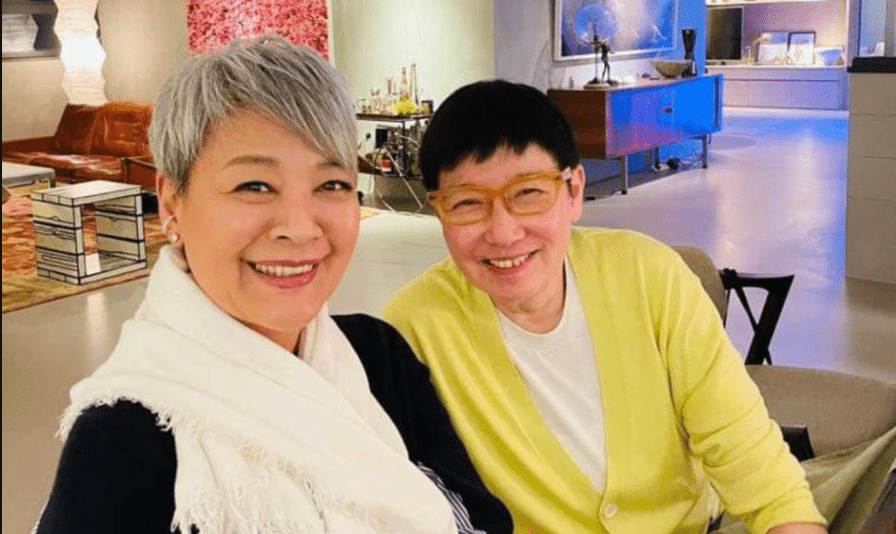
With current medical technology, dementia is irreversible and progressively worsens. Patients will inevitably reach a point where they need to rely on others for care. Chin witnessed firsthand how her partner, Susie Wong, cared for her own mother with dementia. The family treated the mother like a child, often visiting to have meals and chat with her.
Chin stated that the companionship and support of family, even just silently being there, is a kind of "blessing" for the sick person. However, not every family has the means to achieve this. Caregivers often face enormous financial pressure and must invest a significant amount of time. Family members usually need to work and find it difficult to be constantly by the patient's side, yet not everyone has the financial resources to hire a helper or other assistance, trapping them in a dilemma. "Not everyone has the ability to take good care of family members without affecting their own lives. This is the most difficult, most difficult part."
Returning to Taiwan with Her Daughter to Care for Her Dying Father
As for Chin herself, she also cared for her parents for over a decade, so she deeply empathizes with the fear and helplessness of caregivers. Although her parents did not have dementia, they both passed away from cancer. During the years of her father's illness, she was living in the UK at the time. She recalls, "I took my daughter, who was just a few years old, and went back to Taiwan from the UK."
When life's focus is entirely on the sick family member, the caregiver's emotions inevitably suffer. Before her father passed away, Chin heard him say, "I'm dying, I'm dying," which was incredibly distressing for her. Not knowing how to handle these emotions, she might not have spoken to her father in the gentlest tone. "You see their suffering and you can't help them, you get scared too."
Early Dementia Testing Allows for Early Preparation
To lessen the burden on families, Chin urges older adults to undergo early dementia testing to know beforehand if they show signs of cognitive decline. "I've always had this thought, but because of filming “The Snowball on a Sunny Day”, I feel I need to do this test sooner." Detecting risks early allows for early discussions with family about future care arrangements and even end-of-life planning. "Everyone needs to know in advance how to cooperate."