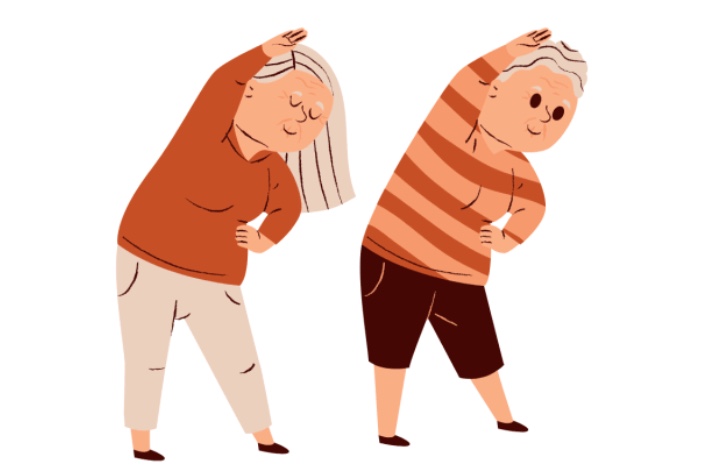
As people age, seniors often experience decreased physical activity, declining balance, and shrinking social circles, which can easily lead to muscle loss (sarcopenia) and emotional distress. According to the latest statistics, there are currently about 1.75 million individuals aged 65 or above in Hong Kong, constituting roughly 24% of the total population. Among them, approximately half suffer from chronic conditions such as hypertension, diabetes, and heart disease, making the coexistence of an aging population and multiple health issues increasingly common. Currently, about 80,000 seniors reside in long-term care homes, representing about 4.5% of Hong Kong's elderly population. This highlights the crucial role care homes play in senior care and health promotion.
Traditional Exercise: Easier Said Than Done
Previously, promoting senior health focused on moderate physical activity, which effectively improves bodily functions and helps prevent/manage chronic diseases. While exercise intervention remains the most effective non-pharmacological method to alleviate various adverse health impacts, research reports indicate that implementing exercise programs in long-term care homes often faces challenges such as low motivation among seniors, fear of injury, and resource limitations, leading to low participation rates. Therefore, we need to find innovative ways to attract seniors to participate in health-promoting activities.
Exercise as Entertainment: The Rise of Exergaming
With technological advancement, "Exergaming" (exercise gaming) is gradually becoming a new trend for enhancing senior health. These games require participants to complete challenges through physical movements (e.g., dance mats, motion-sensing game consoles), successfully combining exercise with entertainment. Besides increasing fun, they also help improve seniors' physical and mental well-being.
Multiple studies indicate that compared to traditional exercise therapy, exergaming can more effectively boost seniors' motivation and willingness for sustained participation. Data from systematic reviews highlight its advantages:
- Improved Physical Function: Enhances balance, reduces fall risk, and boosts cognitive function.
- Significant Effectiveness: Seniors participating in exergaming for 8 weeks (90-120 minutes per week) showed significantly greater improvement in balance and fall risk reduction compared to traditional training.
- High Adherence: The overall exercise adherence rate in the exergaming group was as high as 70% to 99%, surpassing that of the traditional exercise-only group.
These results reflect that exergaming, by combining fun, interactivity, and physical/mental exercise, can more effectively encourage seniors to participate consistently and reap health benefits.
HKMU Study: Exergaming Effectively Improves Sarcopenia
To address sarcopenia among seniors in care homes, the Hong Kong Metropolitan University (HKMU) Exergaming Research Centre for Healthy Aging conducted a study last year on exergaming incorporating resistance elements.
The results showed that seniors engaging in this resistance-based exergaming achieved similar effectiveness in improving muscle loss compared to traditional resistance training. However, due to the fun and sense of accomplishment from the gaming elements, exergaming encouraged seniors to participate in exercise more actively, thereby enhancing physical function and improving daily living abilities. This holds promise for further reducing fall and disease risks.
Nevertheless, when choosing exergames, it is essential to match them with the senior's physical condition and interests, and ensure participation in a safe environment accompanied by family, friends, or caregivers. If seniors have chronic illnesses or mobility impairments, it is advisable to select appropriate games and exercise modes under professional medical guidance.
In summary, exergaming, through the fusion of technology and exercise, offers seniors a novel and engaging health-promoting option. It not only enhances physical health but also promotes psychological and social well-being. Looking ahead, this technology holds potential for cross-sector collaboration, integrating support from caregivers, physiotherapists, and family members to drive new models of health management in care settings. The HKMU team will also actively develop exercise modes better suited to the physical and mental conditions of Hong Kong's seniors, contributing to the promotion of healthy aging locally.