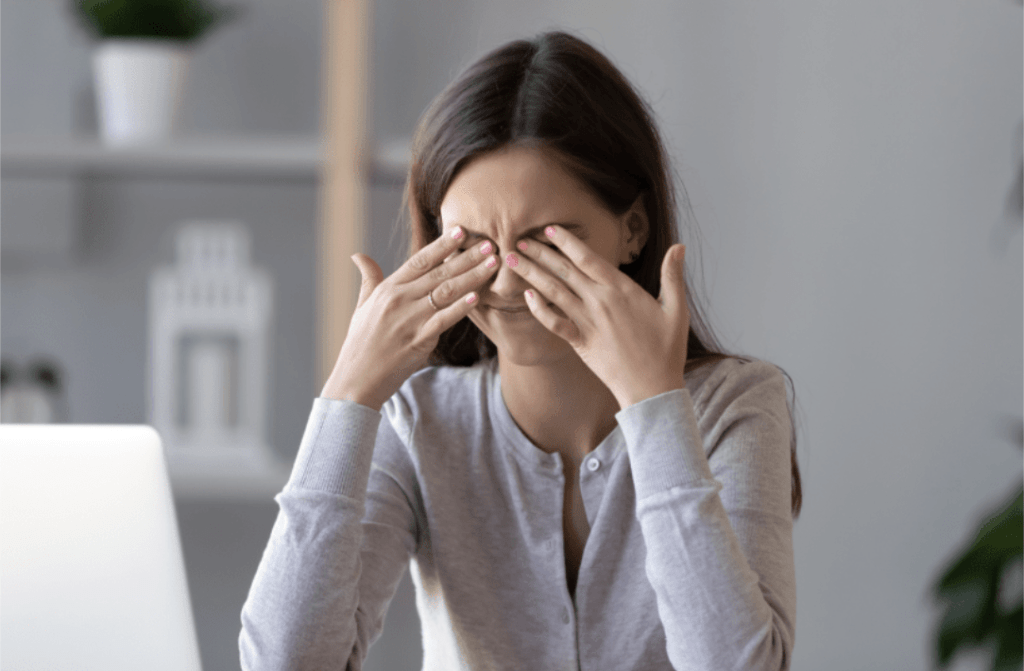
In Hong Kong, whether on the MTR or in restaurants, it is common to see people completely absorbed in watching short videos (Reels/TikTok) on their phones. Dr. Li Sheng-da, Chief of the General Ophthalmology Department at Asia University Hospital, warns that there is an increasing trend of "Short Video Syndrome" and strongly recommends following the "20-20-20" eye care rule.
Staring at Screens for Long Periods Reduces Blink Rate to 5 Times Per Minute
Li points out that the main reason for the increase in patients with Short Video Syndrome is that the human eye structure is not designed to handle long periods of close-up, high-brightness visual tasks. When staring at a screen, the blink rate drops from 20 times per minute to just 5 times, causing tear film evaporation and leading to dry eye syndrome. Many people habitually watch short videos in dim light or before sleep. The rapid movements, exaggerated sounds, and visual effects cause pupils to dilate and light intake to surge, preventing the eye muscles from relaxing and creating a vicious cycle.
Secondary-School Student's Myopia Soars to 800 Degrees
Clinically, there are concerning cases: a Form 5 (junior/senior secondary) student named "Xiao Fei" spent 3 to 4 hours daily watching short videos, and her myopia soared to 800 degrees within two years. Another 28-year-old salesperson developed symptoms of pre-presbyopia (early farsightedness) after watching short videos before sleep. Li notes that traditional drama binge-watchers still take breaks between episodes, but short video users find it hard to resist the endless stream of content, leading to eye strain. As fatigue accumulates, vision may become intermittently blurred, eventually progressing to severe migraines, shoulder tightness, and nausea.
The 20-20-20 Eye Care Rule
Li emphasizes that "prevention is better than cure" and strongly recommends implementing the 20-20-20 rule: every 20 minutes of screen use, look away from the screen for 20 seconds at something 20 feet (approximately 182.88 cm) away. This simple far-distance gazing effectively relaxes the tense ciliary muscles.
Additionally, cultivate the habit of blinking more often to maintain a healthy tear film, and ensure a viewing distance of at least 30 cm (about 12 inches) when reading or using a phone. Pay attention to indoor lighting and avoid using phones after lights are turned off. Increase outdoor activities whenever possible. If you notice any eye abnormalities, schedule regular dilated fundus examinations. If severe dry eye is present, intense pulsed light (IPL) therapy may be needed to improve meibomian gland function. Li specifically reminds the public not to buy soothing eye drops with unknown ingredients, as they may mask underlying conditions or cause secondary harm due to side effects.
𝗗𝗼𝘄𝗻𝗹𝗼𝗮𝗱 𝗧𝗵𝗲 𝗦𝘁𝗮𝗻𝗱𝗮𝗿𝗱 𝗔𝗽𝗽 ↓