Daily poor posture gradually accumulates damage to the lumbar spine, leading to back pain and even more serious problems. Hong Kong registered chiropractor Dr. Wong Chun-wah shared a case with Sing Tao Headline, mentioning a 24-year-old woman who experienced sudden, intense back pain that affected her mobility while resting at home on the weekend. Her right foot also became numb, suspected to be caused by a certain leisure habit that triggered a herniated disc.
Yoga instructor Lai Lok-yan shares 3 stretching exercises that effectively strengthen back muscles, maintain spinal stability, and help prevent and relieve herniated discs.
24-Year-Old Woman Suffers Herniated Disc Due to 1 Leisure Habit, Leading to Severe Back Pain and Foot Numbness
Wong stated that staying home to combat the pandemic became the norm in earlier years, restaurants closed early, and many Hong Kong residents returned home early. Physical activity greatly decreased, while time spent watching TV programs increased significantly. Consequently, spinal problems caused by this also increased substantially, and patients visiting clinics often reported spending twice as much time sitting on sofas and beds as before.
Ms. Deng, 24, recently visited his clinic for back pain. She mentioned spending her weekend at home lying on the sofa watching TV, and before she knew it, three hours had passed. When she tried to get up again, she experienced intense pain in her lower back and couldn't move. It took about 15 minutes before she could slowly walk. After getting up, her right foot also began to feel numb.
She pointed out that she had never experienced back pain before, so she was very worried and came to the clinic immediately. After a detailed examination, including neurological reflex and muscle strength tests, it was estimated that Ms. Deng suffered an acute herniated disc due to insufficient core strength combined with prolonged lying on the sofa. Due to the severity of the numbness, Wong arranged for her to undergo an MRI scan, primarily to clearly identify the location of the lumbar disc herniation and rule out other causes for the acute back pain. The results showed a posterior herniation of the disc between her 4th and 5th lumbar vertebrae, compressing a nerve and causing foot numbness.
Why Can Lying on a Sofa for a Long Time Also Cause a Herniated Disc?
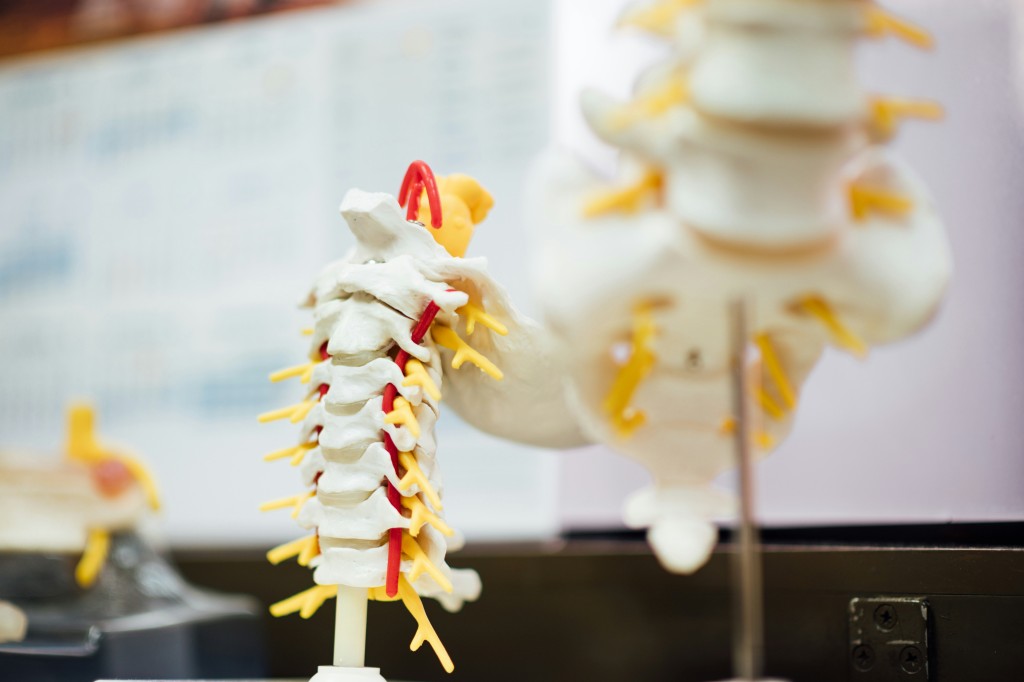
Wong explained that from a side view, the human spine is in an "S" shape. When standing or sitting properly, the spine can evenly support the body, reducing the burden on muscles. When lying on one's side for an extended period, the body does not support its weight as evenly as when sitting normally. Coupled with the softness of the sofa, the pelvis begins to tilt forward. Prolonged time in this position increases pressure on the lower lumbar spine, compressing the intervertebral discs and raising the risk of herniation. Additionally, as she spent more time at home recently with reduced physical activity, her core muscles likely became weaker, making the spine more susceptible to injury.
After several treatments, including ultrasound to reduce inflammation, muscle relaxation, and chiropractic adjustments, Ms. Deng's foot numbness has significantly decreased. Importantly, she improved her habit of lying on the sofa to watch TV. When her condition stabilized, she gradually began strengthening her core muscles to avoid suffering from back pain again.
Yoga Instructor Teaches 3 Moves to Prevent Herniated Discs and Relieve Pain
For people accustomed to prolonged lying and minimal exercise, therapeutic yoga instructor Zora Lai Lok-yan reminds us that performing simple yoga poses combined with breathing techniques helps strengthen back muscles and increase flexibility. Muscle strength is a crucial part of preventing herniated discs, but people who exercise infrequently may find it difficult to start training. Simple yoga poses are a more accessible way, remembering to coordinate with breathing to feel the muscles. However, Zora reminds us that patients with herniated discs are not advised to do backbend poses, as these encourage the spine to curve backward, potentially further increasing pressure within the disc. In the case of an already herniated disc, this additional pressure might worsen the protrusion, leading to more intense pain.
To prevent or relieve herniated discs, Zora recommends performing the following movements at home, which can effectively improve the situation. She also reminds that if a sharp, needle-like pain occurs while doing these movements, it could be nerve compression causing pain and discomfort. Pause the movement immediately and seek advice from a medical professional.
1. Cat Pose
The Cat Pose can help improve spinal flexibility and relieve back tension. When done with coordinated breathing, it can reconnect you with and make you feel the back muscles stretching.
- Step 1:
Start on all fours in Table Top Pose. Place your palms under your shoulders with fingers spread and fingertips gently pressing into the floor. Your thighs and calves should form a 90-degree angle, with knees directly under your hips. Toes should be grounded. If the toes are not lightly pressing into the ground, all the force can easily concentrate on the knees, which may feel pressure and pain. - Step 2:
Check if your lower back is arching (bending backward). Try to keep your entire back in a flat, straight line. Inhale through your nose. As you exhale through your nose, round your back. Imagine your back trying to push towards the ceiling, with your abdomen hollowing inward, feeling your pelvis tilt backward. Beginners might find it harder to feel the back muscles stretching and can change to inhaling through the nose and exhaling through the mouth. During the exhalation, focus on feeling the back muscles. - Step 3:
Maintain the rounded back position (Cat Pose). Hold this pose for 5 deep breaths, inhaling through the nose and exhaling through the mouth 5 times. Then relax, rest for a moment, and repeat two more sets.
2. Standing Cat Pose (Variation of Cat Pose)
For those with knee injuries or discomfort when kneeling, you can do this standing version. Find a chair or a sturdy object for support. This version will also provide a slight stretch for the legs.
- Step 1:
Place both hands on a chair for support. Similarly, inhale a breath through your nose. As you exhale through your nose, round your back, imagining your back trying to push towards the ceiling, with your abdomen hollowing inward. Beginners might find it harder to feel the back muscles stretching and can change to inhaling through the nose and exhaling through the mouth. During the exhalation, focus on feeling the back muscles. Maintain the rounded back position (Cat Pose), feeling your pelvis tilt backward. - Step 2:
Hold this position for 5 deep breaths, inhaling through the nose and exhaling through the mouth 5 times. Then relax, rest for a moment, and repeat two more sets.
3. Table Top Pose Knee Lift
After becoming familiar with stretching movements and breathing exercises, you can take it a step further to train whole-body balance, especially the core muscles, to maintain spinal stability.
- Step 1:
Start on all fours in Table Top Pose. Place your palms under your shoulders with fingers spread and fingertips gently pressing into the floor. Your thighs and calves should form a 90-degree angle, with knees directly under your hips. Toes should be grounded. - Step 2:
Check if your lower back is arching (bending backward). Try to keep your entire back in a flat, straight line. Inhale through your nose. As you exhale through your nose, lift one knee about one inch off the ground. Inhale through the nose and exhale through the mouth. During the exhalation, focus on feeling the abdominal muscles. Of course, in this movement, you will also feel the glutes and quadriceps engaging. - Points to Note:
Note that the higher the knee lifts off the ground, the easier it becomes. Try to keep it as close to the ground as possible to feel more engagement in the abdomen. Also, check if the force is all falling on the wrists; the fingertips should also exert force. Furthermore, the toes must press firmly down into the ground, which will reduce the sensation in the wrists, and the main focus of force should be on the abdomen.