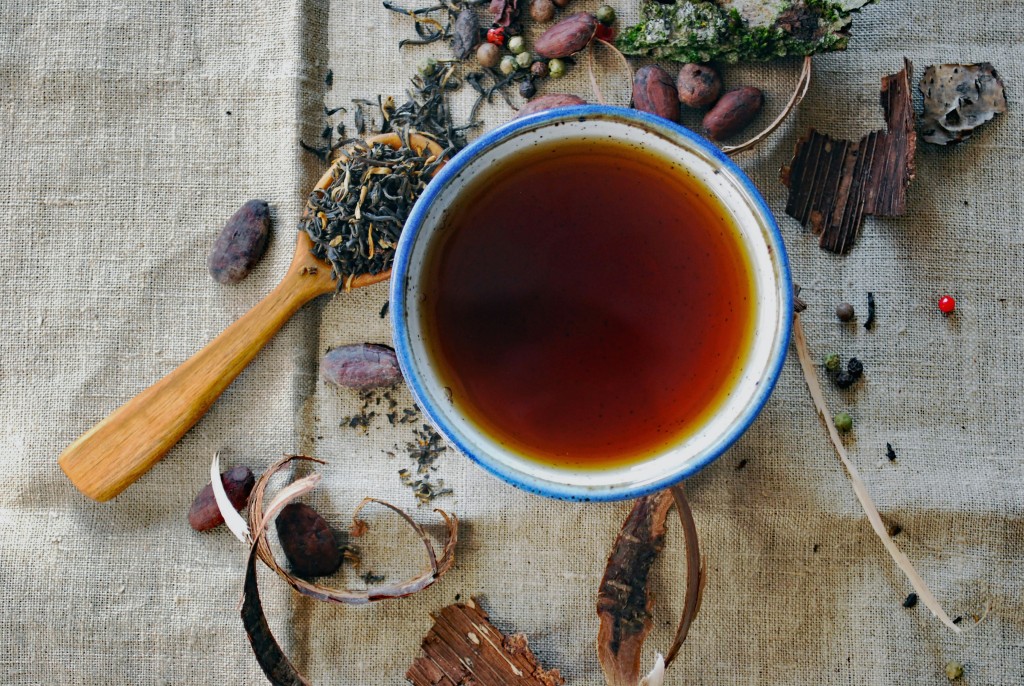
The Japanese program "Kono Sa tte Nan Desu ka?" once invited six women in their 20s to 40s with poor blood circulation for a test. The six participants stayed in a room with a temperature of 20°C and drank hot coffee, green tea, black tea, hot chocolate, hot ginger tea, and hot Amazake (sweet rice drink) respectively. The program team then used an infrared thermographic camera to measure the rate at which their body temperatures dropped, recording the time it took for each person to return to a normal body temperature of 36.2°C, thereby comparing the lasting warming effects of the six hot drinks.
Ranking of Warming Duration for 6 Hot Drinks
6th Place: Hot Coffee (Warming Time: 9 minutes)
The test subject's body temperature began to drop significantly just 5 minutes after drinking hot coffee and returned to the normal 36.2°C by the 9th minute, making its warming effect the lowest among the 6 drinks. Guest doctor Dr. Ishida Nina explained that the caffeine in coffee stimulates the sympathetic nervous system, causing blood vessels to constrict and blood flow to decrease, leading to a drop in body temperature and affecting its warming effect.
5th Place: Green Tea (Warming Time: 14 minutes)
The test subject's body temperature also returned to the normal 36.2°C after 14 minutes. The warming duration was only about 5 minutes longer than coffee, making its effect similarly less than ideal. Dr. Ishida Nina explained that green tea also contains caffeine, so its warming effect is as short-lived as coffee's.
4th Place: Hot Amazake (Warming Time: 27 minutes)
The test subject's body temperature didn't drop back to normal until 27 minutes after drinking hot Amazake, showing a decent warming effect. Dr. Ishida Nina explained that because Amazake is made from fermented rice, it contains abundant sugars which can generate heat in the body. Furthermore, its paste-like texture allows it to stay in the stomach longer, helping to warm the body continuously. However, Amazake lacks components that promote blood circulation, so its lasting warming effect isn't as good as the top three drinks.
3rd Place: Hot Ginger Tea (Warming Time: 47 minutes)
The warming effect lasted for over 35 minutes after the test subject drank hot ginger tea, and their body temperature only dropped back to normal after 47 minutes. Dr. Ishida Nina explained that ginger contains gingerol and shogaol, which not only help dilate capillaries and promote blood circulation but also raise body temperature and generate heat.
Although the test subject's body temperature once rose to nearly 36.9°C after drinking ginger tea, the sharp rise in temperature can also lead to sweating, which in turn makes it easier to lose body heat. Therefore, its lasting warming effect isn't as good as the top two drinks.
2nd Place: Hot Black Tea (Warming Time: 52 minutes)
The warming effect also lasted over 35 minutes after drinking hot black tea, and the subsequent drop in body temperature was slightly slower, only returning to normal after 52 minutes. Dr. Ishida Nina explained that black tea contains theaflavins, which have the effect of improving blood circulation, helping to raise the overall body temperature and improve cold hands and feet.
1st Place: Hot Chocolate (Warming Time: 59 minutes)
The warming effect also lasted over 35 minutes after the test subject drank hot chocolate, and the rate of body temperature drop was the slowest among the 6 drinks, only returning to normal after 59 minutes, making its warming effect the best. Dr. Ishida Nina pointed out that chocolate contains cocoa polyphenols, which can promote blood circulation, thus maintaining the warming effect for nearly an hour.
Can Alcohol Warm You Up? Like Coffee, Does It Make You Colder?
Furthermore, while the common saying "drink alcohol to warm up" exists, the Hong Kong Hospital Authority has stated that this is actually a misconception. They pointed out that although alcohol dilates blood vessels, giving an immediate sensation of warmth, this is only a temporary illusion. After the brief warmth, because the blood vessels cannot constrict in time, it actually accelerates body heat loss, making you feel colder. Therefore, excessive drinking in cold weather may instead lead to hypothermia.
If you want to feel warm all over, nutritionist Gao Minmin has previously recommended 9 thermogenic foods that can even make you "sweat profusely," as if carrying your own heater! These foods that help warm the body include: old ginger, chili peppers, black pepper, turmeric, garlic, garlic chives, hot black tea, cocoa above 70%, and cinnamon. Among them, old ginger, turmeric, and cinnamon can also be brewed into drinks.