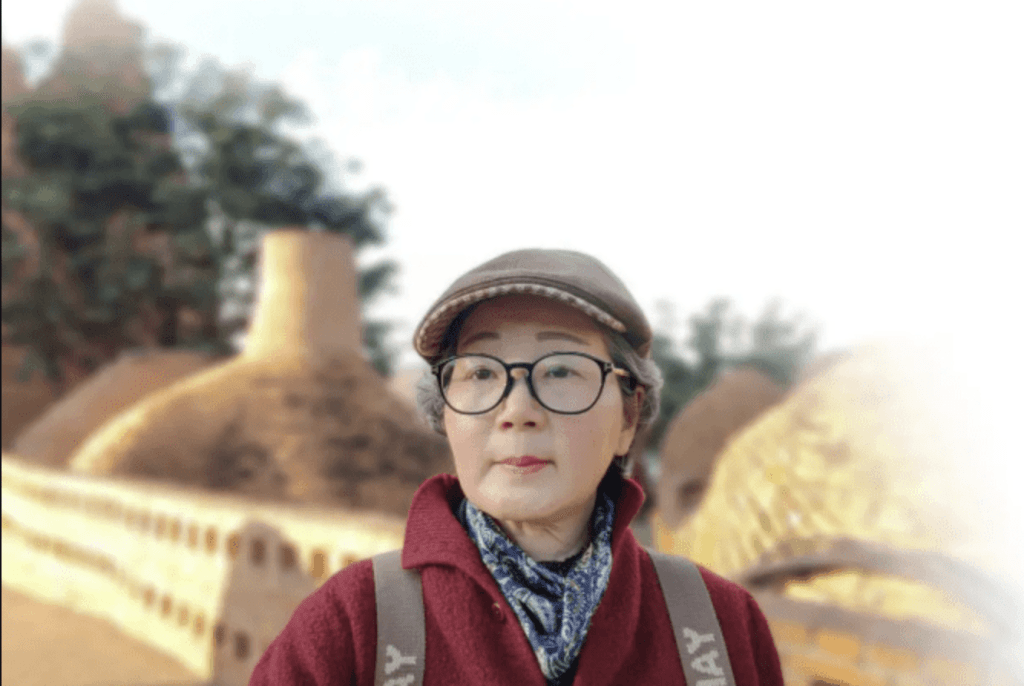
A 58-year-old mother in mainland China was diagnosed with advanced triple-negative breast cancer in 2014. Over 17 years, she has endured cancer metastasis, chemotherapy, and even lower jaw necrosis requiring a leg bone graft for repair. She relies on a simple 9-word mantra for happiness: "It's okay, never mind, not that bad." She persists with exercise and a healthy diet, cherishing the present moment and living her "rented life" with passion and vigor.
According to mainland Chinese media Trend News, 58-year-old Xu Bin-bin from Yueqing City, Wenzhou, Zhejiang Province, was building her career in the Philippines in 2009 when she accidentally felt a non-tender, non-itchy lump in her left breast. Alone overseas, she checked into a hospital for a biopsy and was diagnosed with advanced triple-negative breast cancer, one of the most aggressive forms, with no targeted drug therapy and a far higher recurrence rate than other types. Upon hearing the devastating news, instead of collapsing, she called her sister and laughed, "I have good news and bad news. The good news is I'm still alive. The bad news is I have cancer." Encouraged by her family, she resolutely returned to China. Through subsequent surgeries and chemotherapy, she silently endured all the pain without complaint.
Four and a half years after surgery, life was gradually getting back on track. But in 2014, the cancer metastasized to her sternum. The ensuing chemotherapy pushed her body to the brink of collapse; her platelet count once plummeted to 12×10⁹/L, requiring emergency transfer. Even on the edge of life and death, she remained calm, packing her own things and cooperating with tests, comforting her panicked family: "What use is fear? The cancer hasn't defeated me yet; I can't scare myself to death first." Unable to tolerate the high-intensity chemotherapy, she decisively switched to a conservative treatment combining Chinese and Western medicine, learning to live with the cancer.
Her trials were not over. In 2022, long-term injections of bone-protecting agents caused left lower jaw necrosis, with a risk of fracture. Doctors recommended a graft from her right leg. Faced with this high-risk major surgery, she said lightly, "It's just replacing a part. Look at this 30 cm long scar on my right leg – it's just another medal on my cancer-fighting journey." In 2024, the cancer metastasized again, this time to her ribs. She remained calm: "Getting cancer wasn't my choice, but since it happened, I'll just be myself gracefully." Over 17 years, she underwent three chemotherapy regimens, each requiring 8 sessions, but her body could only complete half each time. After each round, her hair fell out, but it grew back naturally curly. She jokes, "It's a free hairstyle from chemo, prettier than a salon perm – soft, like baby hair."
Warmth and Hope Amidst the Struggle
To fight the disease, she insists on exercising daily. Starting with just 2 minutes of running in place that left her breathless, she now steadily works out for an hour. She says, "Just being able to run every day makes me happy." Her diet consists of light steaming and boiling, with fresh vegetables, fish, and lean meat for balanced nutrition. But when meeting friends, she'll happily eat skewers and laugh heartily, believing, "Don't be too special. A good mood matters most."
She divides her time monthly: one part with her son, playing with her grandchildren; another part rushing back to her 91-year-old mother in Beibaixiang to show filial devotion; the remaining time is for herself – exercise, work, and outings with friends. In recent years, Xu Binbin has started posting videos online documenting her cancer-fighting journey and healthy diet. At followers' requests, she posts daily. A mid-April video of her working out unexpectedly garnered over 310,000 views. Countless fellow patients thank her: "Because of you, I'm no longer afraid of cancer," "Seeing you so energetic, I'm slowly regaining confidence to fight bravely."
Living a Passionate Life by "Cherishing the Present"
"My greatest wish is to 'go' after my mother." This woman, who never shed a tear over her 17-year battle, gets teary-eyed only when speaking of her 91-year-old mother. Initially diagnosed, her greatest fear was not the disease, but that her elderly mother couldn't bear the blow. She wore wigs when her hair fell out, forced a smile before entering the house, and lied that her treatments were for travel or business. She hid the truth for four years. When her condition eventually made it impossible, she revealed reality. Her mother wept but never spoke discouraging words, silently cooking varied meals and protecting her with the deepest care.
Last Mother's Day, Xu wrote heartfelt words on her social media: "With my mother, I am a happy child; with my children, I am a happy mother. Grateful for time's mercy and for the love and support of family and friends." Seventeen years with cancer have taught her to live fully: "Time doesn't turn back; there are no 'what ifs.' The most precious thing is to cherish the present." Her secret to happiness is just nine words: "It's okay, never mind, not that bad." She proves: "Even if life is rented, live it with passion and fervor."
Breast Cancer: 7 Symptoms and 9 High-Risk Groups
The Hospital Authority reminds that after developing breast cancer, the breast, nipple, and armpit may show the following changes:
- Breast: Presence of a lump of any size, change in shape or size, dimpling of the skin, vein dilation, or peau d'orange (orange peel) appearance.
- Nipple: Spontaneous discharge, bleeding, or inversion.
- Armpit: Swelling or enlarged lymph nodes.
High-Risk Groups for Breast Cancer:
- Gender (female predominance, though men can be affected)
- Age (risk increases with age)
- Genetics (higher risk if mother, sister, or immediate relatives have had the disease; about 5-10% of cases may be genetic)
- Early menstruation (before 12) or late menopause (after 55)
- Diet (long-term high intake of animal fat)
- Lifestyle (smoking, heavy drinking, lack of exercise)
- Reproductive history (never given birth or first birth after age 35)
- Medication (long-term use of oral contraceptives or hormone replacement therapy for more than 5 years)
- Personal cancer history (certain cancers like Hodgkin's lymphoma, lung adenocarcinoma, colorectal cancer, or childhood cancer)
The Hospital Authority reminds that premenstrual breast tenderness or lumpiness is a normal physiological response to cyclical hormonal changes. However, if you suspect a breast lump, consult a doctor for examination to determine if it is benign or malignant. Most breast lumps are benign (e.g., cysts or benign fibroadenomas) and harmless.
Source: Trend News, Hong Kong Hospital Authority