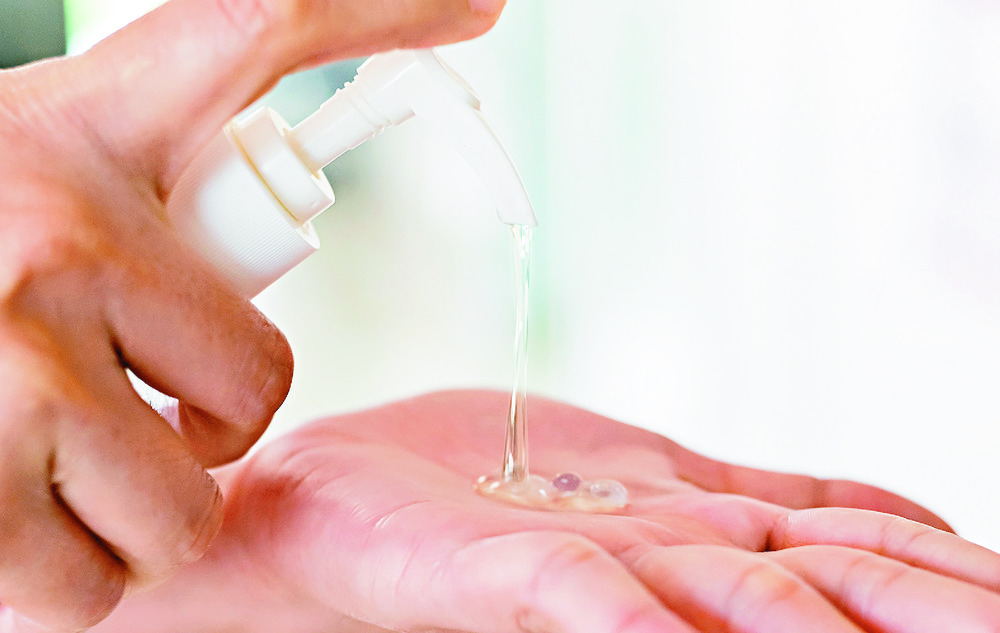
Some widely available hand sanitizers that consumers snapped up last year to ward off coronavirus infection contain high levels of a chemical known to cause cancer.
Hand cleaners that flooded into the market after mainstays disappeared from retail outlets contain high levels of benzene, said Valisure, an online pharmacy that tests products for quality and consistency.
Benzene causes cancer. The World Health Organization's cancer research arm puts it in the highest risk category, on par with asbestos.
Valisure analyzed 260 bottles from 168 brands and found 17 percent of the samples contained detectable levels of benzene. Twenty-one, or 8 percent, contained benzene above two parts per million, a temporary limit the Food and Drug Administration set for liquid hand sanitizers to ease the supply squeeze.
That level "can be tolerated for a relatively short period of time," the FDA said in June. Fifteen brands were represented among the 21 bottles with the highest levels of contamination.
Exhorted to wash their hands, consumers quickly exhausted supplies of household names such as Purell and Suave. While those brands, like most of those tested, didn't contain unsafe benzene levels, many new entrants did. Some of these tainted sanitizers were found for sale on Amazon and Target outlets.
Most hand sanitizers Valisure found and tested were gels. The pharmacy's test results were verified by Yale University's Chemical and Biophysical Instrumentation Center and Boston Analytical, a private lab. Valisure has asked the FDA to take action on the contaminated products.
"These findings are alarming and reveal a serious potential risk to public health," Valisure said in a petition signed by chief executive officer David Light and other executives.
It isn't clear how benzene became present in the products. It may have been introduced during the manufacturing process when germ-killing alcohol is purified, Valisure said.
Among the most contaminated hand cleaners were products from artnaturals, Scentsational Soaps and Candles, The Creme Shop and a Baby Yoda-themed bottle from Best Brands Consumer Products.
The analysis also found high levels of methanol in the hand sanitizers. One Scentsational product that tested for high levels of benzene held 14 times the limit of methanol, which is 630 parts per million.
Alcohol-based hand sanitizers typically should not contain methanol; they're usually made with ethanol, or grain alcohol, which is also used in some drinks.
Light said he originally scoffed at the idea that a dangerous carcinogen like benzene would be in hand cleaners, but he's now glad that chief scientific officer Kaury Kucera pushed to test for it.
While benzene should be removed in the final steps of manufacturing after the alcohol is purified, it may not have been. Gel hand sanitizer is also made by adding a powder called a carbomer, often made with benzene, to create viscosity, the pharmacy said.
Medications have also been found to contain carcinogens that either weren't properly washed out during the manufacturing process or formed later as the medications sat on shelves.
Contaminants include NDMA, or N-Nitrosodimethylamine, a probable carcinogen that was found in blood-pressure pills in 2018, leading to recalls.
Valisure later detected NDMA in the heartburn drug Zantac and its generic forms as well as metformin, a diabetes treatment, prompting further actions. Zantac and its generic form, ranitidine, were eventually taken off the market in the United States.
In 2019, Valisure also identified elevated levels of a probable carcinogen called DMF, or dimethylformamide, in blood pressure drugs. DMF is a solvent used during the early stages of drug manufacturing that is supposed to be washed out of the final product.
The FDA is looking more closely at ingredients manufacturers that might use DMF.
Benzene is the third and most dangerous cancer-causing chemical the pharmacy has helped bring to light in product testing.
Bloomberg