Beijing's restrictions on American chipmaker Micron in retaliation to sweeping US chip curbs mark a major step up in its response to Washington's pressure and could open the door for further measures in the geopolitical standoff, analysts say.
But they warned President Xi Jinping's ability to raise the stakes will be limited as he battles to re-energize the world's No 2 economy while it struggles to recover from years of Covid-imposed inertia.
China banned the use of Micron's chips in critical infrastructure projects, which Beijing said posed major network security risks that could affect national security.
Washington expressed serious concerns over the ruling that came just as leaders of the world's seven richest nations (G7) signed a statement urging Beijing to end economic coercion.
The move marked a significant shift in China's response to US measures that have targeted the country's technology sector, with Gary Ng, a senior economist at Natixis, calling it ''a landmark case."
He emphasized it was China's first cybersecurity probe into a foreign company since tighter rules were announced in 2021, and a rare instance when the scope of such reviews was expanded to include national security concerns.
"I wouldn't be surprised if regulators used these reviews as a tool for retaliation in future" when faced with other geopolitical issues, he said.
China began an investigation into Micron in late March, five months after the US unveiled sweeping curbs aimed at cutting off Beijing's access to high-end chips, chip-making equipment and software used to design semiconductors.
"This is clearly part of a tit-for-tat retaliation for what Beijing perceives as Washington's support of Micron and the US semiconductor industry," said Paul Triolo, a China tech expert at consultancy Albright Stonebridge.
Micron was singled out to make a political statement, Triolo said, adding that previous cybersecurity reviews of domestic firms, such as ride-hailing app Didi, focused on data instead of broadening the scope to include national security.
Washington has banned Chinese chipmakers including Micron rival Yangtze Memory Technologies.
The announcement came as the G7 nations said they would move to "de-risk, not decouple" from China, while Washington pressures allies to unite in restricting chip equipment exports to China.
"The strong statement from G7 may have added fuel to this fire," Ng said.
However, Xi's desire to combat what he sees as US hegemony will need to be balanced against the impact such measures would have on the economy.
Analysts say Micron - one of America's largest memory chip-makers - was an easy target because its semiconductors could be replaced by products from South Korea's SK Hynix and Samsung.
But restrictions against other US firms such as Intel and Qualcomm would be much harder to deal with because their technologies are used in consumer goods, including smartphones, that are made in the country and shipped abroad.
"The approach of limiting US firms like Micron intends to send a signal that Beijing is willing to bear some pain as it contests with the US," said Ja Ian Chong, an associate professor of political science at the National University of Singapore.
"But Beijing is quite careful to limit costs to itself," he said.
The ban will come down particularly hard on companies offering cloud services or data centers because they use hardware that requires high-end memory chips, said Toby Zhu, an analyst at market research firm Canalys.
He said Micron's consumer goods products are replaceable by South Korean and domestic memory chip suppliers.
And Triolo said Beijing was betting on switching to South Korean suppliers.
However, the White House last month urged South Korean chip-makers not to export to China.
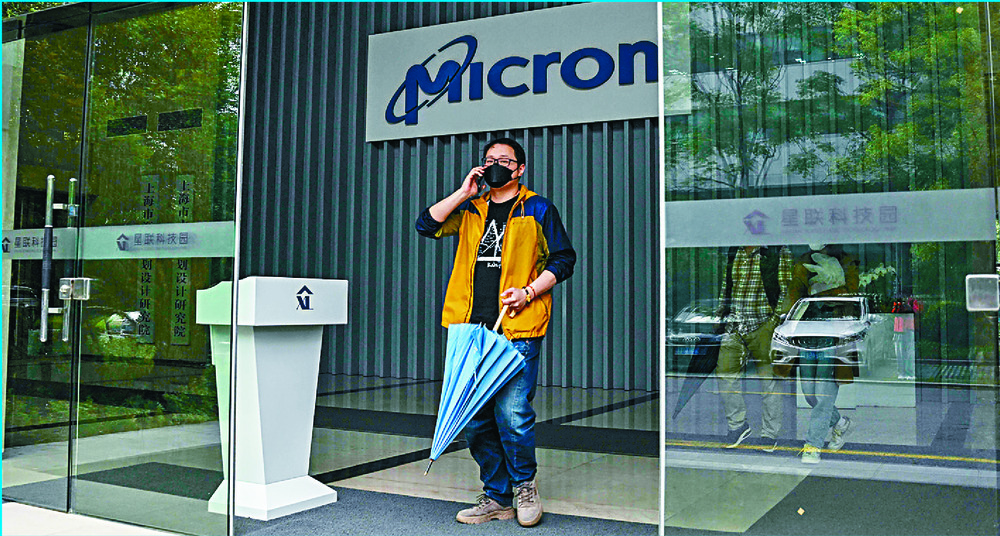
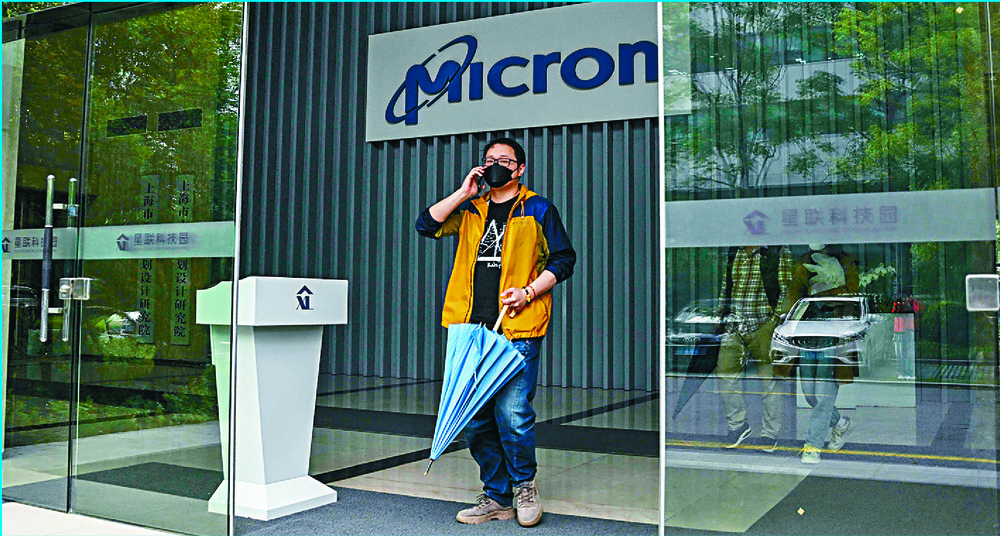
Micron's facility in Shanghai.