Read More
A natural characteristic of a piece of machine is that it has a finite life. Whether it is a room air-conditioner, a refrigerator or a TV set, they invariably deteriorate with time and need to be decommissioned or discarded after it has served its useful purpose.
ADVERTISEMENT
SCROLL TO CONTINUE WITH CONTENT
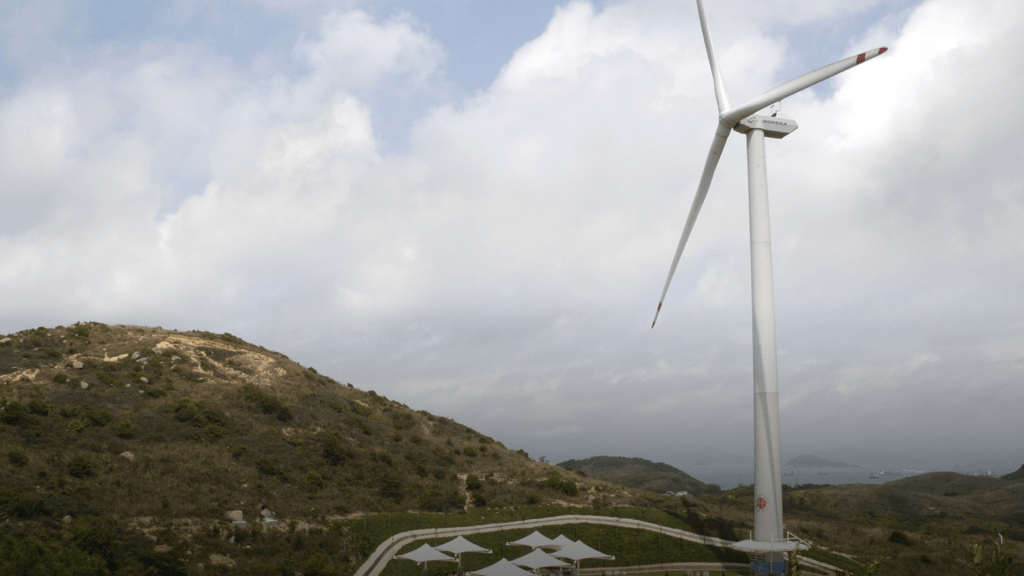
I watched the one-and-only large scale wind turbine, the Lamma Winds, being installed on Lamma Island in Hong Kong. It had a power output of 0.8 megawatts, which was huge by wind turbine standards 20 years ago. To put it in scale, the total generation capacity for the whole of Hong Kong is about 10,000 MW. While it was the largest we could build in Hong Kong, due to land and other limitations, it did not provide a significant enough impact. But it served its useful purpose as a sample of what we could expect in the growth of renewable energy.
The tremendous growth and development in the last two decades, in both solar power and waste-to-energy systems, lead us to plan what we can do for future renewable energy projects. We have investigated offshore wind farms in the outlying areas within the Hong Kong border, but eventually it has proven extremely difficult and not cost-effective enough to pursue.
On the other hand, solar power has developed in both energy density and robustness, and thus has been widely applied. As an example, for the Hongkong Electric Co Ltd, the power supply company for Hong Kong Island and Lamma Island, the total solar generation capacity within its supply areas last year was some 22 times that of Lamma Wind. It is also a static machine, which is far easier to operate and requires minimal maintenance.
On the contrary, wind turbines have not only grown in size but also in the materials used that could withstand larger stresses and resist corrosion. Modern wind turbines are huge machines and generally of at least 10 MW, if not more. But with these huge sizes, they cannot be installed in or near city centers, as they not only require a large piece of land but also cause noise and visual impacts, which may not be environmentally friendly.
To refurbish this 0.8 MW wind turbine to extend its life, we need to find manufacturers who continue to produce such machines.
Unfortunately, for commercial and technical reasons, manufacturers are no longer interested in machines of this small size. But as the large blades of the wind turbines are made of composite materials, they only have a useful life of 20 years, and invariably start to delaminate and disintegrate, threatening safety. For many other countries, the discarded turbine blades are left as rubbish in the suburbs as they take a long time to totally disintegrate, causing undesirable environmental impacts.
For Hong Kong, where land is always in short supply, wind turbines occupy valuable expanses of land which can be used for other purposes. With a wind turbine, a large piece of land has to be cordoned off from the public as there is a need to minimize safety-related risks – such as a blade failure leading to fracture or breakage – as per current safety practices. Arguably, such land can be used as an open space or for many other purposes.
There is a strong case to dismantle the end-of-life wind turbine and repurpose the land for other purposes. Technology has moved on and there are many other environmentally friendly ways to generate renewable energy with much more efficient use of resources.
The beauty of engineering is continuous development. Recent years have seen battery electric vehicles quickly replacing petrol engine vehicles on roads, the same way the past century has witnessed kerosene and firewood being superseded by gas and electricity for cleaner cooking. We must keep modernizing our ways of living to ensure we move with the times to live in an environmentally friendly manner. We owe it to our future generations.
Veteran engineer Edmund Leung Kwong-ho casts an expert eye over features of modern life