





Read More








HK restaurants sweep top two spots at Asia's 50 Best Restaurants
26-03-2026 02:33 HKT

Man dies in suspected electrocution at Mui Wo beach
26-03-2026 06:50 HKT


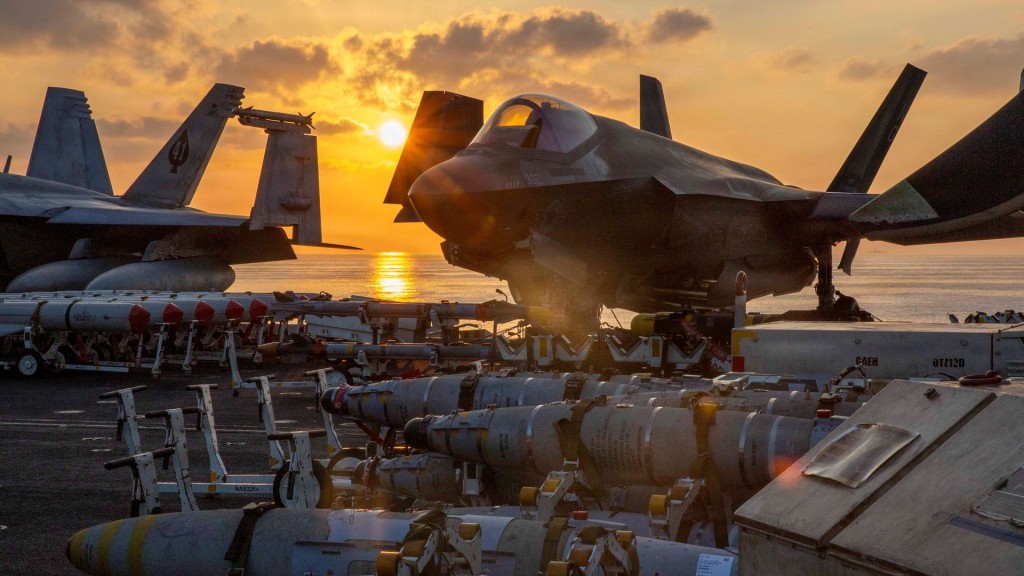
During my student days at the London School of Economics and Political Science, my favorite subject was public international law. Despite sounding dry, to my younger self, this was really about studying nations playing a high-stakes game of risk with actual consequences.
Our guide was Professor Christopher Greenwood – Sir Christopher was knighted in 2009 – a towering figure in the law of the use of force, later a judge at the International Court of Justice. I recall a lecture where we explored the narrow circumstances under which the use of force is considered lawful. The framework, as the professor explained, is deceptively simple. International law starts with a firm “no fighting allowed.”
States are prohibited to use force against each other. Exceptions are slim: self-defense, or get the UN to bless your action. Beyond that, the terrain becomes murkier, shaped as much by politics as by principle. That lecture also posed a tricky question: What happens when a powerful state ignores these rules? International law has no central enforcer, no global sheriff, no compulsory court to stop a determined superpower. The UN Security Council can authorize action, but any of its five permanent members can veto it.
Critics call this toothless. The professor sees this as too cynical a view, since even the most powerful states today rarely dismiss legal justifications altogether; instead, they frame their actions within the language of law.
Powerful states arguably have an interest in maintaining a rules-based, reciprocal order: that instinct – to justify rather than openly defy – suggests that the law still exerts a gravitational pull. As the professor argues, law without central enforcement remains law, and those who repeatedly flout it risk long-term consequences, especially in substantial reputational damage.
Looking at the world today, these are certainly dark times we are living in – but while the law remains imperfect, it is far from irrelevant.
Victor Dawes SC is the former chairman of the Hong Kong Bar Association