Read More
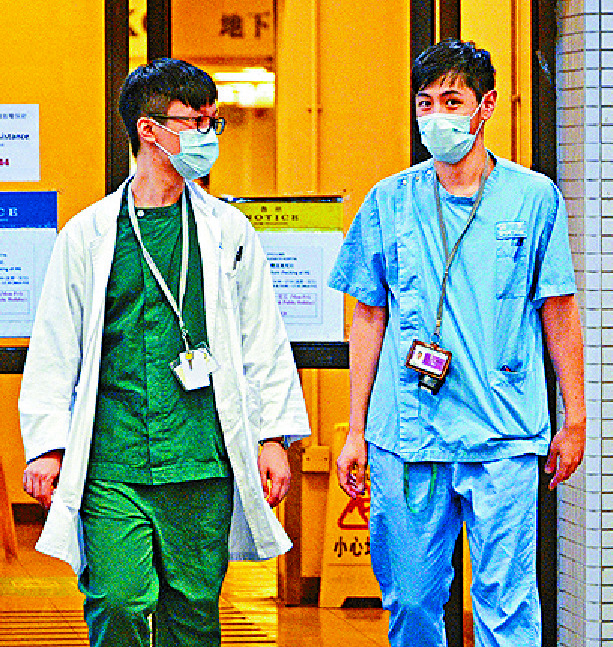
It is a citywide consensus that Hong Kong needs to train more doctors to overcome a shortage that forces patients to wait for many hours in order to be seen in the emergency ward or for many months before they can be seen by a specialist in the public sector.Fortunately, the Hong Kong University of Science and Technology, University of Hong Kong and Chinese University of Hong Kong have offered a solution of their own.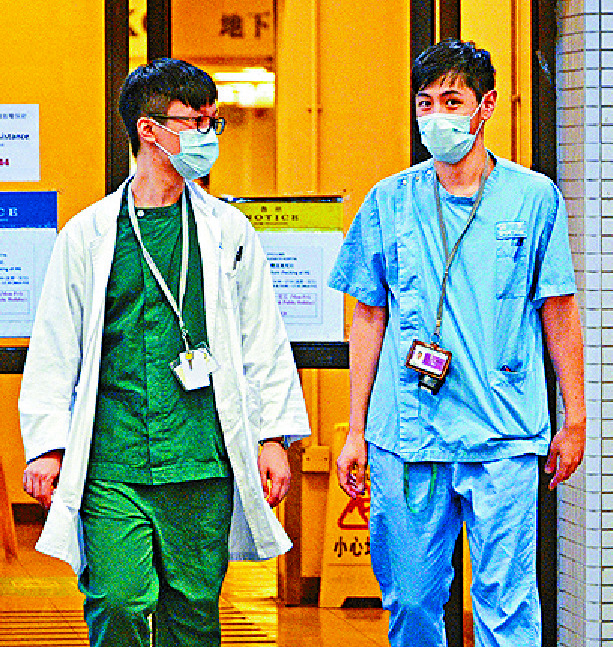
But how to make that happen?
ADVERTISEMENT
SCROLL TO CONTINUE WITH CONTENT
Although laws have been changed to make it easier for public hospitals to recruit doctors from overseas, the city cannot rely on these external reinforcements to cure the manpower shortage for good as doctors are so scarce that governments around the world are competing for them.
Hong Kong must rely on itself to resolve the shortage in the long term.
HKUST has mentioned a plan to establish a new medical school in addition to the two existing campuses at HKU and CUHK.
While HKUST should be applauded for thinking big in the first place, its efforts have advanced so much that it is reportedly collaborating with the prestigious Imperial College London with a view to opening a medical school at HKUST's campus in Clear Water Bay or at a site in Tseung Kwan O.It is unlikely a coincidence that, as HKUST seeks government support for its plan, HKU revealed a new graduate-entry program allowing graduates to apply to study medicine as a second degree for a duration of four years rather than the standard six.
HKU appears confident that the proposed expansion would allow it to increase enrolment by a third - to 400 students a year from the current 295 - which is certainly a piece of encouraging news.Perhaps CUHK has also learned from its peers, thinking big with an alternative to raise the number of doctors it can train annually to contribute more to solving the city's doctor shortage. As with HKU, this will also be a second degree.
On the surface, HKUST's plan to open a new medical school and the proposals from the other two universities to expand their existing medicine programs may appear to be competing with each other or even to be mutually exclusive which, nevertheless, should not be viewed as such.Rather, they should be mutually inclusive.
If government officials in charge of education and health policies consider them to be conflicting - thus, either this or that, but not all of them - such an attitude would fail to find an audience since the public wants to see more doctors at public hospitals.Being reasonable would result in shortened waiting times in emergency wards and outpatient clinics.
Also, doctors could spend more time on every patient rather than going through their cases hurriedly in order to see the next one waiting in the corridor.It is fine to set the terms that the universities must meet but they have to be objective.
After all, it will be in the city's overall interest to keep an open mind to all proposals as officials go through the applications. Better still, give them the green light if they are seen to be beneficial to the public on the whole.