Read More
Integration across the border took another step forward with the extension of government medical vouchers for the elderly to cover more facilities in Guangdong province.According to the government, about 540,000 Hongkongers are estimated to be living in Guangdong, including 88,000 elderly.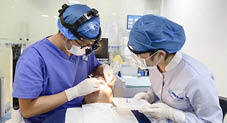
The extension to certain hospitals in Guangzhou, Nansha, Zhongshan, Dongguan and Shenzhen, as well as some dental facilities in Shenzhen, may be a small step but it is symbolic enough to emphasize an ongoing trend that is seeing an increasingly obscure border overall.
ADVERTISEMENT
SCROLL TO CONTINUE WITH CONTENT
At the moment, the only medical facility across the border that accepts the annual HK$2,000 vouchers the Hong Kong government issues to elderly residents above 65 is the University of Hong Kong-Shenzhen Hospital.
As a result of the program expansion that will come into effect in the third quarter this year, the vouchers will soon also be accepted at five other comprehensive hospitals and two facilities offering dental-care services.
The new arrangement will make it more convenient for Hong Kong retirees living in the Greater Bay Area to seek medical care locally without having to travel back to Hong Kong or the University of Hong Kong-Shenzhen Hospital in Shenzhen in order to pay with the vouchers.
That said, it is also fair for Hong Kong's dental professionals, for example, to voice concern that this will increase competition from their mainland peers.While these concerns are legitimate, competition will be unavoidable as cross-border integration is bound to press ahead.
The constitutional arrangement that the SAR practices a system different from that of the mainland does not prevent social and economic cohesion from happening. Both are merging continuously with each other socially and economically.Nonetheless, the concerns expressed by dental professionals here are unwarranted.
Even now, before the voucher scheme extension, many Hongkongers are already heading north to Shenzhen for tooth implants that cost only a fraction of the price in Hong Kong. Although there may be some concern regarding the quality of the surgery performed across the border, patients can still look to Hong Kong professionals for repairs if something does go wrong.Dental care is just one example.
As long as the cost disparity remains wide between the two sides of the border, it is only natural for demand to flow towards the side that charges consumers less.Such movement cannot be stopped until the costs of both sides become so close that consumers do not consider the distance traveled justifies the price difference.
It may be said that the vouchers will add further impetus to the trend after their use is accepted more widely.Meanwhile, it may also be expected that, as some Hongkongers head north for bargains, others - including mainlanders who can afford better quality - will continue to use professional services in the SAR knowing that quality always carries a price.
Look at some of the private hospitals here, where new buildings are being put up to increase the beds for premium customers.