Read More



Taxi e-payment ‘3pc fee’ notices spark debate on rollout day
02-04-2026 12:42 HKT
HK braces for natural gas shortage
02-04-2026 08:00 HKT
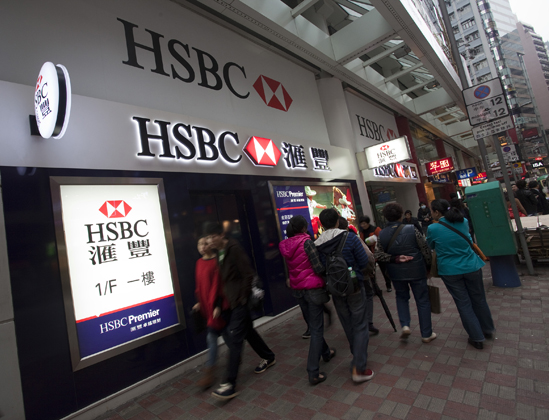
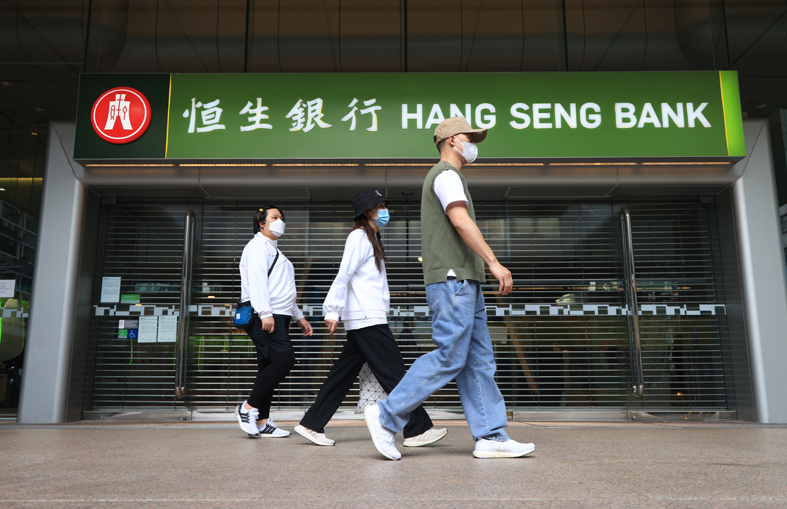
A recent Reuters report that Hong Kong's leading bank HSBC is tightening risk supervision at its local arm Hang Seng Bank is believed to have touched many a nerve in the city even though public confidence in both lending institutions remains at a high level.
That top executives at Hang Seng are reported to have been invited to attend the parent's Asia-Pacific risk management meetings is viewed by many as a precautionary measure against exposure to economic headwinds and an unfolding property sector crisis in China.
Nonetheless, it does help to reveal a common concern in the banking sector - that is, the state of the country's economy.
The public usually do not expect to hear bankers - especially those in very top positions - talk negatively about something in public as the latter are aware that their public remarks could often cause an impact on the market.
But this does not necessarily mean they do not think about it.
So when the Hong Kong Monetary Authority held the Global Financial Leaders' Investment Summit here in November, it was suggested that a number of the visiting top bankers were also in the city to carry out in-person field inspections after reading reports from their local or regional managers.
According to Reuters, exposure to the mainland property sector has pushed up Hang Seng's bad loans ratio in recent quarters.
The reported tightening of risk management at Hang Seng may be viewed as an additional safety feature aimed at preventing anything undesirable from becoming real rather than a knee-jerk reaction to a serious issue.
It may be read as an indirect confirmation of increased concern over potential exposure as China and Hong Kong are expected to continue to come under pressure economically due to both internal and external factors.
If the anticipated environment for business operation had been totally fine, would top bankers at HSBC have taken the unusual step now after having not done so in earlier years?
In this particular perspective, it would make good sense to see it as a sign that it may be necessary for the city's regulator to give closer attention to the local banking sector on the whole.
That is with the view of making sure that anything that may have the potential to evolve into a bigger issue, or even a crisis, can be spotted and mitigated at an early stage.
The city's property sector has been tepid, with falling home and commercial property prices for awhile, and the trend is expected to continue this year.
HKMA chief executive Eddie Yue Wai-man recently said the authority monitors the market and reviews its policies constantly and will make adjustments as appropriate.
Even so, it may be necessary for the authority to avoid putting undue pressure on the banks that could cause them to refrain from making decisions that are commercially sound to the banks themselves but could inconvenience their commercial clients.
In the face of exposure to increased risk, it would be best to give banks total freedom to protect themselves and the interest of depositors.