Read More
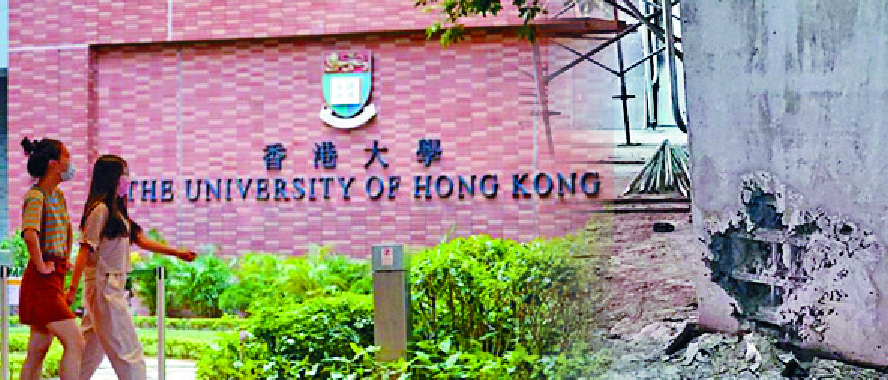
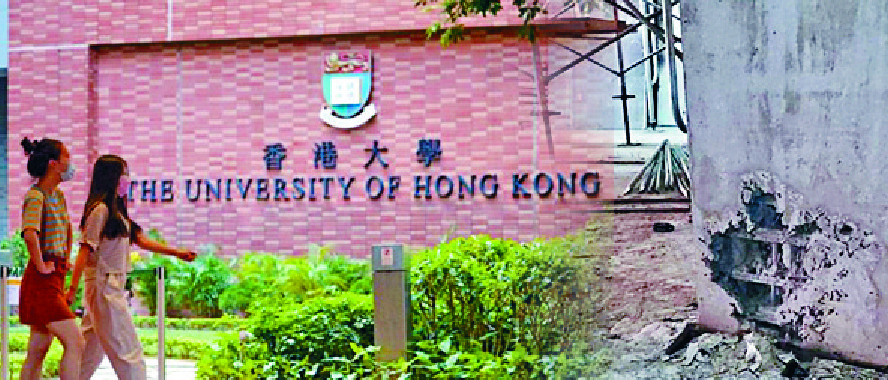
It is fortunate that probable structural defects in an ongoing University of Hong Kong redevelopment project have been discovered early so that remedies can be taken in time.
ADVERTISEMENT
SCROLL TO CONTINUE WITH CONTENT
If not due to a whistle blower exposing the matter on social media, would the fiasco have continued until a later stage?
Perhaps so because, for every project like this, there is bound to be a quality assurance scheme in place. The system should be able to pick up signs of problems sooner or later, though not necessarily at the current stage.
Perhaps credit should be given to industry critic Jason Poon Cheuk-hung. His posting of a number of photos showing shoddy building works has helped to capture urgent attention from the media and university management to the situation.
The problems are reportedly found in the university's High West Site development, of which Aggressive Construction Company is the main contractor.
The university has expressed serious concern and says it is closely monitoring the situation. As some independent engineers have suggested, in the worst case scenario the affected parts may have to be torn down and rebuilt.
Nonetheless, it would be prudent to assume the case is an isolated incident unless more information comes to light.
Although the incident is assumed to be an isolated one, it is not the only case involving substandard building works in recent years.
In 2021, a major developer had to suspend the sale program of a popular residential development atop Tai Wai MTR station after concrete of insufficient strength was found to have been used in building the wall base of two blocks of the project.
According to a company announcement at that time, these two buildings, with hundreds of units, had to be demolished and rebuilt.
Prior to that, building of the Hong Kong-Zhuhai-Macau mega bridge was also caught in a major scare involving manipulated concrete-test results.
Although investigation concluded the bridge structure was sound, it was the first major instance of concern involving concrete strength in recent memory.
The last major construction scandal involved more than 570 public housing blocks in the 1980s. In that scandal, 26 housing blocks and a school building had to be torn down due to risk of collapse.
Hong Kong has come a long way in rebuilding public confidence in the local construction industry since the 1980s scandal and property buyers are confident that their homes are built to high standards.
It may be imprudent to say the latest incidents at HKU and in Tai Wai would undermine consumer confidence in the quality of new builds. However, isolated incidents like these can erode public confidence a little each time and, before long, confidence could collapse.
After jerry-building was found in the 1980s, the Independent Commission Against Corruption was brought in to investigate the incidents.
It is vital to ensure an environment in which corrupt practices, including acts of cutting corners, cannot be allowed spread in the industry.
As Warren Buffett says, it takes 20 years to build a reputation but five minutes to ruin it.