
Read More
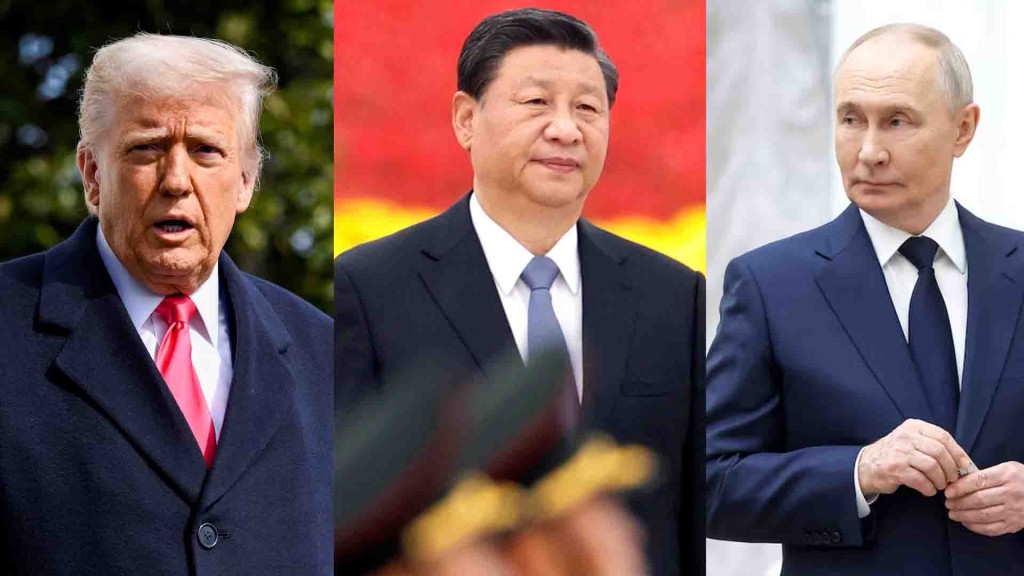
Russian President Vladimir Putin is coming to China on May 19 to 20, less than a week after US President Donald Trump’s visit, showing the accelerating eastward shift of the global balance of power.
ADVERTISEMENT
SCROLL TO CONTINUE WITH CONTENT
Compared to Trump’s precarious situation – spanning the war in Iran, the domestic inflation risk, and the upcoming mid-term elections – Putin is coming to Beijing with an even weaker hand, as his war with Ukraine is not doing any better while his war economy becomes increasingly unsustainable.
Ukraine has recently intensified its drone attack campaign deep into the Russian heartland, including the Moscow region, leading to the Kremlin significantly downsizing its May 9 Victory Day parade – no heavy military hardware was displayed for the first time in nearly 20 years amid security fears.
Despite the Iran war having pushed up global energy prices to the benefit of Russia’s oil exports, Moscow has recently slashed its 2026 GDP growth forecast from 1.3 to 0.4 percent due to internal stagnation and systemic strain from supporting the war economy.
Siberian gas pipeline
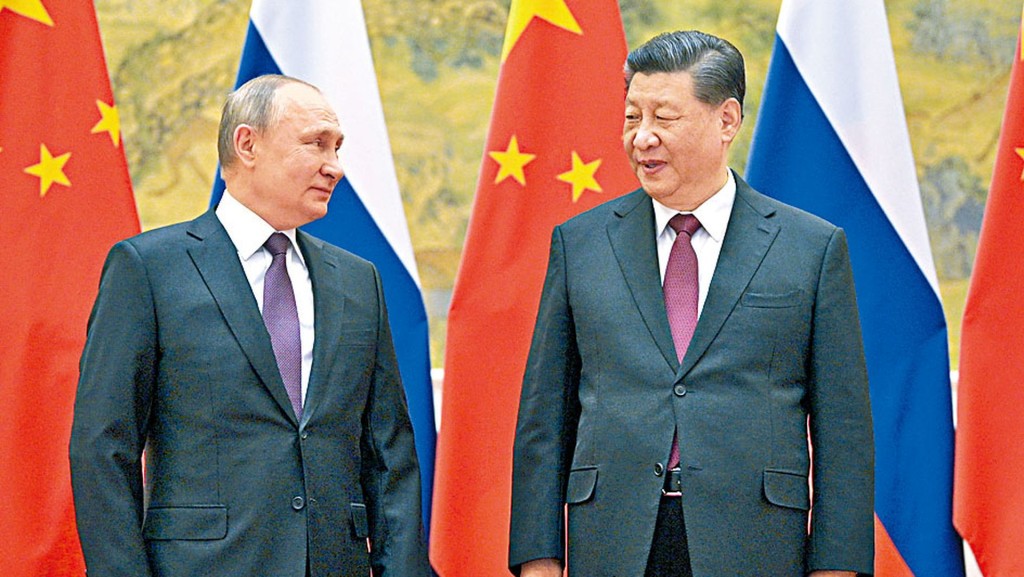
Securing an energy contract with China would top Putin’s agenda when he meets President Xi Jinping, especially regarding the long-stalled Power of Siberia 2 gas pipeline, on which the two countries reportedly have disagreements over pricing.
On the contrary, as ties with the United States have somewhat stabilized, the strategic value of this “back-to-back” relationship with the Kremlin has become less critical as before.
The two countries still have the shared vision of countering the US-led Western order, but Beijing would likely prefer a less confrontational approach after Trump’s visit.
It would give Beijing more leverage over Moscow in some key areas of interests, including building an energy land corridor that could withstand blockades on crucial sea routes such as the ongoing siege of the Strait of Hormuz.
This would require Russia’s endorsement, as such a land corridor would pass through the former Soviet republics in Central Asia – which in Moscow’s eyes still falls under its sphere of influence – at a time when trade and energy ties are growing rapidly between China and the Central Asian states.
Arctic affairs and Japan
China has also taken a great interest in the Arctic, seeing the Polar Silk Road as a highly potential alternative to the traditional higher-risk shipping route passing through the Malacca Strait, the Indian Ocean, and the Red Sea.
Under a recent India-Russia defense pact, Russia has also invited India to become a new competitor in the Arctic theater – an attempt to counter Chinese influence in its northern backyard.
A similar approach could be seen in Putin’s defense pact with Kim Jong Un in North Korea, as both leaders see each other as strategic leverage countering Beijing’s growing influence in the region.
Despite all the subtle differences, China and Russia’s strategic interests remain highly aligned, and Beijing remains Moscow’s main economic lifeline to continue fueling its war machine against Ukraine.
In return, Beijing would likely ask Moscow to strengthen its joint military deterrence against Tokyo with more drilling and patrolling, as China is facing a more challenging security environment in East Asia due to Japan’s increasingly proactive military posture under the Takaichi administration.