Read More
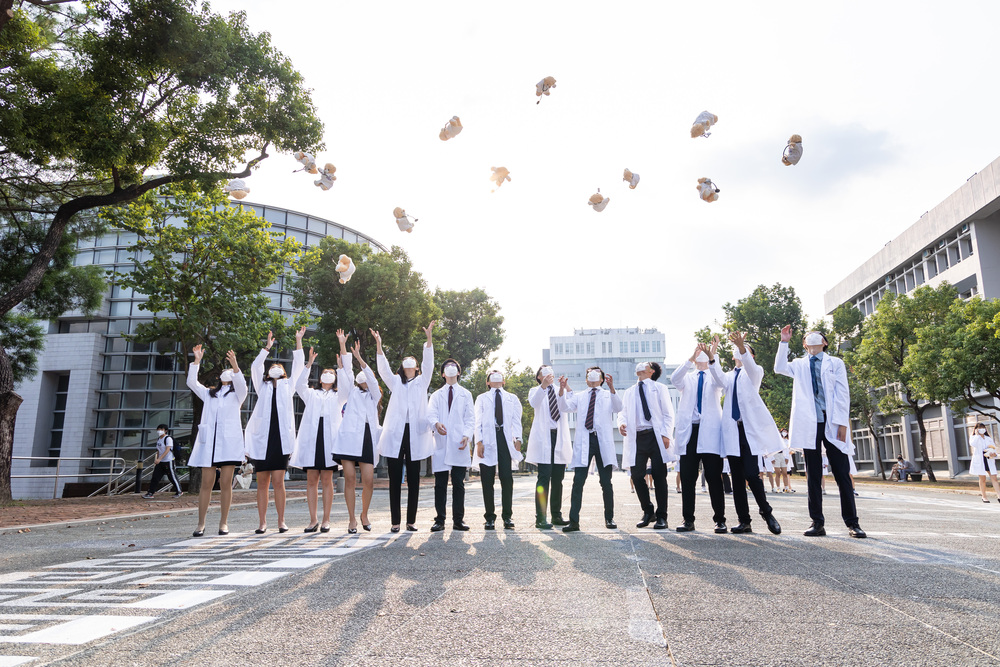
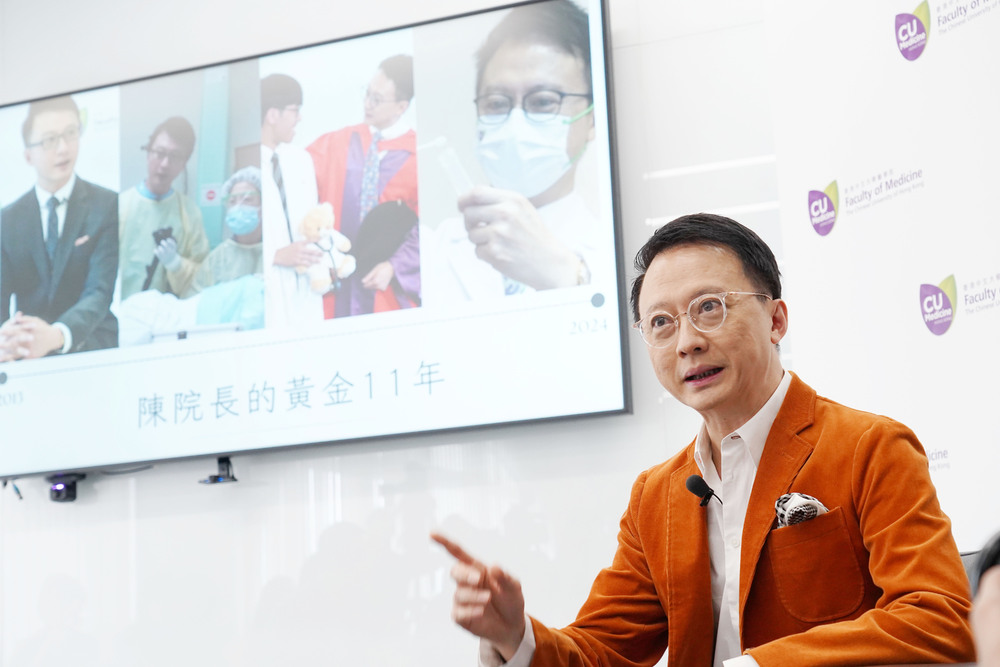
The medical innovation industry can become a pillar of Hong Kong's economy in the future, says Chinese University medical school's outgoing dean Francis Chan Ka-leung.
ADVERTISEMENT
SCROLL TO CONTINUE WITH CONTENT
Chan's 11-year term ends on January 31. He will go on an 18-month sabbatical to learn about management and continue to push the city's development in medical innovation.
He said he will remain a full-time professor at CUHK's Department of Medicine and Therapeutics but did not say whether he will take up jobs at other institutions, including the government.
Chan said he has a good relationship with government ministers. "If there is anything I can do [for them], it will be a good learning opportunity for me," he said.
Asked if he aims to become CUHK president in the future, Chan said he loves the university but the selection of president is a serious matter. There is a strict mechanism to select the president, Chan said, adding he is confident that CUHK can find a suitable person to lead the university through challenges.
Chan said resigned CUHK president Rocky Tuan Sung-chi is "a friend and a mentor" to him and used to help the medical school by allocating more resources.
"In the 2018-19 academic year, the medical school over-enrolled more than 30 students and I couldn't ask the students to leave I had to seek help from president Tuan, who made an immediate decision to allocate more resources to the medical school as he said the quality of CUHK education cannot be lowered due to limited resources," Chan said.
"With the resources, we were able to include these students and introduce more medical education facilities in the following years, so I'm grateful to president Tuan."
Chan hopes CUHK can receive 400 medical students per year - currently the number is 295 - to help solve the shortage of doctors in Hong Kong and the university has been prepared with sufficient resources for the increase in the number of students.
Chan believes the personnel change at the university is only a short-term issue, after Tuan resigned following the sacking of his right-hand man Eric Ng Shu-pui, saying every institution has personnel changes.
He added: "That's why I like to study Chinese history, as it made me realize that the constant replacement of dynasties will not stop us from developing."
Chan hopes to devote himself to the development of the medical innovation industry in the future, building Hong Kong as a medical innovation center with new technologies and artificial intelligence.
The city should establish a large medical database to attract international pharmaceutical companies to develop new drugs, he said, adding high-quality medical innovation can become a major contributor to the economy.
Chan agrees with government plans to increase charges at public hospital emergency rooms, saying it can reduce the waiting time for patients with urgent needs.
"Some secondary school students would visit the emergency room at 6am before going to school to treat their pimples, which is an abuse of emergency medical resources," he said.
But Chan said authorities should consider carefully before introducing a varying charge at emergency rooms depending on patients' severity.
"Medics' judgment on patients' severity is very subjective. Even a senior medical worker could make mistakes, which will lead to arguments," he said.
Associate dean Philip Chiu Wai-yan will become dean of the medical school from next month.
Chan said he has known Chiu for decades and has worked well with him, adding he feels relieved after learning he will succeed him.
"If I had to pass my duties to someone I don't know or trust, I wouldn't be able to sleep as the university is like my home," he said.
wallis.wang@singtaonewscorp.com
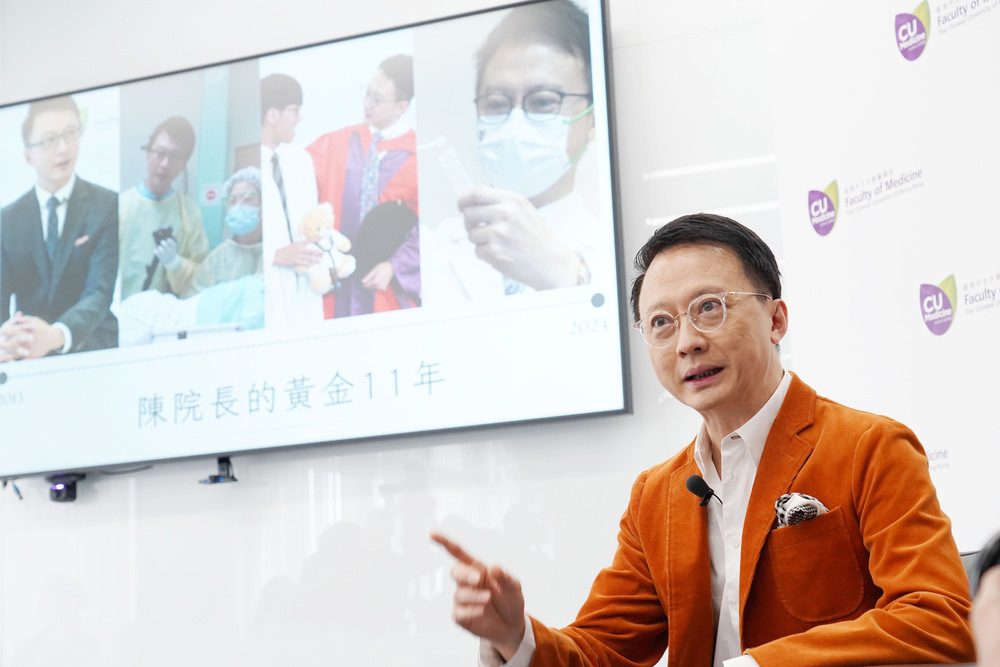
Francis Chan hopes CUHK can accept more students. SING TAO