Read More


Night Recap - April 3, 2026
48 mins ago


Taxi e-payment ‘3pc fee’ notices spark debate on rollout day
02-04-2026 12:42 HKT
Property developers will meet to discuss a plan to provide public housing in Kai Tak, where a show flat was unveiled yesterday.
The scheme involves building "light public housing" - modular designs where units are shaped elsewhere then assembled on site - that is considerably quicker to provide than conventional homes.
Half of the light public housing developments being envisaged would be located in urban areas in Ngau Tau Kok, Kai Tak and Chai Wan, with Secretary for Housing Winnie Ho Wing-yin saying yesterday they would be "lifeboats" for families presently living in dire conditions in subdivided flats.
This comes after the chairman of the Real Estate Developers Association of Hong Kong, Stewart Leung Chi-kin, said on Friday that the development in Kai Tak went against the original plan.
That includes rezoning three commercial sites for residential development last year and building public housing in an area that was to provide upper- and middle-priced residences.
Leung said the changes may trigger opposition from developers, so the association will hold a meeting this week to garner opinions from the sector.
It is understood that a site on Olympic Avenue, originally planned for commercial use, is being eyed to provide several thousand light public housing units close to Airside.
That was meant to be a shopping and office landmark development in Kai Tak. It is also only a 10-minute walk to Kai Tak MTR station.
Leung also said he is unsure about the Planning Department's thinking about the effect a lack of supporting facilities such as hotels and commercial buildings in the area would have on Kai Tak's role as Hong Kong's second business district.
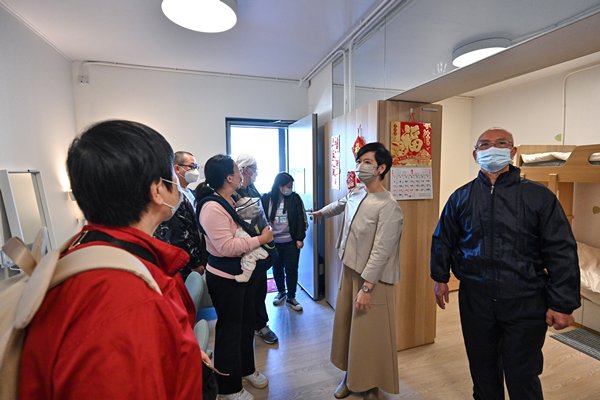
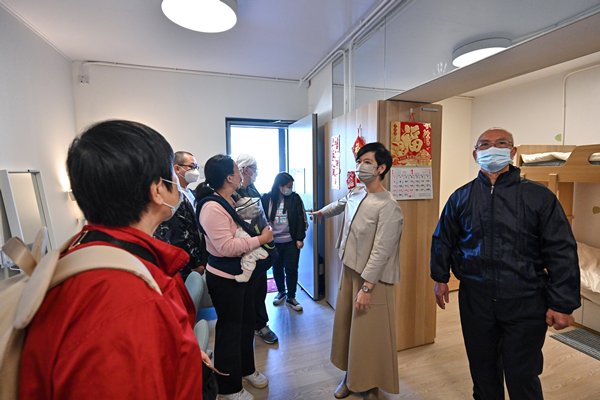
Administration officials yesterday also uploaded a video of Ho visiting a show home of light public housing with a group of tenants of subdivided flats.
That showed a 330-square-foot light public housing flat for a household of four or five members, which features a simpler design than a regular public housing unit.
Ho said the rent would be about HK$2,650 a month.
Sources also said the total project cost for light public housing, previously estimated at HK$26.8 billion, will be reduced by about HK$1 billion.
On that, Ho said the modular integrated methods being used to build the flats would mean a time saving of one to two years for construction.
She also argued that light public housing would provide an "imperative lifeboat" for those with urgent housing needs, especially the more than 100,000 families living in subdivided units.
Anthony Chiu Kwok-wai, executive director of the Federation of Public Housing Estates, noted that the housing locations are close to MTR stations or bus stops.
While Chiu said he believed light public housing in the New Territories would attract people now in subdivided units he suggested that authorities consider whether the LPH units could be reassembled in other locations or applied in other public housing projects on the grounds of the system being more cost effective.
Sze Lai-shan, deputy director of the Society of Community Organization, said it would be good for half of light public housing to be located in urban areas as grassroots people are generally concerned about transport facilities and school transfers for their children.
But she added that authorities should also provide extra support for light public housing in the New Territories as potential residents would take transportation expenses into account.
That would enhance the attraction of LPH units if rents were also lower than in urban areas.