The covid-19 pandemic forced the sector to adopt e-learning on pretty much an everyday basis, making hybrid learning models that integrate both online and face-to-face instruction the future of education.
With this in mind, Wall Street English and Zoom have partnered up to offer a more convenient and diverse approach to English language teaching and learning.
For David Kedwards, executive chairman at Wall Street English, "we've been using online learning for a long time prior to working with Zoom, but we were finding limitations with the previous solutions that we were using. And I'd put those into sort of two broad buckets.
"First one is bandwidth, the connections you can make. If your bandwidth is limited, you're going to be reaching fewer people. And then the second bucket that I would draw attention to is functionality."
A lack of functionality is what many students, particularly those from underprivileged backgrounds, have experienced, with e-learning bringing a decline in the quality of their learning experience due to a feeling of detachment and inauthenticity.
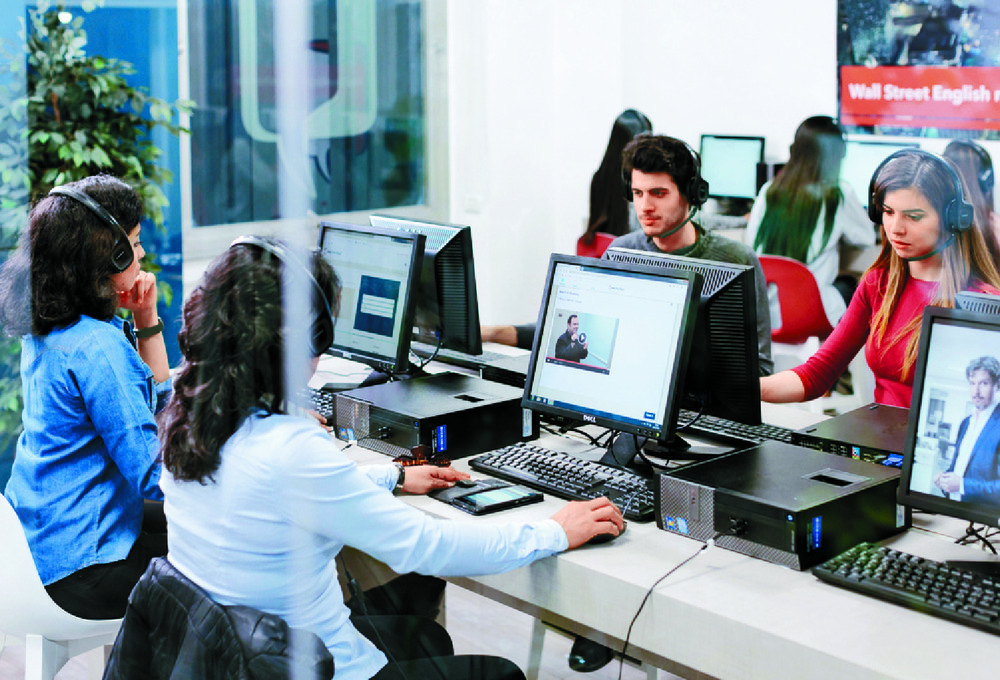
As an English language training provider of 50 years, Wall Street English faced similar problems during the pandemic. However, with Zoom's video SDK, students will be able to enjoy a better-quality digital classroom experience "with high-performing, scalable video and audio," Kedwards said.
"We were able to bring a lot more functionality into what was actually happening within a digital classroom. And we are also able to reach more students.
"What we've been doing is not just building a platform, but consistently augmenting and growing the platform to make it very easy and frictionless for teachers and students to connect and collaborate anywhere."
Ricky Kapur, head of Asia Pacific at Zoom, said: "Our video SDK allows high quality at very, very low bandwidth in remote areas to bring the same immersive experience to students, whether they are in Hong Kong or beyond, whether in a metropolitan city or in a rural area."
Kedwards said: "A small thing that I'd point out is the ability to have breakout rooms so you can have a classroom with a larger group.
"But then the teacher might want to take out of that main class one or two of the students to do something specific. So you can have a breakout digital classroom teacher who will deal with those guys, and then ultimately can come back into the main classroom.
"There are two things that we are bringing to the table. One is we're constantly improving the functionality. We're adding things to our platform that can be used by students and teachers for a richer experience like polls and quizzes, and functions for feedback.
"We're using AI technology for automation of translation and transcription. So the entire course lecture can be automatically transcribed and used by the students later.
"We're improving more and more on the recording capabilities so that a student can record a lecture and then later go back and go and review the lecture. Except for breakout rooms, we're adding whiteboard capability so that people can draw and make notes while they are in class," he explained.
Such a classroom would certainly be beneficial for Asian students.
"The one thing that we did see historically in Asia was the desire for face-to-face teaching with the foreign teacher," said Kedwards. "Now with the introduction of Zoom, we've been able to reduce some of that resistance. We're getting the experience, very, very close to as it would be in a real-life situation.
"Wall Street is about providing choice. If you really want your face-to-face class, you can have it by all means. But we want to offer people the choice, a hybrid solution, and we're finding more and more people now are choosing the hybrid solution."
Kapur said: "Rich, immersive learning experiences in an accessible way, in any part of the world. That is our philosophy."
roxanne.li@singtaonewscorp.com