In a world racing to embrace artificial intelligence, a homegrown Hong Kong organisation is making the case for a different kind of AI – one powered by imagination, empathy, and creativity.
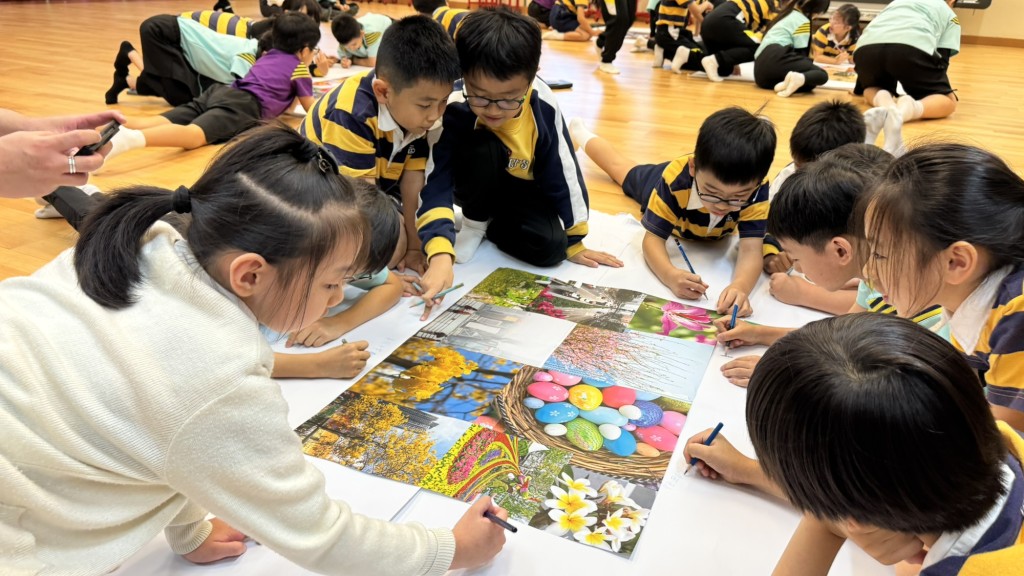
In a primary school classroom in Hong Kong, a pair of dancers stands before a group of wide-eyed students. The lesson of the day is science – specifically, which materials are transparent, semi-transparent, or opaque. But there is no textbook in sight. Instead, the children are copying each other's movements, mirroring the precise curl of a finger, the tilt of a head.
Then a piece of black cloth is placed between two students. Everyone assumed it would block everything. It doesn't. Through the movement exercise, the children discover they can still trace the shadow of a silhouette behind the fabric. Black cloth, it turns out, is not opaque at all – it is semi-transparent. The exam paper will have to be rewritten.
This is what happens when artists walk into Hong Kong classrooms – not to teach children how to paint or pirouette, but to fundamentally change how they think and learn. It is also a small but vivid window into a much larger conversation about the kind of intelligence that will matter most in the decades ahead.
Creativity as the engine
That conversation sits at the heart of the Knowledge Exchange 2026 – Artistic Intelligence: Shaping Human Achievement, a major annual initiative of AFTEC Jockey Club Creative Futures Project run by AFTEC, a homegrown Hong Kong arts education organisation.
Funded by the Hong Kong Jockey Club Charities Trust, the Project pairs practising artists with primary school teachers to co-design lessons across the curriculum – from science to ethics to language – using creativity as the engine of learning. The approach is built on what the Project calls the 5Cs: Creativity, Critical thinking, Communication, Collaboration, and Contribution.
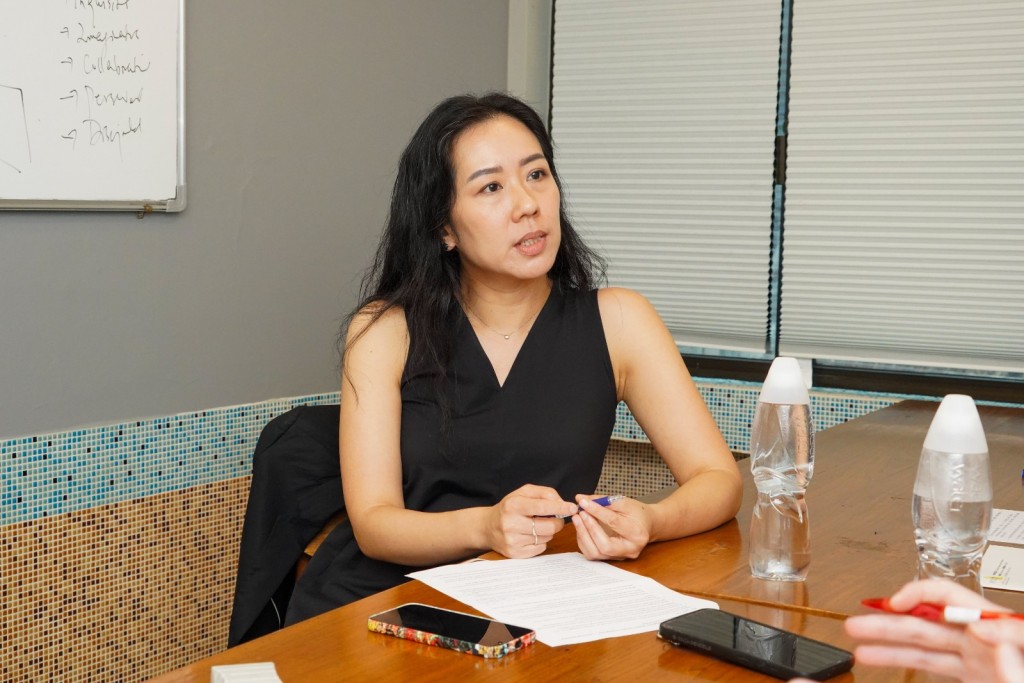
Lynn Yau, Chief Executive Officer of AFTEC and Project Director of the AFTEC Jockey Club Creative Futures Project, is emphatic about why this matters. “Behind AI, who is behind AI?” she asks. “Does AI create itself? Hopefully never. Only when we have creative mindsets can AI be created. It's all created by human beings.”
It is a rallying cry wrapped in common sense. At a time when the world is consumed by artificial intelligence – its dazzling efficiency, its promise and its peril – Yau argues that we have lost sight of something more fundamental. She calls it “Artistic Intelligence”: the uniquely human capacities of empathy, imagination, and meaning-making that no algorithm can replicate and without which no algorithm would exist.
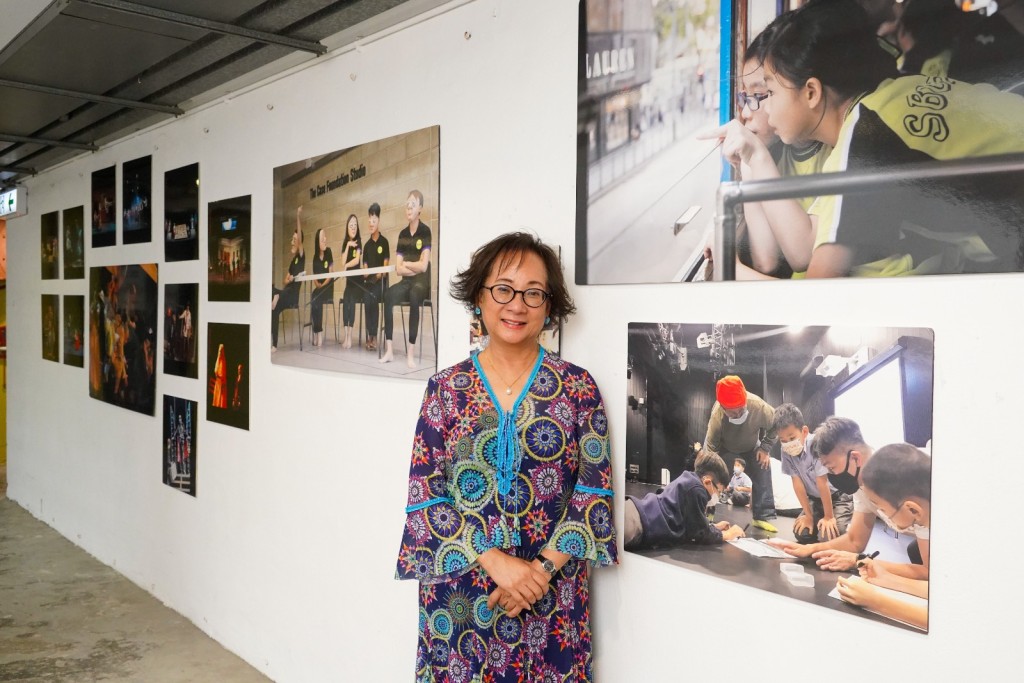
Lynn Yau is championing “Artistic Intelligence” as the foundation for Hong Kong's future.
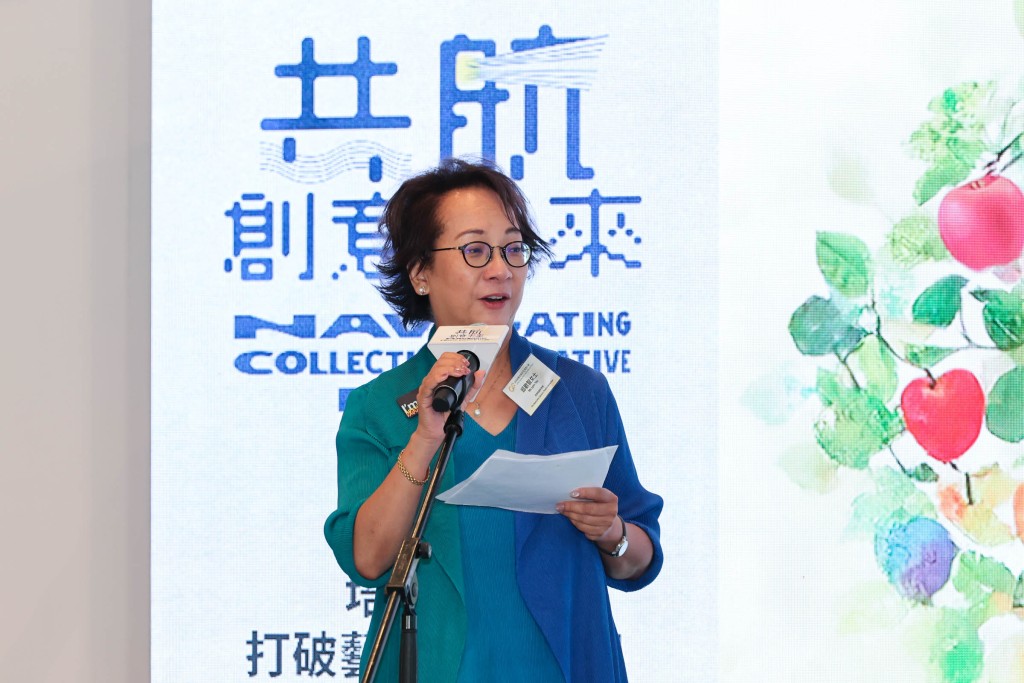
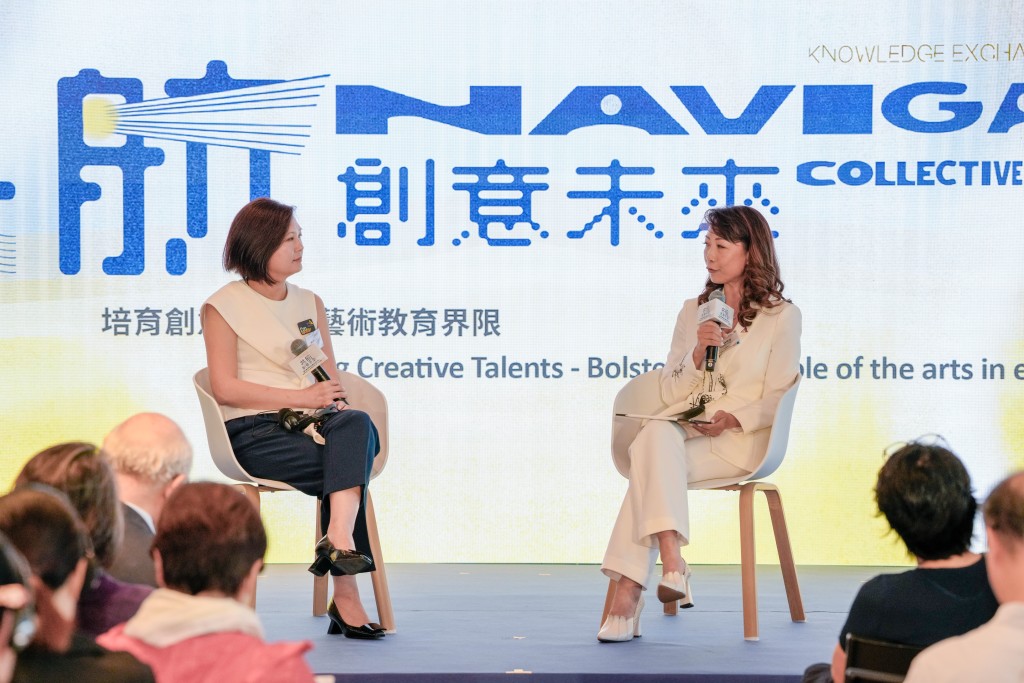
Lynn Yau emphasised the importance of collaborative efforts in nurturing future talent at last year’s 'Knowledge Exchange'.
“It is not a zero-sum game,” Yau says. “There is always a misbelief – maybe it's a Hong Kong thing – that we should have AI and we shouldn't have artistic intelligence. What are the arts about? Performances? Exhibitions? Great. I love both those things. But the arts are much, much more than that. It's about firing the imagination, interaction, communication, different ways of seeing and understanding.”
She points to hard data to back up the claim: creative thinking ranked fourth among the top global skills employers sought in 2025, according to the World Economic Forum. The UNESCO Framework for Culture and Arts Education, released in 2025, also underscores the urgency of embedding creativity into schooling. “There is very substantial evidence that this is what the rest of the world is going towards,” Yau says.
When artists walk in
But evidence alone does not change a classroom. That is where the artists come in – and where the work gets both difficult and beautiful.
Dr Priscila Chu, a composer by training and Head of Creative Practice (Performing Arts) on the AFTEC Jockey Club Creative Futures Project, describes teaching a class of Primary 3 students about honesty. She asked them to make up a three-line story about themselves and deliver it convincingly. The class would then vote on whether they believed the storyteller.
Teachers were initially alarmed – was she teaching children to lie? But the exercise cracked open a conversation no one had thought to have. “The teachers worry that when students write stories, they don't have imagination, but they also blame them if they are making-up stories?” Chu says. “Never has anybody discussed with the kids: when is it a good time to think outside the box, and when is it not okay?”
There was no neat answer at the end of the lesson. That was precisely the point. “I, as an artist, am not going there to tell them what is right,” Chu says. “But I want this discussion, I want the teachers to hear what the students are actually thinking and to help facilitate the students in expressing their thoughts.”
Dr Priscila Chu, Head of Creative Practice (Performing Arts) of the 'AFTEC Jockey Club Creative Futures Project', along with other creative practitioners, will share their insights and experience at 'Knowledge Exchange 2026'.
Dr Priscila Chu leads the creative work inside Hong Kong classrooms.
This kind of teaching demands a different kind of trust – between artists and teachers, teachers and students, school and parents. Yau describes it as building an ecosystem: the physical environment, the mental environment, and the emotional environment. When fear is lowered – the fear of getting the wrong answer, of being laughed at – children begin to play, and when they play, they learn.
“Every parent wants his or her child to be happy, to be well, and to learn,” Yau says. “The proof is in the evidence. It's not something that can be done immediately. Unlike AI, you can't get results right away. Sometimes I think our world is going far too fast.” Chu puts it even more simply: “The arts are not a luxury. It is necessary. If we do not have that, then we will be conquered by AI itself.”
A global creative conversation
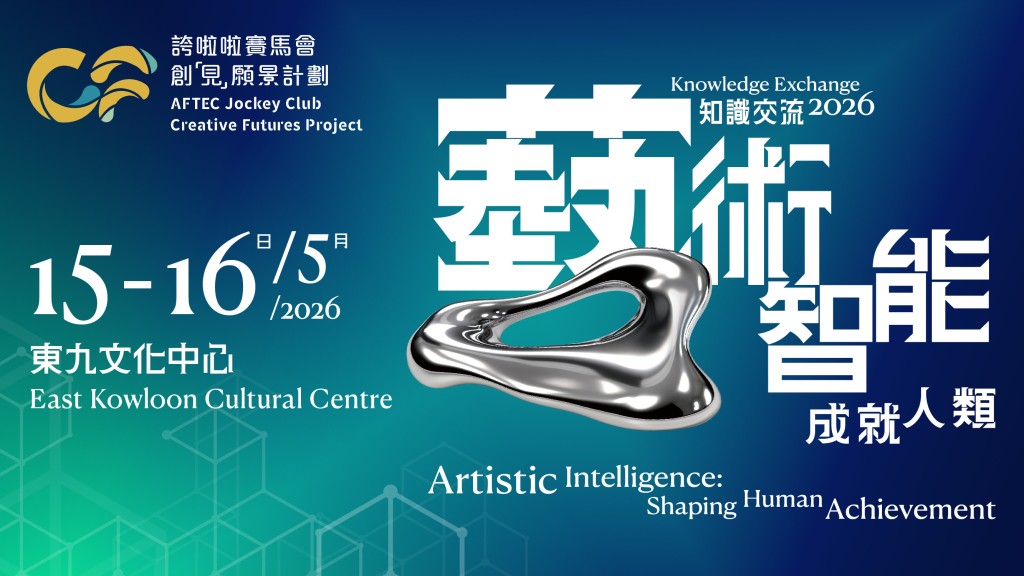
The conversation is set to expand considerably next month, when AFTEC hosts Knowledge Exchange 2026 – Artistic Intelligence: Shaping Human Achievement at the East Kowloon Cultural Centre on May 15 and 16.
The two-day forum will bring together leading voices from Hong Kong and abroad, including Professor Anne Bamford OBE, FCGI, the internationlly renowned arts educator and researcher, known for championing creative learning; Kate Cross MBE, Director of The Egg at Theatre Royal Bath, who has spent years reimagining what schools can look like by taking children out of classrooms and into theatres, graveyards, and across an entire city; and Jigyasa Labroo, founder of New Delhi-based Slam Out Loud, who uses poetry, storytelling, and theatre to reach tens of thousands of underserved children across India.
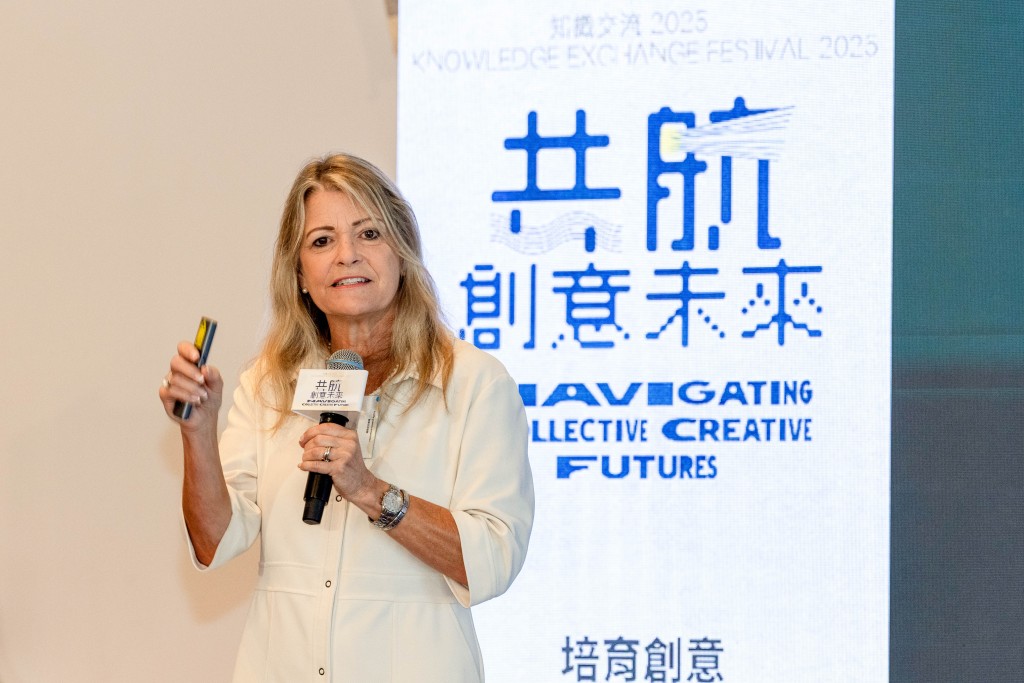
Last year’s 'Knowledge Exchange' guest of honour, Professor Anne Bamford OBE, FCGI, will deliver a keynote on the real AI—Artistic Intelligence—at the upcoming 'Knowledge Exchange'.
Through keynotes, panels, and hands-on workshops, the event will explore how different cities are nurturing creativity in vastly different contexts – and what Hong Kong can learn from them. “Nurturing creative mindsets is not just about the arts,” Yau reflects. “It's about the whole society. The top talent programme brings great minds in from overseas. Excellent. But what about the continuous nurturing of our own minds, from primary schools all the way up?”
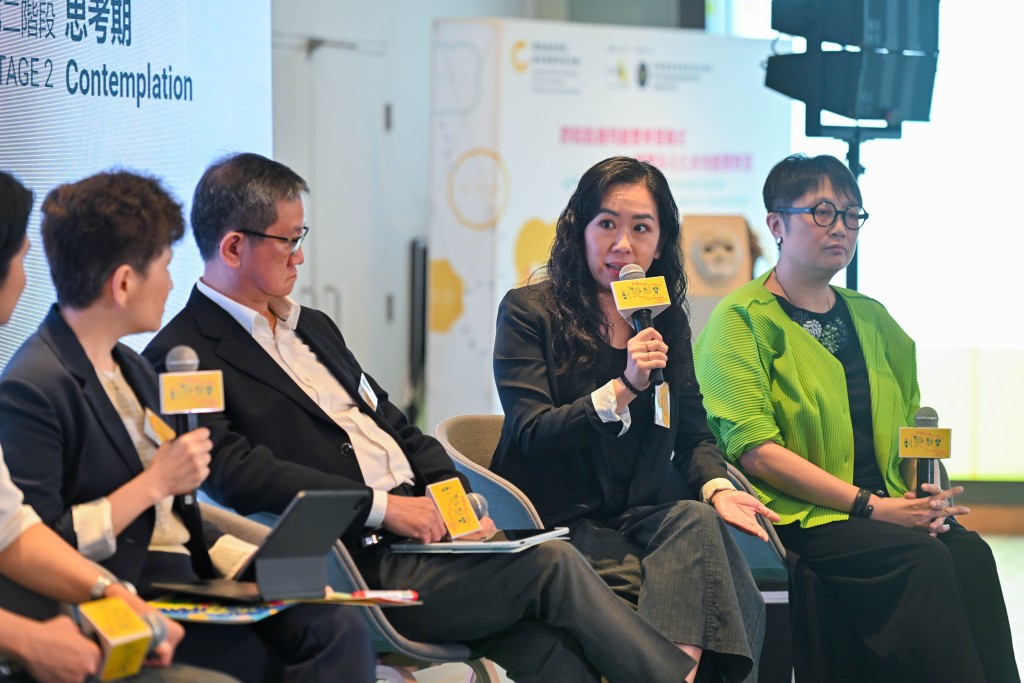
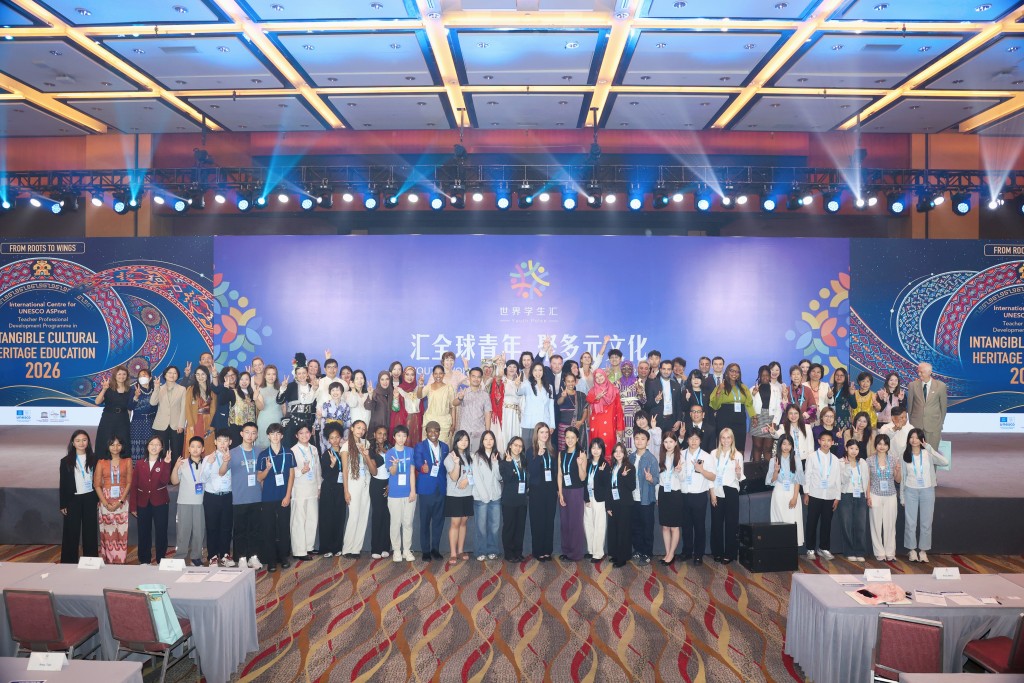
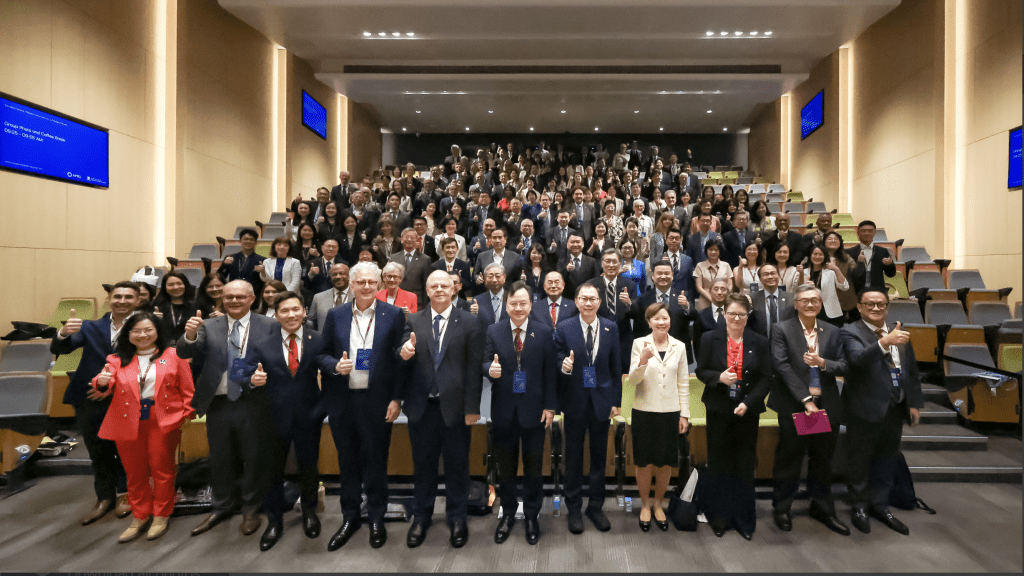
'Knowledge Exchange' gathers arts education experts around the globe every year.
It is a question, ultimately, not just for educators or artists, but for every parent, employer, and policymaker in a city racing towards the future. The real AI, it turns out, may have been here all along.
Knowledge Exchange 2026 – Artistic Intelligence: Shaping Human Achievement takes place on May 15–16 at the East Kowloon Cultural Centre. Admission is free. Learn more at creativefutures.aftec.hk and register at ticketflap.com.