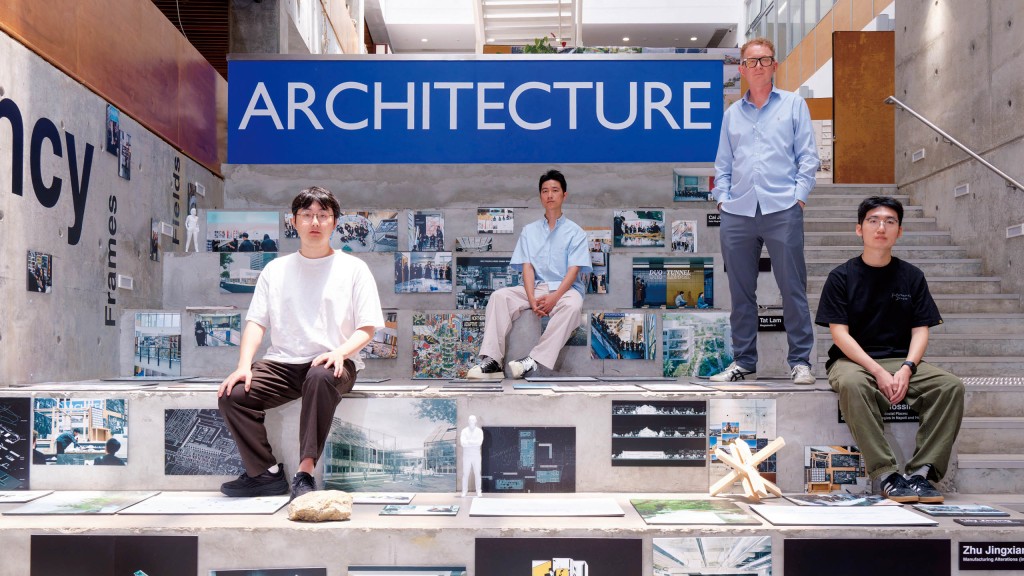
When architecture students typically wait until their 30s to build their first real project, Associate Professor Peter Winston Ferretto, Director of the School of Architecture at The Chinese University of Hong Kong (CUHK), decided to change the rules. In 2018, he co-founded Condition_Lab with Milly Lam and Paula Liu. Supported by CUHK Sustainable Knowledge Transfer Project Fund (S-KPF) in 2021, a strategic initiative empowering academics to bridge the gap between rigorous research and real-world application by transforming research outcomes into sustainable social ventures, the lab has since created a series of impactful Book House projects in rural villages in Mainland China and the informal settlement of Kibera in Nairobi, Africa.
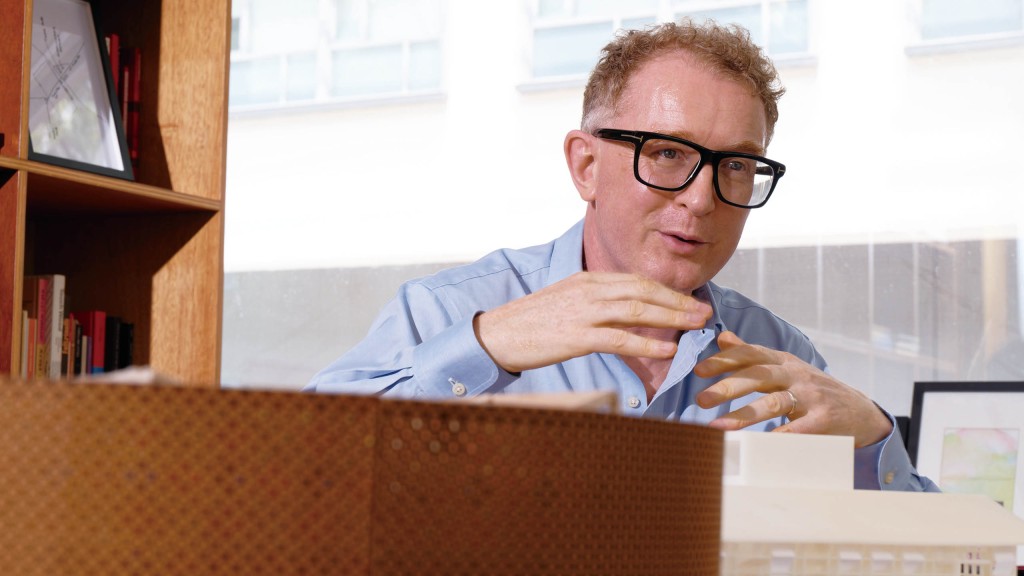
“We want to make architecture more down to earth,” says Professor Peter Winston Ferretto. “It should be practical, accessible, and truly serve the needs of ordinary communities.”
As the three directors of the lab, Ferretto, Lam and Liu operate in a horizontal, non-hierarchical structure that blurs the traditional line between professor and student. The lab uniquely integrates social enterprise, research, and design practice into one entity. Its mission is to use architecture as a tool to create meaningful social impact and drive positive change in communities.
“Architecture has become very exclusive,” Ferretto explained. “We wanted to create high-quality buildings that ordinary people and communities can actually access. Our goal is to make architecture more down to earth — more grounded, practical and truly relevant to people’s everyday lives, rather than serving only big companies or institutions.”
The journey began in Hong Kong with the Mei Foo Book Tree, a temporary installation under a flyover for free book donations that quickly became a source of community pride. The team then expanded to rural Hunan province in China, where they worked to preserve disappearing Dong ethnic timber architecture traditions.
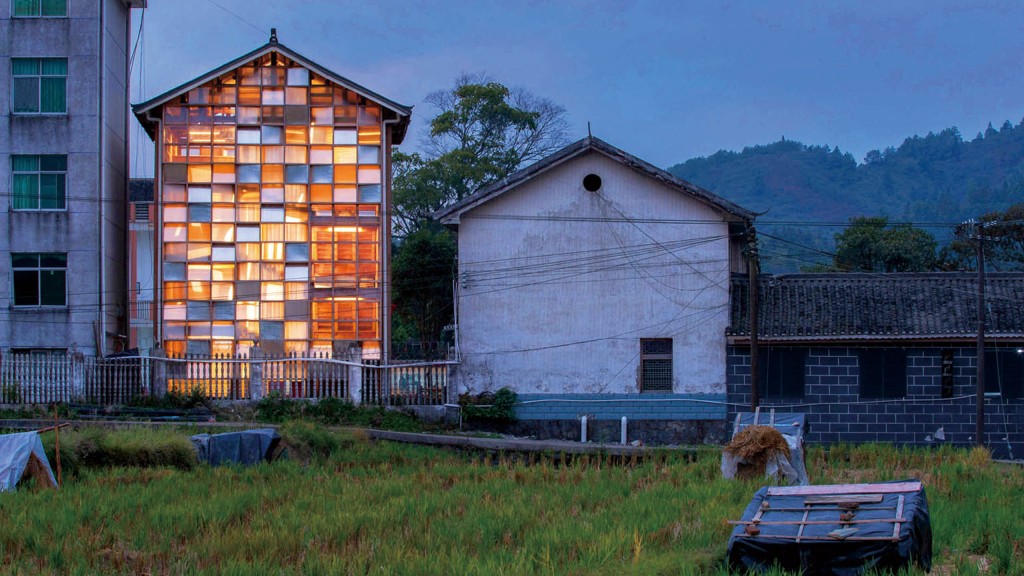
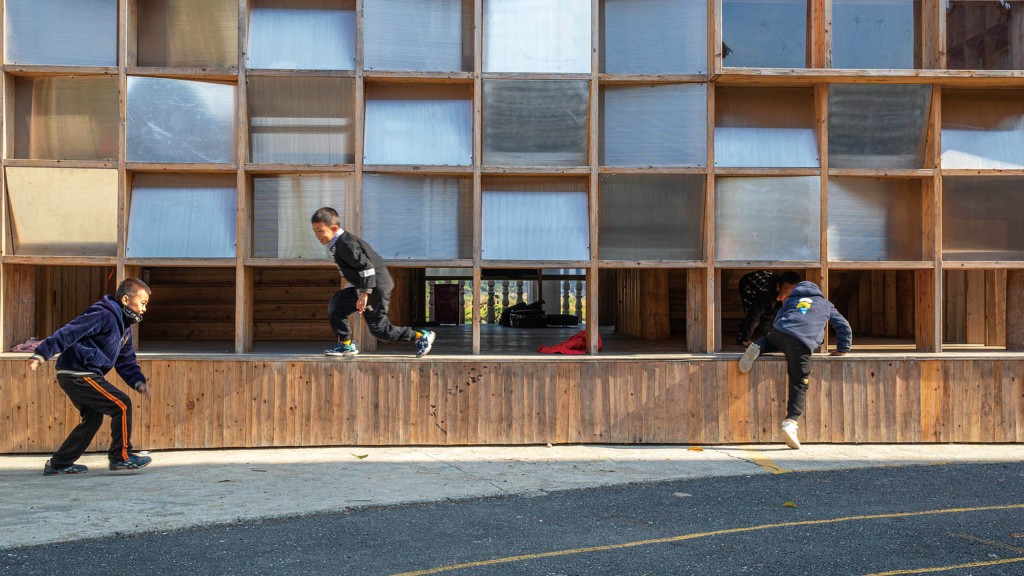
The Pingtan Book House cleverly blends contemporary needs with local culture using traditional architectural elements in a contemporary way. Simple elements such as a staircase are given new life through innovative design themes in a double helix creating a place where children can learn by playing.
The Pingtan Book House in Hunan cleverly blends contemporary needs with local Dong culture, using a hybrid construction method of concrete structure and traditional timber.
This community-oriented design did not emerge overnight. Community trust was not easily won. “At first, villagers were sceptical, thinking we were there for our own benefit,” Ferretto recalled. The team made repeated visits with CUHK students over several summers, gradually building relationships. Only after gaining genuine trust did they ask the villagers what they needed most. The answer was unanimous: support for the children.
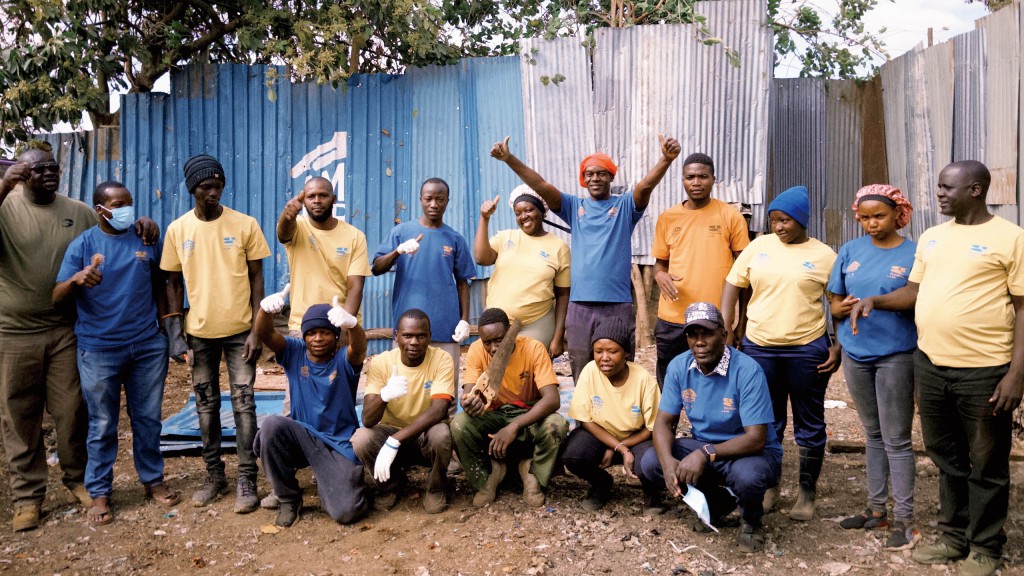
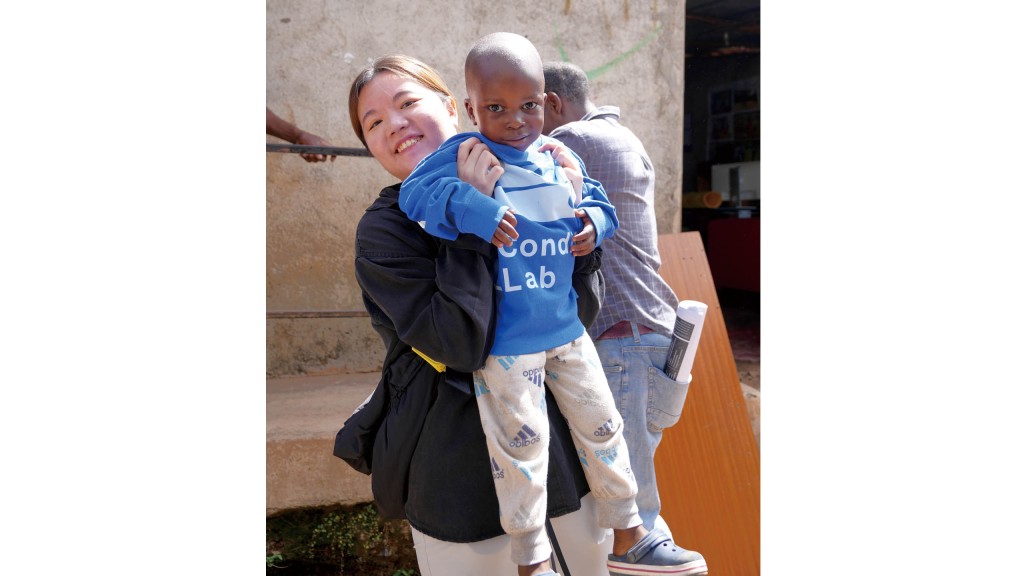
Last year, the project made a significant leap to Africa. After winning an international award and presenting at UN-Habitat in Nairobi, Condition_Lab began work in Kibera, one of Africa’s largest informal settlements. The Amani Kibera Book House in Lindi Village integrates Nubian cultural elements and will function as a children’s library, public gathering space, cultural showcase and sewing workshop for local women. Construction started in September 2025 with local builders, and three PhD students have been based in Nairobi to oversee the work. The building is expected to open in June 2026.
PhD students have been based in Nairobi to closely supervise the construction of the Amani Kibera Book House.
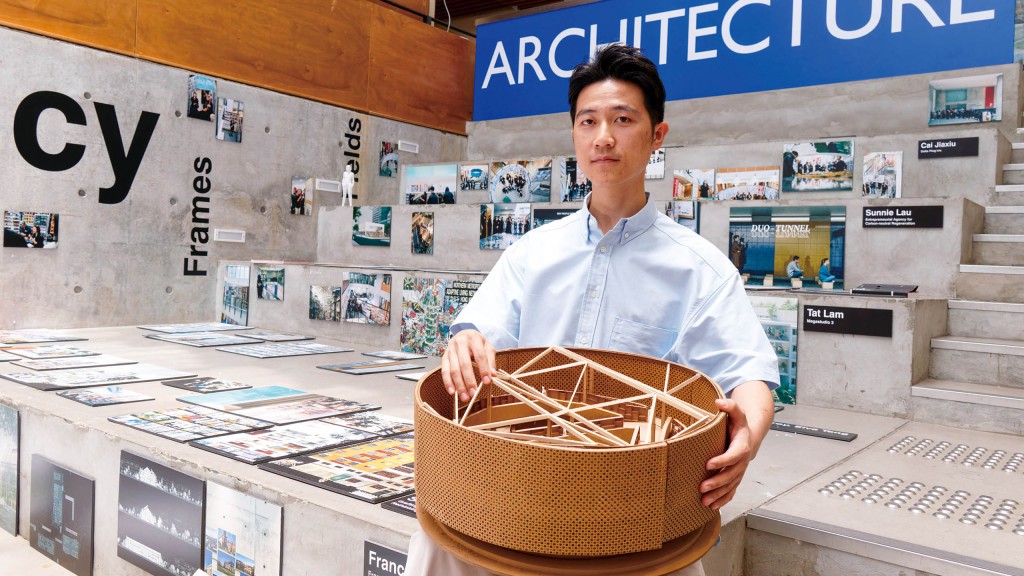
Oliver Lin, a first-year PhD student at CUHK’s School of Architecture and a member of Condition_Lab, is currently responsible for a new project in Kenya. He shared his insights: “This project follows the same principles as our previous work — deep community engagement and designing for long-term ownership. The most interesting part is creating a space where children can play and learn freely. However, funding is always a big challenge. We have to raise money while ensuring the design uses cheap, locally available materials.”
Oliver Lin, a first-year PhD student at CUHK’s School of Architecture, is currently working on Condition_Lab’s new Book House project in Kenya.
Lin emphasised the importance of sustainability after the team leaves. “We don’t want to just hand over a building and disappear. We work with local NGOs and the community so they can maintain and even adapt the structure themselves using affordable local materials. The goal is to bring real change that allows them to continue developing the space independently.”
Condition_Lab is redefining architecture as a social practice. As Ferretto concluded, the future lies in “architecture with people” — shifting from top-down designs to collaborative, community-focused solutions that deliver lasting social impact.