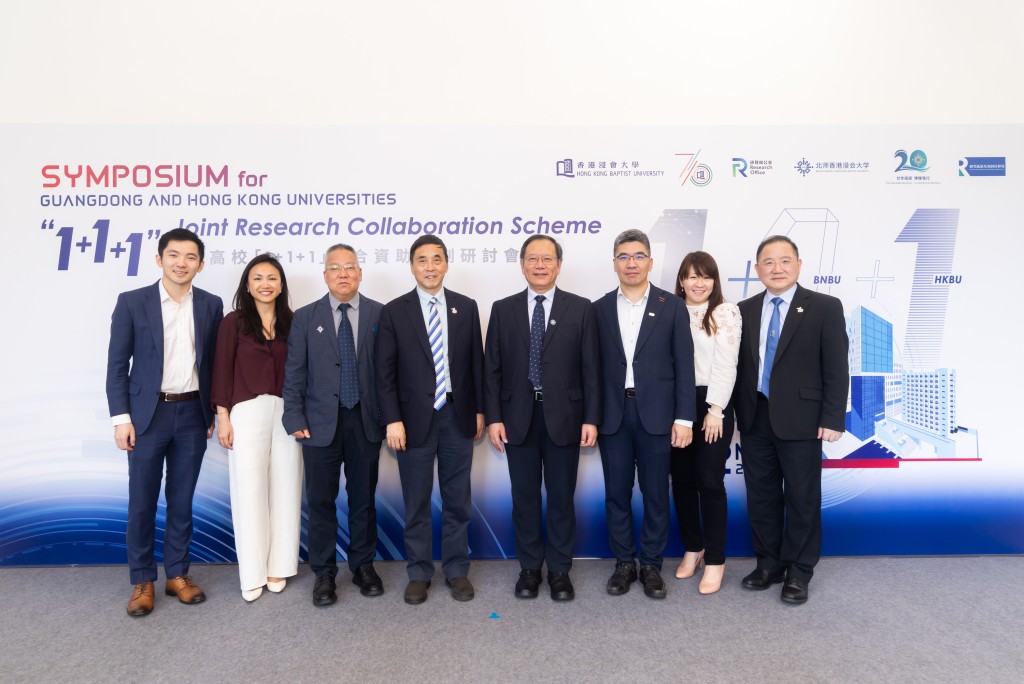
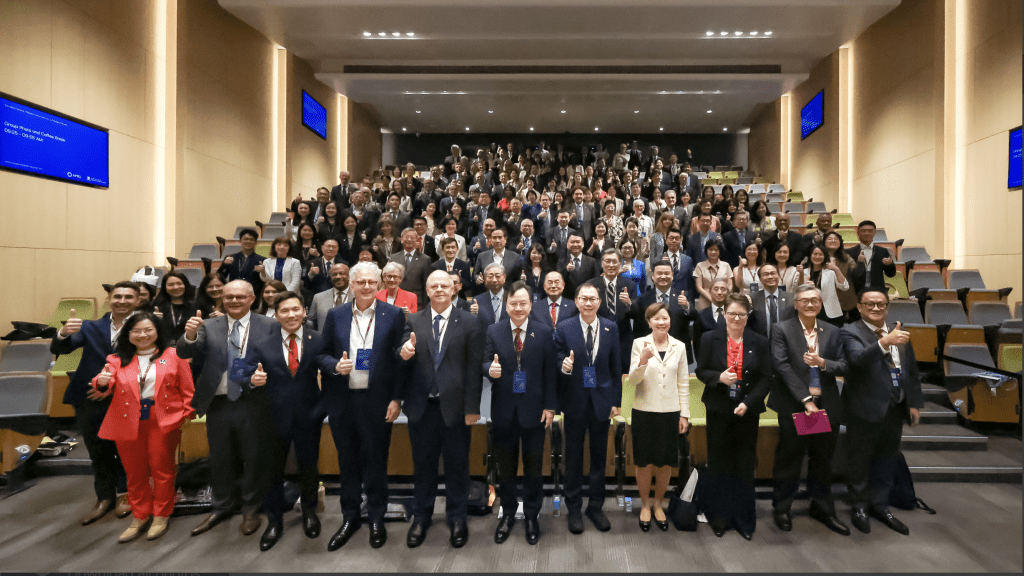
Hong Kong Baptist University (HKBU) held a major symposium on Tuesday to showcase the Guangdong and Hong Kong Universities '1+1+1' Joint Research Collaboration Scheme, drawing attention to cutting-edge developments in data science and artificial intelligence.
The '1+1+1' scheme, launched in 2024 with the backing of the Department of Science and Technology of Guangdong Province, HKBU, and Beijing Normal-Hong Kong Baptist University (BNBU), has secured approximately RMB 90 million in funding to drive technological innovation in the Greater Bay Area.
The event welcomed 180 researchers from HKBU and BNBU, underscoring HKBU’s “One University, Two Campuses” model as a catalyst for research, talent cultivation, and cross-border collaboration—all in line with China’s 15th Five-Year Plan.
During the symposium, Vivian Yam Wing-Wah, a member of the 14th National Committee of the Chinese People’s Political Consultative Conference (CPPCC), stressed the significance of nurturing local talent. "Attracting talent is like arranging flowers, but growing our own is like planting them. Nurturing and retaining our own people is even more important."
The symposium featured presentations and poster sessions by the initial cohort of researchers funded through the scheme.
One highlight was a project led by Tam Ka-Chai, Associate Professor in the Department of History at HKBU, examining the historical development of southern Chinese ports with a focus on Hong Kong and Guangzhou.
By employing spatiotemporal analysis and data science, the study integrates historical and modern port data to uncover factors driving port competition and cooperation, as well as the lasting impact of institutional and infrastructural changes.
"Our research aims to learn from history to guide the future development of ports in the Greater Bay Area, making the most of each region’s strengths through cooperation," Tam said.