Read More
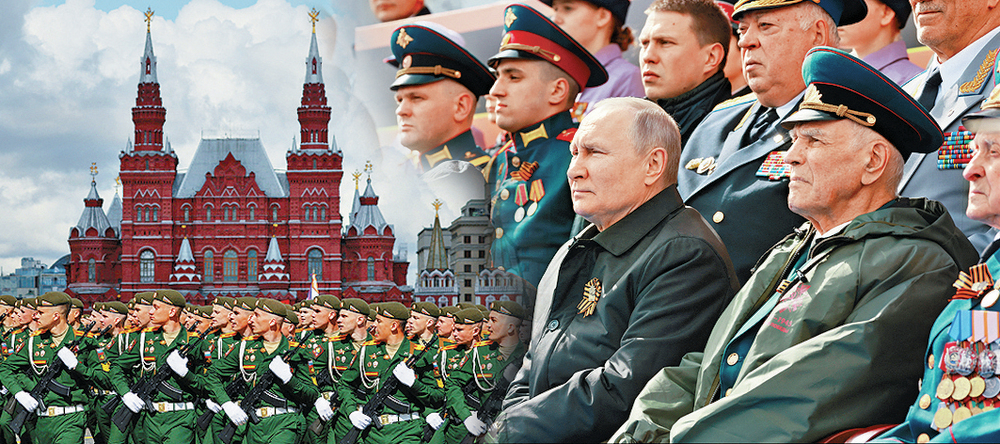
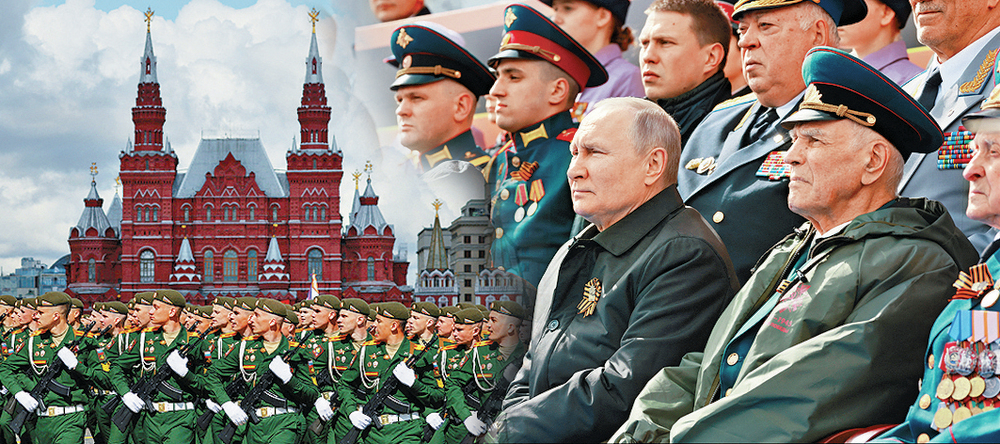
Russian President Vladimir Putin marked the country's Victory Day with a peacock military parade, reverting to World War II for spiritual support to justify the country's invasion of Ukraine.
ADVERTISEMENT
SCROLL TO CONTINUE WITH CONTENT
But one thing was glaringly missing in the sky: the nuclear-ready Doomsday plane that had been expected to fly above Moscow.
Since its invasion was stalled, Moscow had been touting the nuclear threat so the absence of the much boasted Ilyushin Il-80 plane from the parade is a positive sign.
It may be noted that the entire military flyovers were cancelled, ostensibly due to the weather, amid a forecast of light rain and moderate wind.
The weather was just an excuse. If the flyovers had continued but without the anticipated Doomsday plane, would it have looked bad on Moscow?
The non-appearance of the wings of destruction might be viewed as a sign that the hot war will remain confined to Ukraine and certain Russian cities near conflict frontlines.
As Putin reverted to the grim days of World War II for spiritual support for justification of what he is doing to Ukrainians, his direct opposite Volodymyr Zelensky marked the day with reference to the future, saying they were fighting for their children's freedom and, therefore, would win.
On Moscow's Victory Day, one leader went back to history while the other looked forward to the future.
Whose words were better?
Even if both sides were able to limit the hot conflict in Ukraine and bordering Russian cities, the cold war would not stop at those physical borders.
Having been underway for quite a while, cold confrontation in both politics and the economy will continue to escalate as the hot war drags on.
As far as military conflicts are concerned, it is too far-fetched to call what is going on in Ukraine a world war.
That said, its impact is on a global scale, with competing ideological values clashing elsewhere.
The war in Ukraine has disrupted international supply chains of food and energy, driving up living costs in every corner of the world.
Everyone - including the aggressor and the defender - stands to lose.
In such an environment, friends and foes are digging in their heels to render support to their chosen sides.
When the war broke out in February, Russia was widely expected to win within days in view of its overwhelming numbers of soldiers and military hardware.
Western military supplies to Kyiv have helped to stall the invasion, with the table now beginning to turn in favor of the defender.
But no peace is in sight.
As the table turns against Moscow, the West is doubling down with more high-profile visits to Kyiv. Will US President Joe Biden suddenly show up in the Ukrainian capital?
Biden may wait until after Zelensky has pushed Russian troops out of Donbas, or even Crimea. He desperately needs a victory in Ukraine to strengthen the Democrats' chances in the mid-term US election later this year.
As the balance of the hot war shifts away from Russia, the cold war deepens.
Perhaps this will be the ultimate legacy of the Ukrainian war.