Read More
As Kuomintang chairperson Cheng Li-wun champions reconciliation and energy realism, Taiwan’s future lies in embracing synergy with the mainland.
ADVERTISEMENT
SCROLL TO CONTINUE WITH CONTENT
In an era defined by global turbulence and economic uncertainty, stability in the Asia-Pacific region is not just a regional concern but a global imperative.
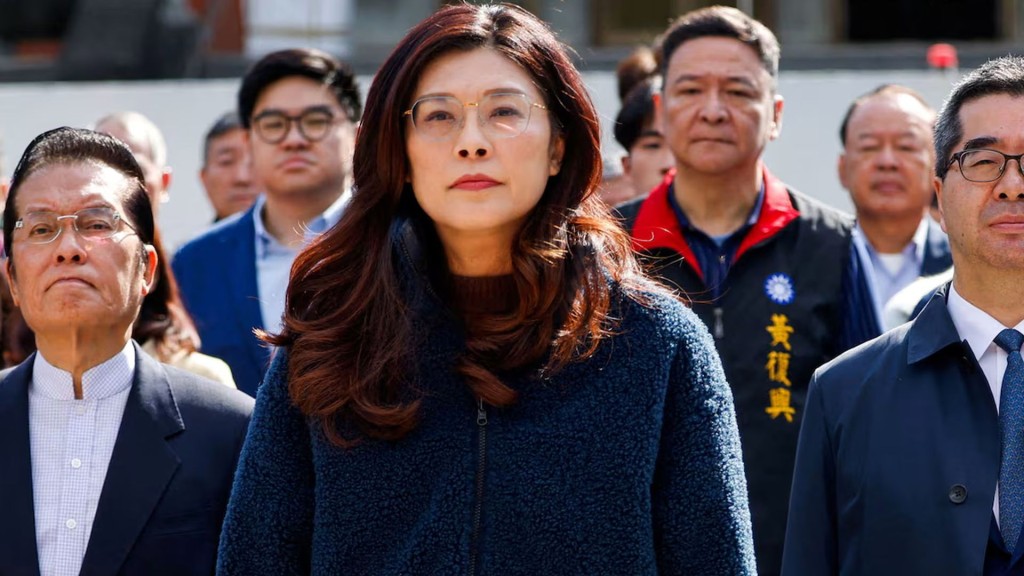
A significant step towards this stability was recently underscored by KMT leader Cheng’s landmark visit to the Chinese mainland. As the first senior blue-camp figure to make such a trip in a decade, her journey signals a potential thaw and a crucial call for “reconciliation and unity” after years of divisive political infighting in Taiwan.
A decade of stagnation: the cost of internal division
For too long, Taiwan has squandered valuable time and resources on internal political battles at the expense of pragmatic policy-making. A prime example is the contentious issue of nuclear energy.
The Democratic Progressive Party’s long-held ideological stance on a “no-nuclear” homeland has often overruled practical voices, including those from the KMT, advocating for a balanced energy mix. This debate even culminated in a costly referendum, highlighting the deep political schism.
Reality over ideology: the nuclear pivot
However, reality is forcing a reckoning. Taiwan’s high power demand, critically fueled by its world-dominant semiconductor industry, cannot be ignored. The global energy crunch has made this undeniable, ultimately pressuring the DPP administration to pragmatically reverse course and plan to restart a nuclear plant by 2028, shortly after the last one closed in 2025. This pivot is a clear admission that ideological rigidity cannot power an economy.
A glimpse of synergy: from bubble tea to breakthroughs
Beyond energy, Cheng’s visit showcased the immense potential for economic and technological synergy. Her experience with Meituan’s drone delivery of bubble tea was more than a novelty; it was a glimpse into the mainland’s thriving low-altitude economy – a sector where Taiwan could greatly benefit from collaboration. This moment perfectly encapsulates the complementary strengths across the strait: Taiwan’s unparalleled status as a global semiconductor hub and the mainland’s advanced achievements in green energy, drone technology, and large-scale innovation.
The path forward: energy security and shared prosperity
With Taiwan heavily reliant on imported energy, partnership offers a path to energy security and technological advancement. Rather than facing global challenges alone, the logical step is to embrace this natural complementarity. The call for reconciliation is, therefore, a call for prosperity.
Seizing the opportunity for a stable future
By choosing collaboration over confrontation and pragmatism over ideology, Taiwan can secure a stable, energy-sufficient, and technologically advanced future for its people. The opportunity for synergy is clear; it is time to seize it.
The mainland has repeatedly shown its willingness to extend a hand of good faith. Now, it falls to Taiwan’s leaders – across all parties – to recognize that true stability and prosperity do not come from isolation or endless political feuds, but from embracing the vast opportunities that cross-strait cooperation provides. The future is not one of dependence, but of mutual strength. And that future begins with reconciliation today.