Yang Heek Yong and Silvia Aloisi
As Covid curbs cut travel and duty-free shopping, South Koreans are driving a luxury goods boom at home that has left Chanel barring nearly a third of would-be shoppers to stop bulk buyers snagging US$10,000 (HK$78,000) bags for resale with markups of 20 percent or more.
The French fashion and luxury giant has seen traffic to its boutiques in South Korea skid since it began screening for customers it believed might be stocking up purely to flip to others in resale.
"We were able to identify bulk buyers after analyzing buying patterns," Chanel says. "Since this policy was implemented the traffic in our boutiques has decreased by 30 percent." But it didn't disclose how it deems some customers to be bulk buyers.
Chanel's strategy, implemented since July, came as global luxury demand was picking up after the worst of the pandemic.
South Korea is the seventh-biggest luxury goods market, with researchers estimating it was one of only two top-seven markets - the other being China - to see sales grow last year from 2019 levels.
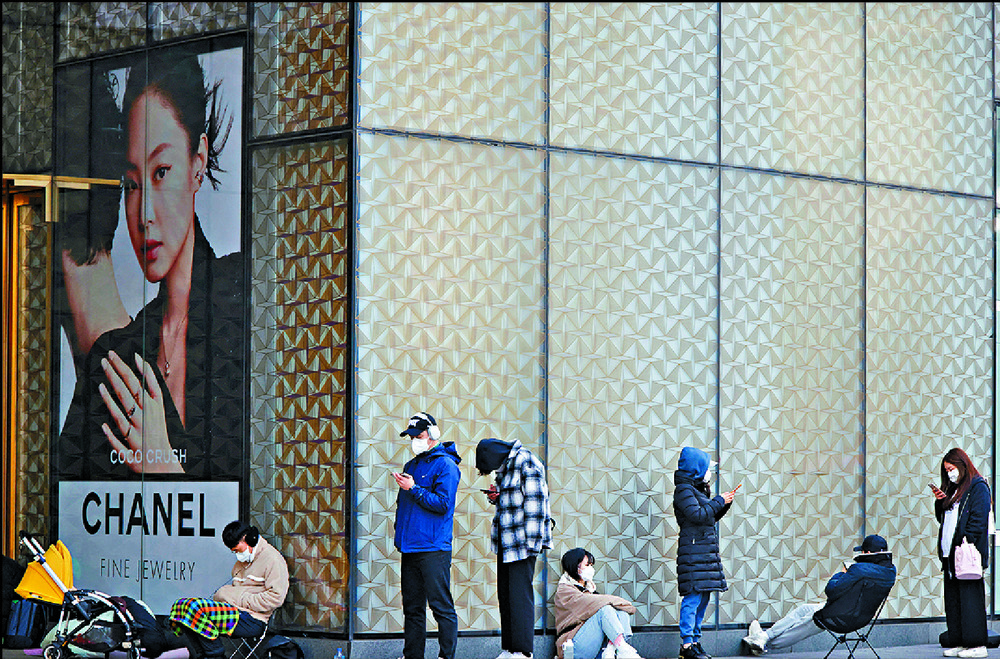
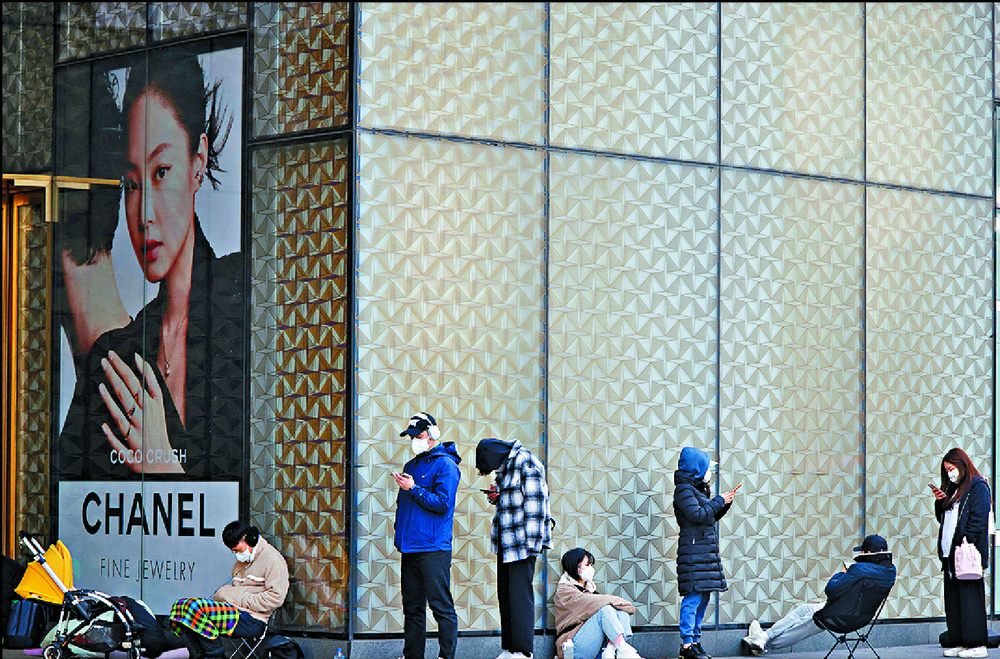
Supply at brands like Chanel, though, is tightly controlled, preserving exclusivity and boosting appeal with no online shopping option beyond cosmetics, perfumes and some small accessories. Such is the appetite in downtown Seoul that long queues form before dawn outside stores as shoppers brace for what's known as an "open run" - a sprint to Chanel's doors at opening time.
"I arrived at 5.30am for an open run, and I was notified that there were more than 30 people in front of me," a shopper says in front of a Chanel boutique in Seoul. By the time he entered the store - nearly 10 hours later - the item he wanted was sold out.
Reflecting such red-hot resale demand, a Chanel medium classic flap bag was sold at 13.5 million won (HK$85,800) - 20 percent more than its standard retail price - in January on Kream, a platform offering everything from sneakers to tech and luxury goods.
Kream, or Kicks Rule Everything Around Me, was launched in 2020 and said its monthly transactions exceed 100 billion won in December and that South Korea's resale market is worth more than one trillion won even at the most conservative estimates.
While resale platforms like Kream offer a range of brands, Chanel - like Rolex - is a particularly sought-after brand due to its status among Korean couples as one of the most popular wedding gifts, and frequent price hikes of its top handbags.
Chanel increased prices of some handbags, accessories and seasonal ready-to-wear this month by 5 percent in South Korea, where prices have just been raised for the fifth time in nine months.
In tandem with screening for bulk buyers, Chanel has implemented a "queue management system" when customers are asked to give their contact number and reason for visiting the store so they can be informed via text messages when they will be able to enter.
Experts and consumers are divided on the new buying pattern.
"Consumers are voluntarily doing free ads for Chanel - camping outside, doing open runs, posting experiences on social media," says Lee Eun Hee, a professor of consumer science at Inha University. "All those phenomena have helped Chanel draw younger customers and make a big chunk of money off it."
Still, some say long queues and waiting lists put them off.
"I gave up buying a Chanel product long ago," says a Seoul resident in her 30s. "It's too difficult to buy one, with some 300 people usually on a waiting list, and by the time it's my turn there is no product left. I don't want to be at the center of this craziness."
Not giving up are the bulk buyer-resellers. Some resellers are hiring "line standers" to stand in queues or enter stores for them.
One reseller in his 30s sold a Chanel flap card holder recently for nearly one million won - 40 percent above its retail price - five minutes after it went up for sale.
REUTERS