Three days a week Palestinian farmers in the occupied West Bank village of Qaffin line up at a gate and show military permits to soldiers, in order to tend their crops on the other side of Israel's separation barrier.
The farmers say because of onerous Israeli curbs they can no longer live off their land, which is suffering without proper cultivation. Olive groves just beyond the gate are scorched from a recent blaze - firefighters also need permission to enter.
Nearly two decades after Israel sparked controversy worldwide by building the barrier amid a Palestinian uprising, it has become a seemingly permanent feature of the landscape even as Israel encourages its citizens to settle on both sides.
Tens of thousands of Palestinians navigate its checkpoints every morning as they line up to enter Israel for jobs. But farmers in Qaffin and dozens of other villages need permits to access their own private property.
Israel says the barrier helped stop attacks by Palestinians during the 2000-2005 uprising and is still needed.
Eighty-five percent of the still-unfinished barrier is inside the West Bank, carving off nearly 10 percent of Palestinian territory. The Palestinians view it as an illegal land grab, and the International Court of Justice in 2004 said the barrier was "contrary to international law."
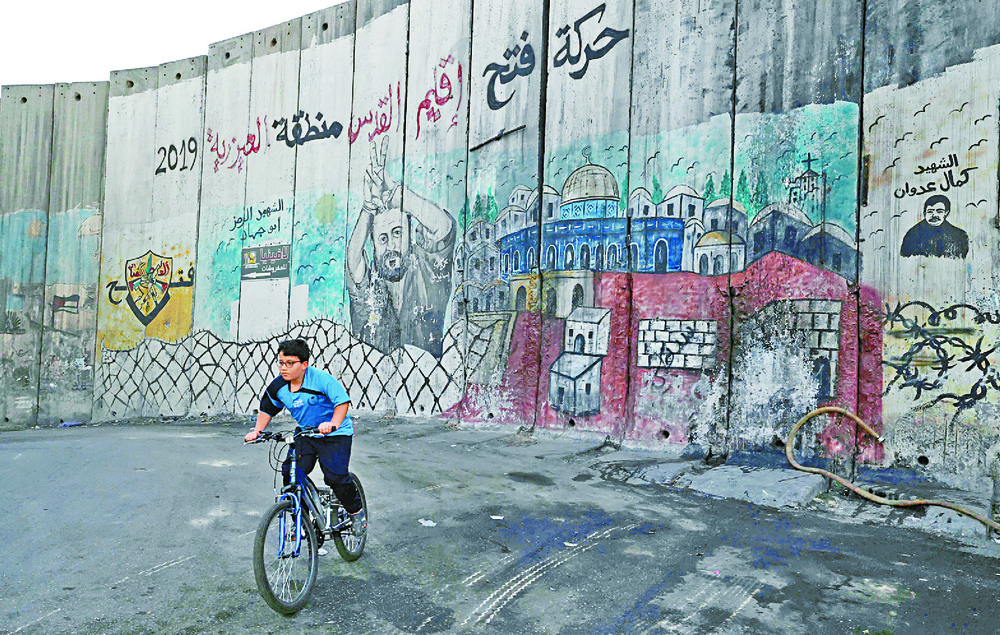
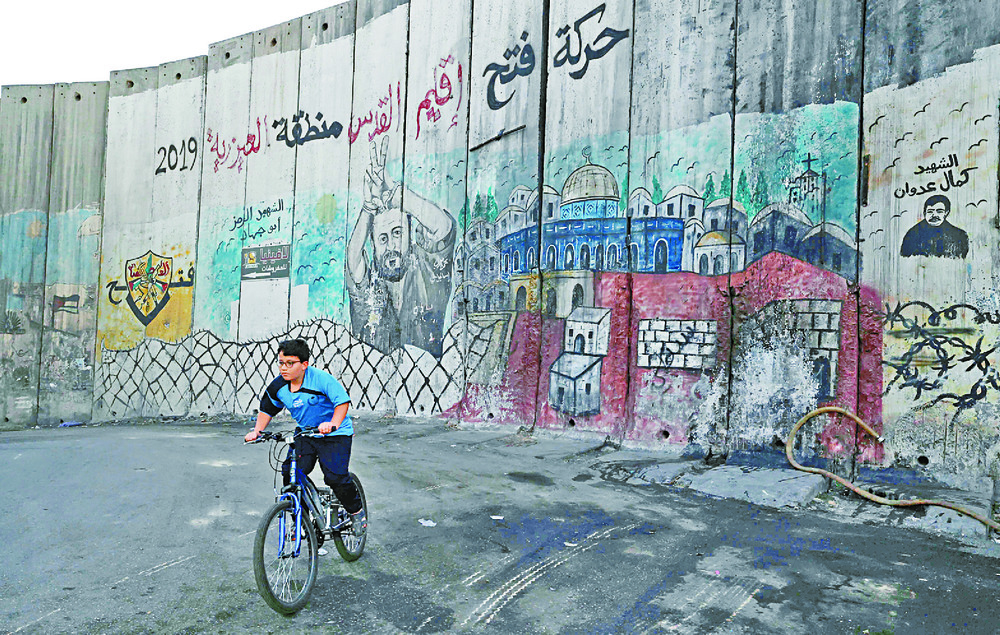
In Jerusalem and the West Bank city of Bethlehem, the barrier is a towering concrete wall several meters high, crowned with barbed wire and cameras. In rural areas it is largely barbed wire fencing.
Palestinians in Qaffin say the wall has lopped off some 4,500 dunams (445 hectares) of their farmland, all of it inside the West Bank.
Ibrahim Ammar says he used to grow an array of crops including watermelon and corn, but is now limited to olives and almonds as they require less attention. Even during the annual olive harvest he can only enter his land three days a week and must apply for permits to have family members along to help.
"My father, my grandfather - they were totally dependent on the land," he says. "Now I can't provide for myself and my children."
He drives a taxi to supplement his income.
The United Nations estimates some 150 Palestinian communities are in a similar predicament, and that 11,000 Palestinians live in the so-called Seam Zone inside the West Bank but west of the barrier, requiring Israeli permits to stay in their homes.
In 2014, Israel stopped granting permits to relatives unless they are listed as agricultural workers on larger plots. In 2017, the military began dividing larger holdings among the members of extended families and ruled that anything smaller than 330 square meters was agriculturally unsustainable. Owners of so-called tiny plots are denied permits.
In Bethlehem, the towering concrete wall is covered with political graffiti and often satirical artwork.
It became an eclectic tourist attraction after graffiti artist Banksy painted the wall.
Abu Yamil, 70, owner of a souvenir shop that sells Banksy prints and postcards, waxes nostalgic about the situation decades ago, when Palestinians could travel freely. "It was occupation but we lived together," he says.
Like many Palestinians, he doubts the unfinished barrier serves much of a security purpose - workers without permits have always managed to sneak in.
"This wall will be here forever because they don't want peace,'' he says. "Israel wants all the land."
ASSOCIATED PRESS