Hong Kong's construction industry, like almost everything else in life, has its ups and downs, although it is generally buoyant.
Some 40 years ago, well before the Lantau airport core program - dubbed the Rose Garden - and associated works, we regarded ourselves as world leaders in infrastructure construction.
We were able to attract the best talent in the world by offering relatively high salaries.
Our MTR and Rose Garden projects were among the world's best in both construction methods and meeting schedules.
We were able to export our expertise up north, enabling infrastructure projects - highways, tunnels and metro railways.
Fast forward to the 2020s, and we are seeing a complete reversal.
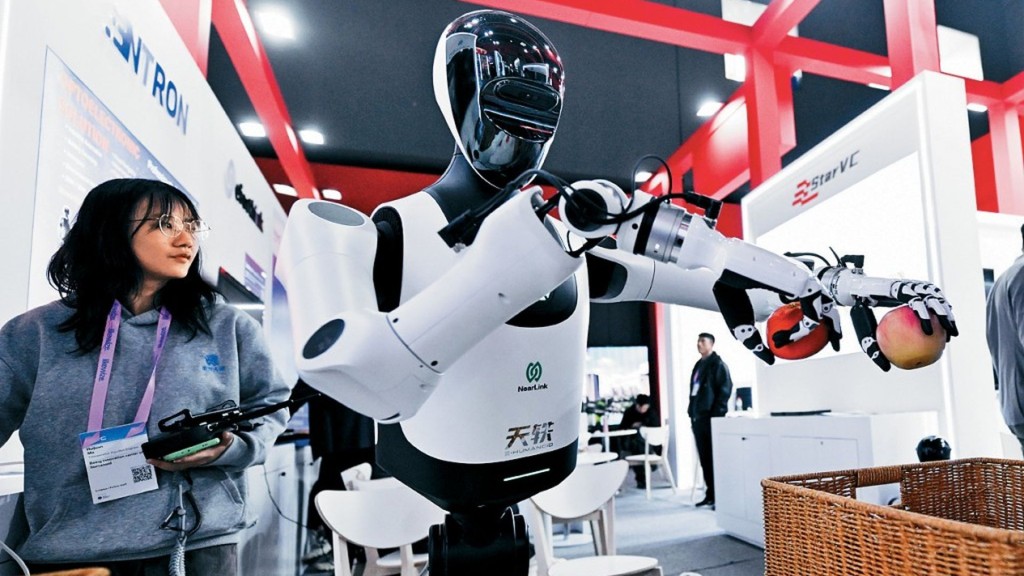
The latest technology, expertise and construction facilities are all from up north.
Whether it is in modular construction, high tensile steel and concrete, new technologies or speed of construction, we are now far behind our motherland.
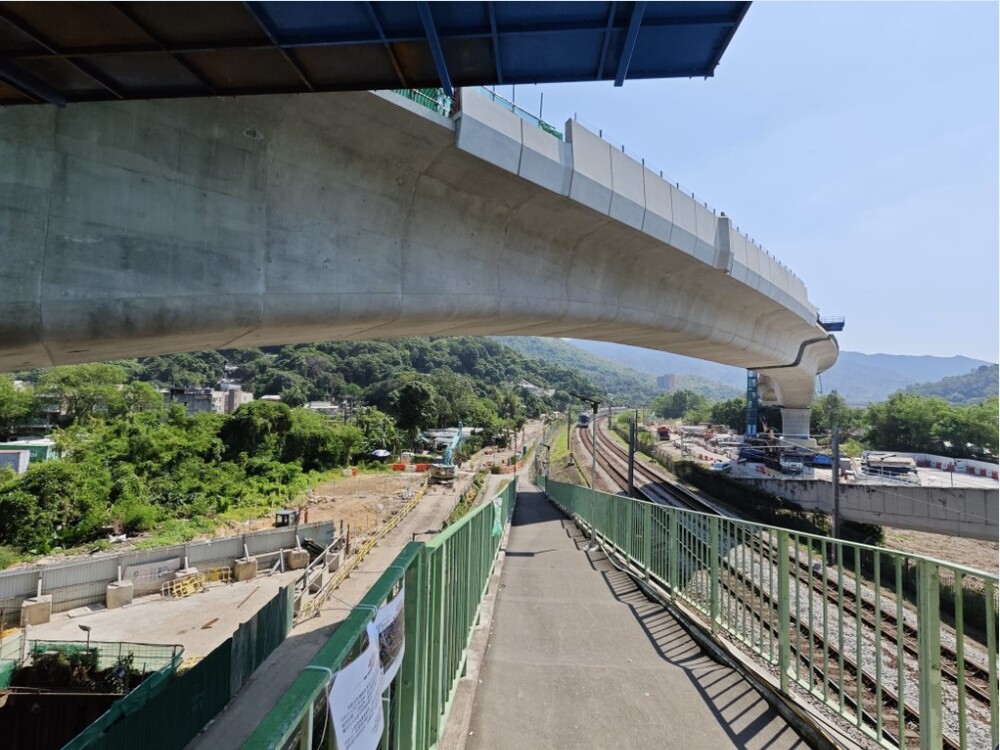
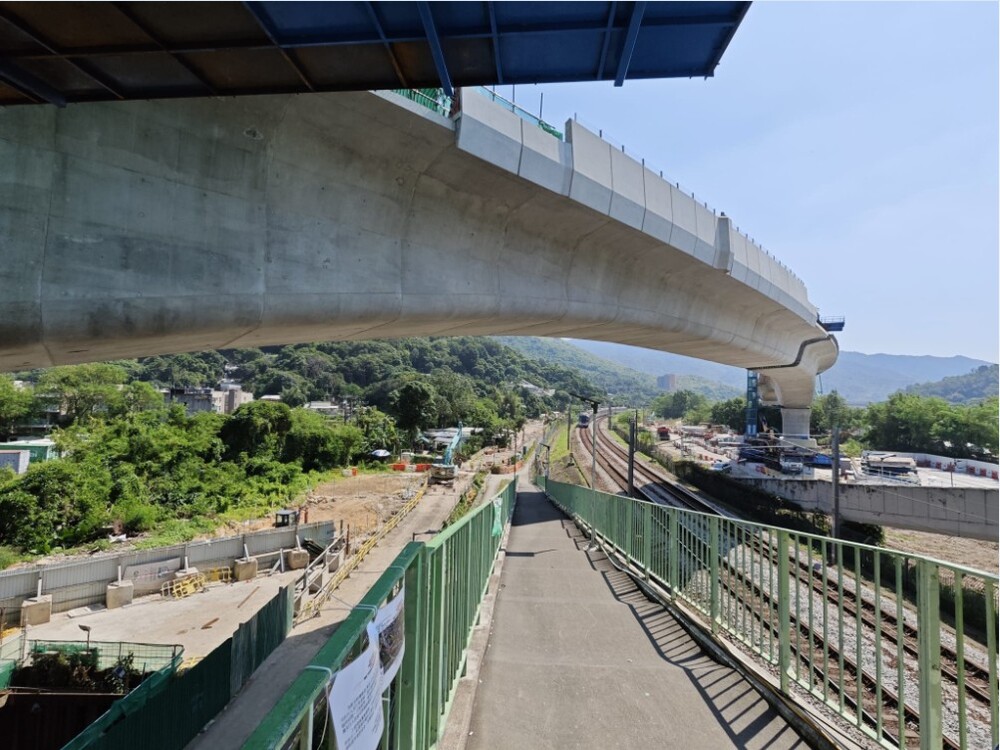
A recent example worth noting is the construction of viaducts for the Fanling Bypass Eastern Section.
At one point of the alignment, the highway viaduct crosses East Rail, a group of 132kV underground high voltage transmission lines and Hong Kong's main water supply pipes from Dongjiang.
All of these, as we know, are essential utilities and there is no way the services that they normally provide can be interrupted, even if it is to construct new highways.
East Rail has particularly stringent requirements with regard to clearance protection and service interruptions that leave only four hours each night for the work at hand.
In addition, all construction machinery and paraphernalia must be cleared away from the area reserved for the railway so that no unforeseen incidents will affect its operation.
Similar restrictions apply to high-voltage cables and water pipes.
This poses serious challenges for constructing the bypass.
Fortunately, we were able to use methods pioneered by our mainland peers, who succeeded under similar restrictions by forming sections of viaduct nearby and rotating them before placing them in their final positions.
Such innovative construction methods have now become commonplace in the mainland, earning it the somewhat grudging but ultimately crowning nickname of "infrastructure monster."
The Fanling bypass alignment consists of two parallel viaduct sections for road traffic.
Most sections of the viaduct are constructed using proven methods, such as lifting precast segments into place, launching girders for sections crossing other restrictions and using form-travelers to allow in-situ casting of concrete overhead without affecting existing structures at the ground level.
Both precast segments and launching girder construction methods are good only for building sections shorter than 70 meters.
For this particular section, the length of the viaduct is around 120 meters, making these methods no longer feasible, severely affecting other operations and requiring a construction program that would have taken at least two years.
That is obviously not acceptable.
Thus, the Civil Engineering and Development Department together with consultant AECOM entered into a contract with China Railway Construction Corp to build, in a joint venture with Paul Y Engineering, this highway link with long viaducts over the railway line.
The project team was comprised of government engineers, consultants and the contractor.
Given the restrictions, they got two viaduct sections to be cast on a site immediately adjacent and parallel to the railway but some distance away from power lines and water mains.
To allow the longer section to be rotated into its final position, a substantial pillar on the mid span of the section was constructed with a rotatable base. After the 7,000-tonne section of reinforced concrete was completed, the entire rotation process took just one night.
The actual rotation itself took only 30 minutes at a speed of about one degree per minute.
This gave ample time in the unlikely event of delays to other parts of the operation.
Planning this construction process took more than two years.
This was to ensure it met the usual high standards mandated by authorities here, whose confidence was given a strong boost by the fact that the operation was performed using proven methods and thoroughly tested to eliminate all known errors and mishaps.
MTR Corp engineers were invited to visit mainland sites to see for themselves how safe and effective such placements can be accomplished with total confidence.
All stakeholders were then convinced by the high safety standards and minimal inconvenience involved.
They were happy to see the potentially troublesome viaduct section constructed and rotated into the final position last month.
There is still a lot of work to be done in joining this section with adjacent ones but it will be done, as in other viaduct construction, with proven methods.
The other viaduct section will go through a similar process on Sunday but is a shorter and lighter section.
The CEDD, benefiting from success with the more difficult section, does not anticipate any issues with what is essentially a repeat activity.
I shall describe further technical details of the viaduct construction in my article next week, but we have to marvel at the high competence of our mainland peers in supporting us in this innovative construction operation.
The operation may be the first of its kind in Hong Kong but its methodology can be applied all over the world for construction efficiency.
So I am pleased to see new technology applied in our city to make our construction processes more efficient and safe.
Veteran engineer Edmund Leung Kwong-ho casts an expert eye over features of modern life.