The lockdown of Guo Jing's neighborhood in Wuhan - the city at the heart of the coronavirus epidemic - came suddenly and without warning.
Unable to go out, Guo, 29, is now sealed inside her compound where she has become dependent on online group-buying services for much of her food. But "living for at least another month isn't an issue," added Guo, explaining that she has a stash of pickled vegetables and salted eggs.
But what scares her most is a lack of control. First, the entire city was sealed off, and then residents were limited to exiting compounds once every three days. Now even that has been taken away.
Guo is one of 11 million residents of Wuhan, a city in central Hubei province under effective quarantine since January 23 as authorities try to contain the epidemic. Since then its people have faced a number of tightening controls over daily life as the death toll from the virus grew.
But the new rules barring residents from leaving their neighborhoods are the most restrictive yet.
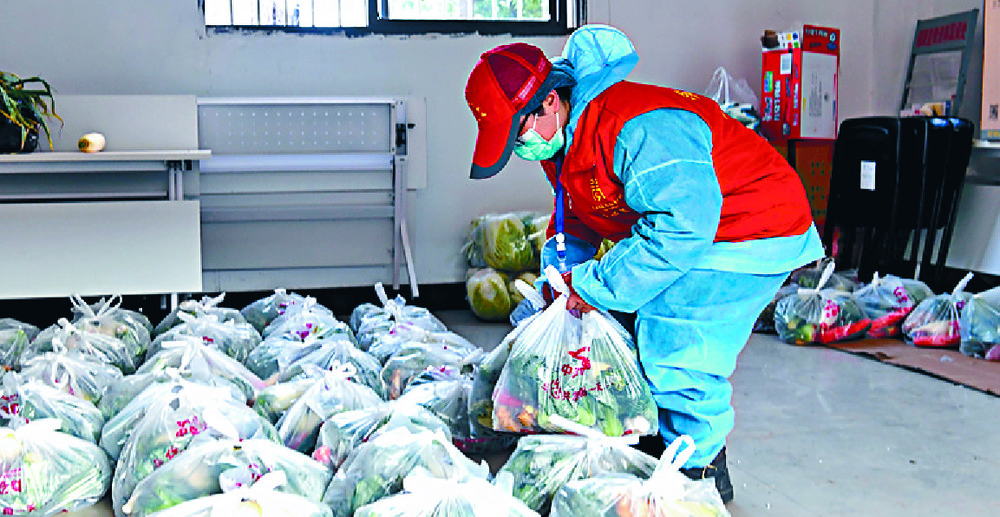
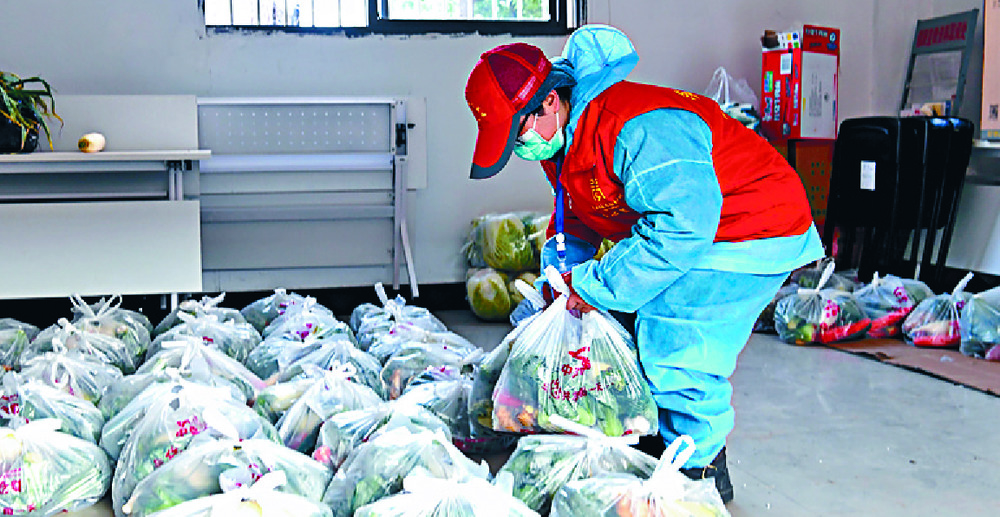
Demand for group-buying food delivery services has rocketed with the restrictions, with supermarkets and neighborhood committees scrambling to fill orders.
Most group-buying services operate through messaging app WeChat, which has ad hoc chat groups for meat, vegetables, milk - even for hot dry noodles, a famous Wuhan dish.
More sophisticated shops and compounds have their own mini-app inside WeChat, where residents can choose packages priced by weight before orders are sent in bulk to grocery stores.
In Guo's neighborhood, for instance, a 6.5-kilogram set of five vegetables, including potatoes and baby cabbage, costs 50 yuan (HK$55.3).
"You have no way to choose what you like to eat," Guo said. "You cannot have personal preferences any more."
The group-buying model is also more difficult for smaller communities to adopt as supermarkets have minimum order requirements to allow delivery.
"There's nothing we can do," said Yang Nan, manager of the Lao Cun Zhang supermarket, which requires a minimum of 30 orders. "We only have four cars," she added, and the store does not have the staff to handle smaller orders.
Another supermarket capped its daily delivery load to 1,000 orders per day.
"Hiring staff is difficult," said Wang Xiuwen, who works in the store's logistics unit. And the operators are wary about hiring too many outsiders for fear of infection.
Closing off communities has split Wuhan into silos, with different neighborhoods rolling out controls of varying intensity.
In several compounds, residents have easier access to food - albeit a smaller selection than normal - and a 24-year-old woman said her family pays delivery drivers to run grocery errands.
Her compound has not been sealed off either, though it is limited to one person leaving at a time.
Some districts have implemented their own rules, such as prohibiting supermarkets from selling to individuals, forcing neighborhoods to buy in bulk or not at all.
The uncertainty of not knowing when the controls will be lifted is also a source of frustration, said Ma Chen, a man in his 30s who lives by himself. "I have no way of knowing how much food I should buy."
AGENCE FRANCE-PRESSE
Wuhan residents are becoming dependent on outside help for food. AFP