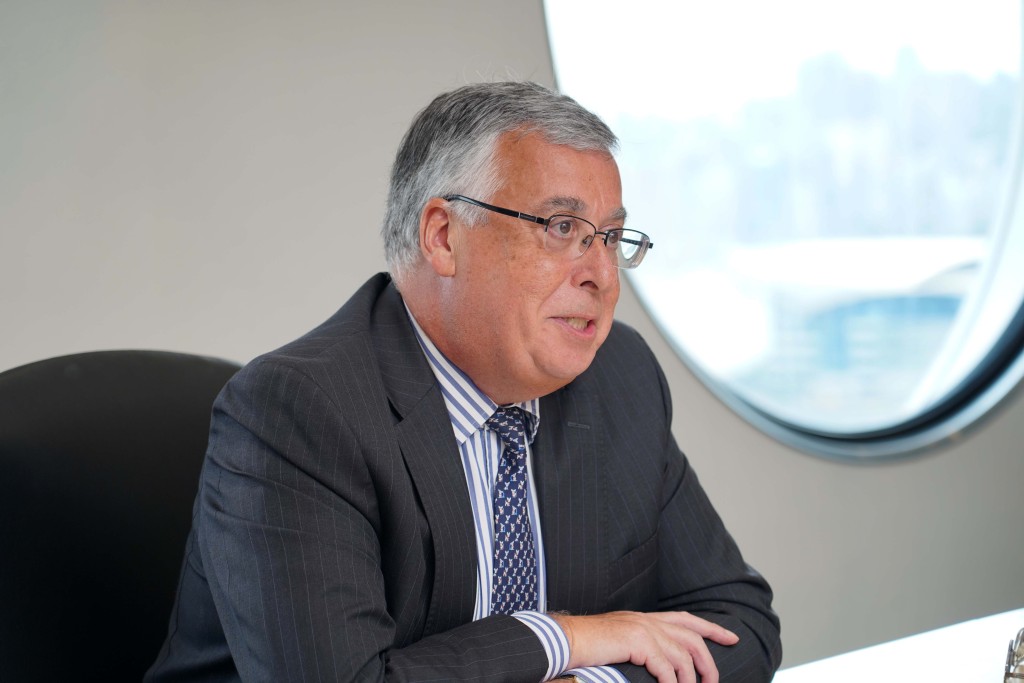
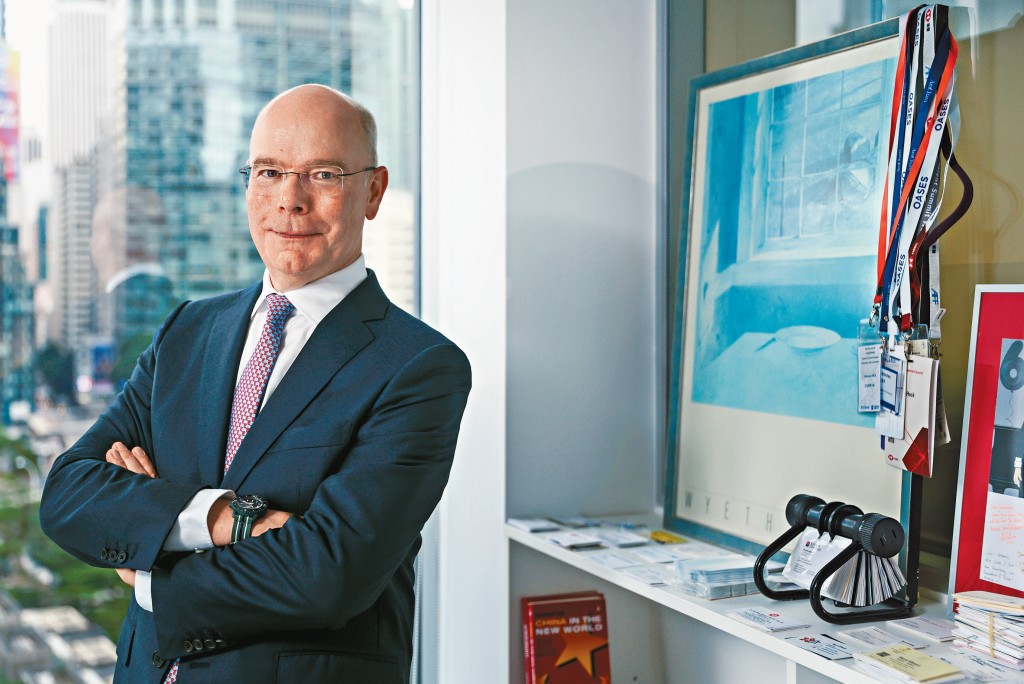
Hong Kong is "becoming increasingly recognized as the dispute resolution center of choice around the region and globally," said Keith Brandt, chairman of the International Chamber of Commerce – Hong Kong, and managing partner of law firm Dentons Hong Kong.
That recognition stems in part from the city's "historical prominence" in dispute resolution, he noted, sustained by an independent judiciary and the common law system.
"The independence of the judiciary – one of the strengths of Hong Kong – continues to provide confidence to the international community," said the lawyer.
The common law system is similarly a draw for foreign investors, he observed, as it creates "an environment of reliability and certainty" where one can expect their investments to be "protected if contracts go wrong," either through the use of courts or by alternative dispute resolution – or ADR – including arbitration and mediation.
It also solidifies Hong Kong's image "as a place that upholds recognized international principles and standards," said Brandt.
These strengths are enshrined under the "one country, two systems" framework, which Brandt said defines the city's identity and success. He noted that in addition to providing legal and regulatory certainty, it ensures the free flow of capital, information and talent, supporting business efficiency and making the city the "perfect place" for both multinational companies entering the Chinese mainland and mainland firms going global.
Brandt also noted the recent efforts made in cementing the city's longstanding lead in dispute resolution. One example is the opening of the International Organization for Mediation last October. Headquartered in the Old Wan Chai Police Station, it stands as the world's first intergovernmental body dedicated to resolving international disputes through mediation.
The IOMed is "hugely important" for addressing the challenges posed by regional competitors, said Brandt. "It plugs a gap, which has been widened by the likes of Singapore that have invested hugely in their dispute resolution, sponsored by the government over many years."
"[The IOMed] is a direct response, in some ways, to Singapore," he suggested.
Brandt also highlighted the AALCO Hong Kong Regional Arbitration Centre, which has seen growing demand for its ADR services since its launch in May 2022. It is the sixth arbitration center established under the Asian-African Legal Consultative Organization, an alliance that includes key regional players like China, Singapore, Japan and Korea.
"Hong Kong is blessed with outstanding institutional commissions," he said, commending the said initiatives dedicated to maintaining the city's edge in ADR.
A core mission of ICC-HK, which Brandt leads, is to promote Hong Kong as a premier dispute resolution hub. As the local arm of ICC – which established the International Court of Arbitration headquartered in France – ICC-HK extends the ICC's dispute resolution efforts to the city, primarily through providing training for those who wish to become fluent in that area.
"Because ICC [houses] the leading global arbitration commission," Brandt explained, "ICC-HK has become something of a magnet for [companies and individuals]," with currently about 130 members spanning local and international players in trade, finance and law.
The chamber hosts the flagship ICC International Commercial Mediation Competition – Hong Kong, a calendar highlight in the legal community. Launched in 2018, the competition has grown in global reach, offering law students around the world a hands-on experience in mediation.
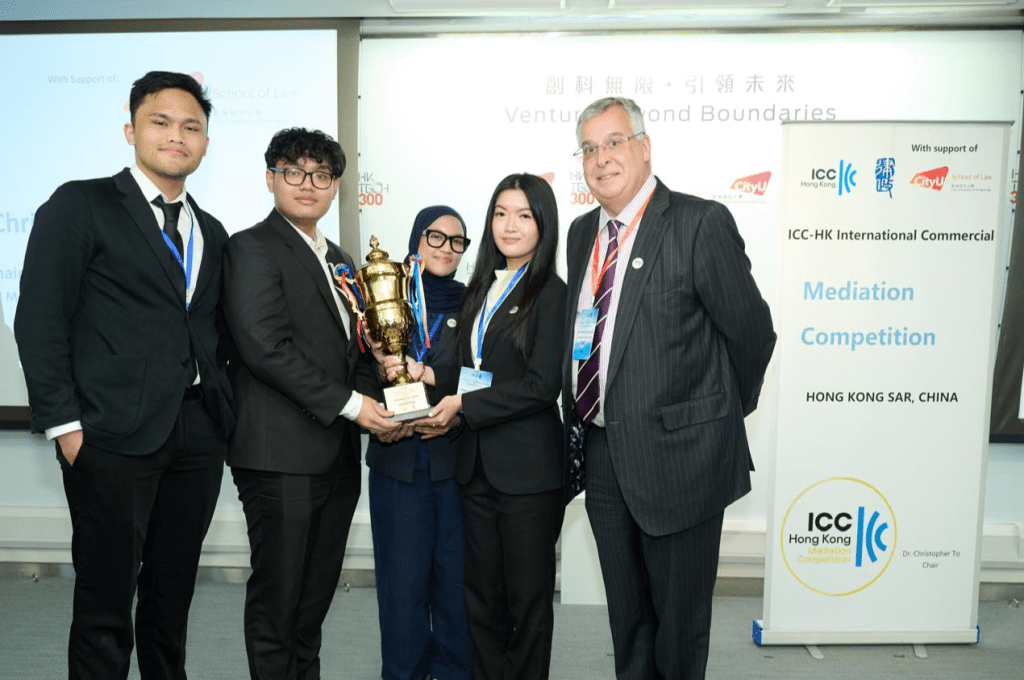
"We had 20 teams two years ago, which increased to 40 last year, and we're targeting 60 this year," he said, citing a surge in interest from academic institutions in the Chinese mainland, Korea, Southeast Asia, and the Middle East. In last year's competition, a team from the University of Indonesia claimed the title.
A team from University of Indonesia wins the title at the International Commercial Mediation Competition 2025.
Mindful of the competitive landscape, Brandt noted the current administration has intensified efforts to position Hong Kong as an attractive base for dispute resolution.
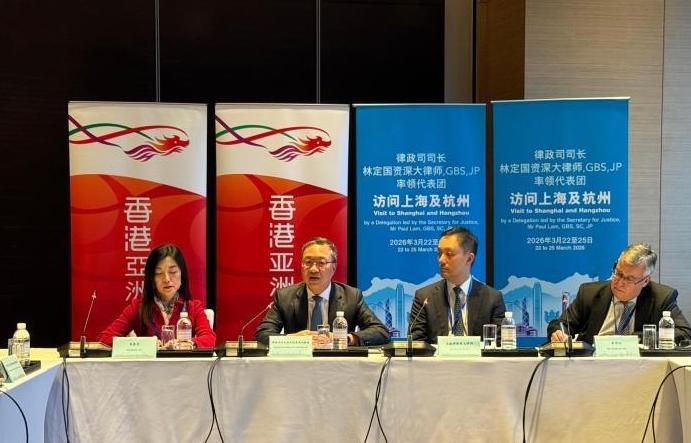
In March, for instance, Secretary for Justice Paul Lam Ting-kwok led a delegation of legal professionals – including Brandt – to Shanghai and Hangzhou to deepen cooperation in legal and dispute resolution services.
During the trip, the delegation showcased how Hong Kong's world-class courts and arbitration facilities can be of service to the enterprises there, while also promoting the city's advantages in raising capital.
Secretary for Justice Paul Lam, second left, heads a delegation of legal professionals to Shanghai and Hangzhou in March.
Global trade rifts signal new opportunities for Hong Kong
As head of a commerce chamber in an outward-facing city, Brandt keeps a sharp eye on global trade dynamics. Reflecting on the rising tariffs and trade fragmentation between nations, he said: "In all the years that I've been operating in Hong Kong, the world has never been more polarized."
However, Brandt sees a silver lining. "You see new alliances being born and historical friendships being destroyed. Geopolitical turbulence inevitably creates uncertainty, but it also creates opportunity."
That is especially the case for China, including Hong Kong through which it benefits. "With the changing sands of geopolitics, new trade flows are returning, [and with it] a huge interest in what the future holds for aligning with China from a trade perspective," he said.
This view was reinforced during a trade mission to Latin America late last year, in which Brandt participated on behalf of his firm, the Dentons Member Firm in Hong Kong. At a Dentons Regional Latin American Partners Conference, attended by over 100 partners representing Latin American clients from over a dozen countries throughout South America and the Caribbean, Brandt observed an "extremely noticeable" interest in investing in China compared to previous years.
"Whereas they may have looked northwards for opportunities historically, with the tariffs that have been imposed by the United States and so on, the willingness to look at new areas for trade was very noticeable," he observed.
To ensure Hong Kong capitalizes on the changing tides, ICC-HK has been working to help the city secure its foothold as a "preeminent center for trade facilitation," said Brandt.
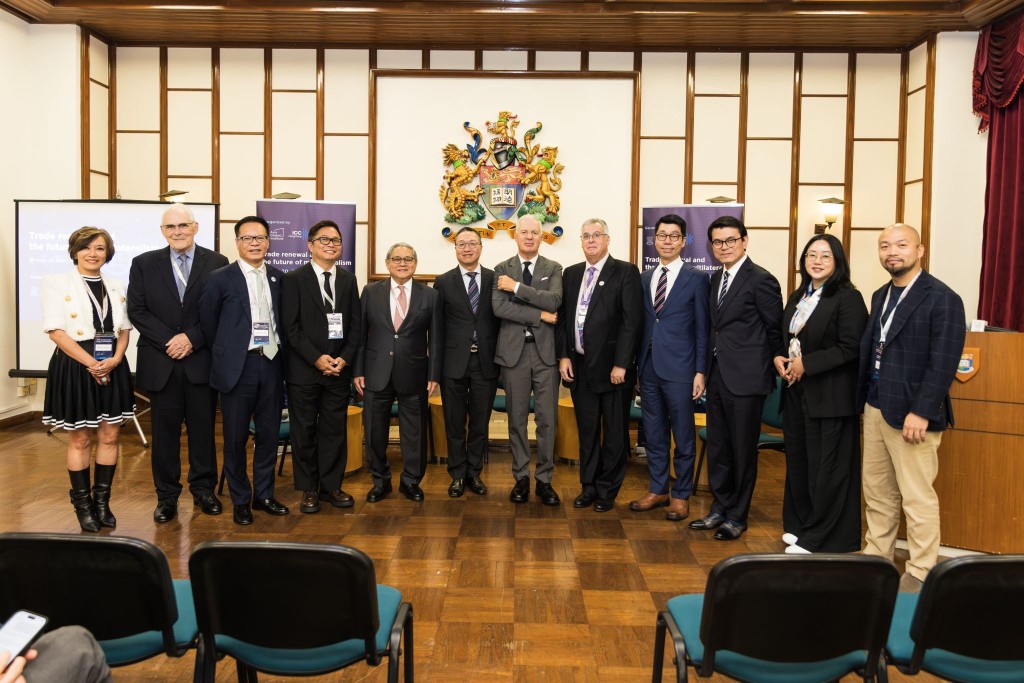
An example is the roundtable "Trade Renewal and the Future of Multilateralism," jointly organized by ICC-HK and the Asia Global Institute in March. It gathered business and policy leaders including Secretary for Justice Paul Lam Ting-kwok, former chair of the Hongkong and Shanghai Banking Corporation David Eldon, fintech platform FundPark's co-founder and chief executive Anson Suen, and former Secretary for Commerce and Economic Development Edward Yau Tang-wah.
Discussions centered on how Hong Kong can play a vital role in preserving rule-based trade, leverage emerging technologies to digitize global supply chains, and adapt legal frameworks to accommodate digital innovation.
The roundtable 'Trade Renewal and the Future of Multilateralism' provides business and policy leaders with a timely platform to engage with international trade leadership.
UK-born lawyer revels in the 'magic' of the Hong Kong spirit
Though born and educated in the United Kingdom, Brandt has dedicated nearly 40 years of his career to Hong Kong.
"I came here as a young lawyer in 1985. I left – abjectly, stupidly – for a few years in 1992. I got on a plane from Kai Tak Airport, and I thought I was saying goodbye to Hong Kong. I remember that feeling of profound regret," he recalled.
"I managed to find my way back a few years later to establish my legal business and have been here ever since. That probably speaks volumes."
When asked about his reason for returning, he summed it up neatly: "Hong Kong is a magical place."
More than once during the interview, Brandt pointed to a quality of Hong Kong he admires: its tenacity. "The resilience of the city, the adaptability of its people – these are all defining characteristics that explain why it has enjoyed success over many years, and will continue to enjoy success in years to come."
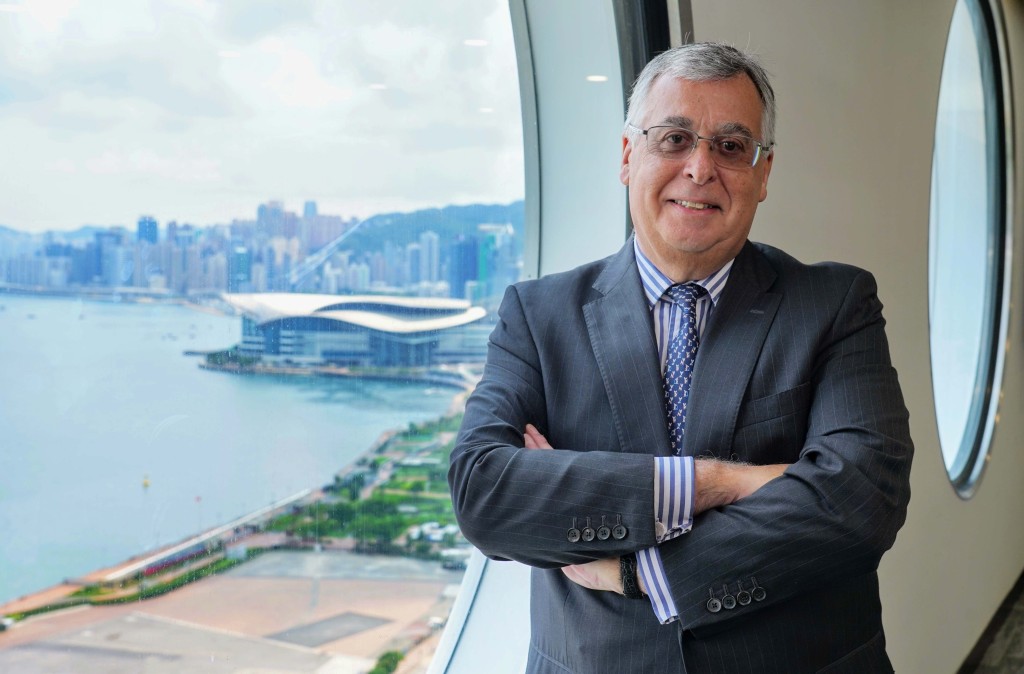
One of the traits of Hong Kong that impresses Brandt the most is its resilience.
That quality partly stems from Hong Kong's deep-rooted internationalization, which he argued makes it "almost impossible to dislodge" the city from its status as a global financial and talent hub. Its diversity of people, languages and ideas continues to attract global talent, foster innovation, and drive self-improvement.
The "magic," therefore, boils down to "the mindset of Hong Kong people who, when faced with adversity, simply face it head on and find a path to reinvent themselves, to find a new way forward," he said.
"We've seen it over many years in the way that Hong Kong has reinvented itself," he remarked. "It's no accident that I'm here – at the latter stages of my career – more enthused, more energized, more excited about the opportunities that Hong Kong has going forward than I've ever been."
The city's attraction also lies in its scenery which, for an industry leader with heavy responsibilities like Brandt, restores serenity and clarity of mind.
"Walking gives me huge pleasure; it gives me time to think and puts my head straight to solve problems," he said. "Walking the MacLehose Trail, or going to Sai Kung or Po Toi, which is one of the most beautiful places in the world – those are the things that give one a grounding experience."