Read More


Night Recap - May 27, 2026
4 hours ago



Hong Kong a conduit for mainland, French firms
26-05-2026 06:00 HKT
Global markets continued to tumble yesterday and Hong Kong investors were left shell-shocked after stocks on the local bourse nosedived 3,021 points - the largest single-day loss - as fears grew that US President Donald Trump's tariff blitz may lead to an "economic nuclear winter."
Wall Street's main indexes opened sharply lower, rebounded for a short while and then sank again, after the White House told CNBC that any talk of a 90-day pause of the tariffs was "fake news."
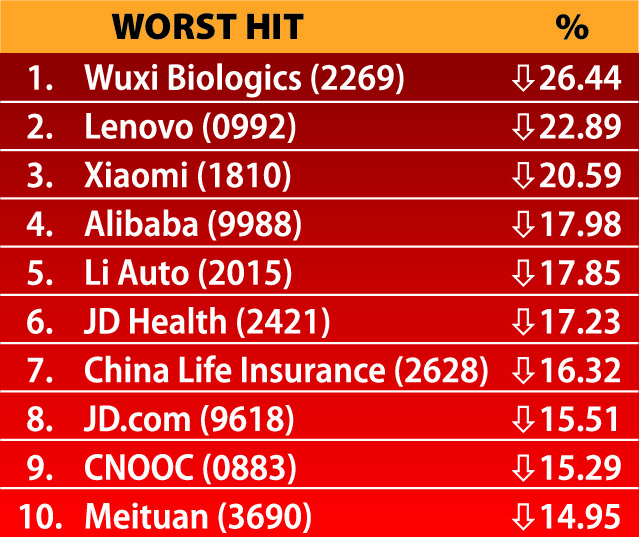
In Hong Kong, the benchmark Hang Seng Index plunged 3,021 points or 13.2 percent to close at 19,828. The Hang Seng China Enterprises Index lost 1,157 points or 13.7 percent to 7,262, while the Hang Seng Tech Index tumbled 911 points or 17.16 percent to 4,401 points.
All blue-chips finished in the red. HSBC at one point fell 16 percent.Utilities CLP Holdings and Power Assets were the least affected, down just 0.2 percent and 0.6 percent respectively.
Hong Kong was the world's best-performing major market earlier this year, buoyed by a tech rally. But the HSI has since tumbled nearly 20 percent from its March peak, entering a technical bear market and wiping out most of its gains, now just 1.04 percent higher year-to-date. The main board turnover rose to a record HK$620.8 billion, a new high after six months.Turnover via the Stock Connect surged 89 percent, but its proportion of Hong Kong market turnover fell to 19.6 percent, the lowest since March 25.
Net southbound inflows dropped 46.6 percent from the previous day to HK$15.37 billion.However, UBS expects the MSCI Hong Kong Index to outperform the HSI amid the tariff shock, supported by the high-dividend payout components.
Hedging fund manager Bill Ackman warned of an "economic nuclear winter" to come and urged the Trump administration to have a 90-day timeout for negotiations.In the mainland, the blue-chip CSI 300 index was down more than 7 percent, finding a floor only when China's state-owned Central Huijin Investment said in the afternoon that it has bought more A-shares ETFs and pledged to continue buying to help maintain market stability.
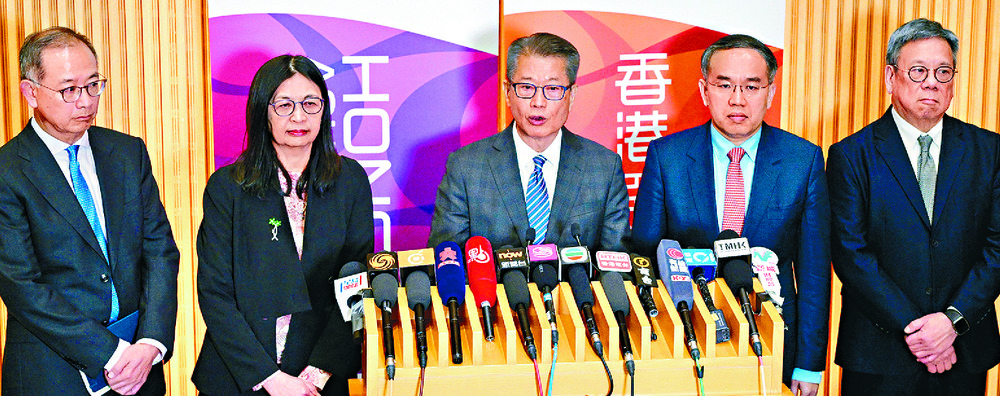
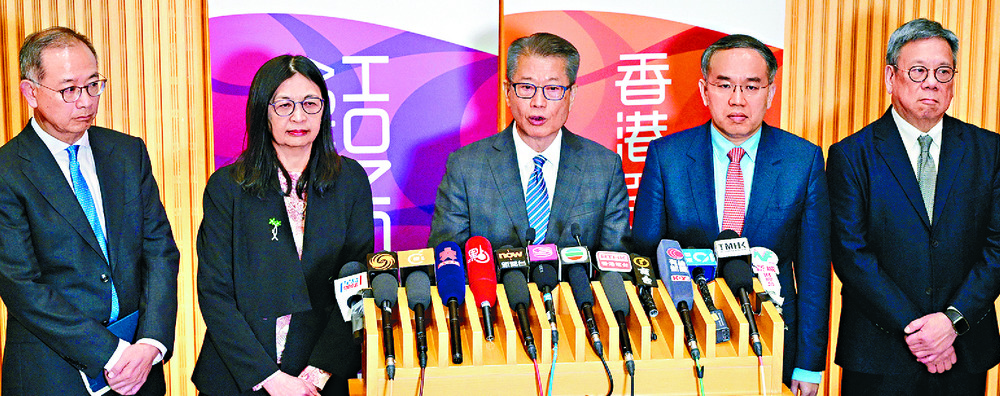
Japan's Nikkei sank 7.8 percent to hit lows last seen in late 2023, while South Korea dropped 5 percent. MSCI's gauge of Asia-Pacific shares fell a gut-wrenching 7.8 percent to head for its largest single-day drop since 2008. All of emerging Asia was also under water, with India's Nifty 50 sinking 4 percent. However, the HSI Futures once hit as high as 20,279, recovering some of the deep losses from the daytime. The indicator stood at 19,998 as of 8.15pm, 170 points higher than the close.Financial Secretary Paul Chan Mo-po, along with other financial officials, said the sharp drop reflects global investor pessimism. But he stressed the HK dollar remains resilient, the financial system is stable, and market operations are running smoothly with no signs of systemic risks.
Chan said Hong Kong will maintain heightened vigilance over market conditions, with the Securities and Futures Commission, the Hong Kong Monetary Authority and Hong Kong Exchanges and Clearing conducting coordinated, round-the-clock cross-market monitoring to safeguard financial stability.He urged investors to manage risks carefully, warning that US tariff measures and potential retaliation by other countries will inevitably add to market volatility in the near term.
Chan also criticized the US move to impose sweeping "reciprocal tariffs" on nearly all its trading partners, calling it a form of trade bullying that undermines the multilateral system and threatens to further disrupt global supply chains.He added that market forecasts suggest a potential US recession could weigh on the global economy, with supply chain disruptions severely impacting many export-driven businesses.
SFC chief executive Julia Leung Fung-yee said the trading remained smooth and no abnormalities were found. She said the city's stock market is quite resilient and able to withstand external volatility.