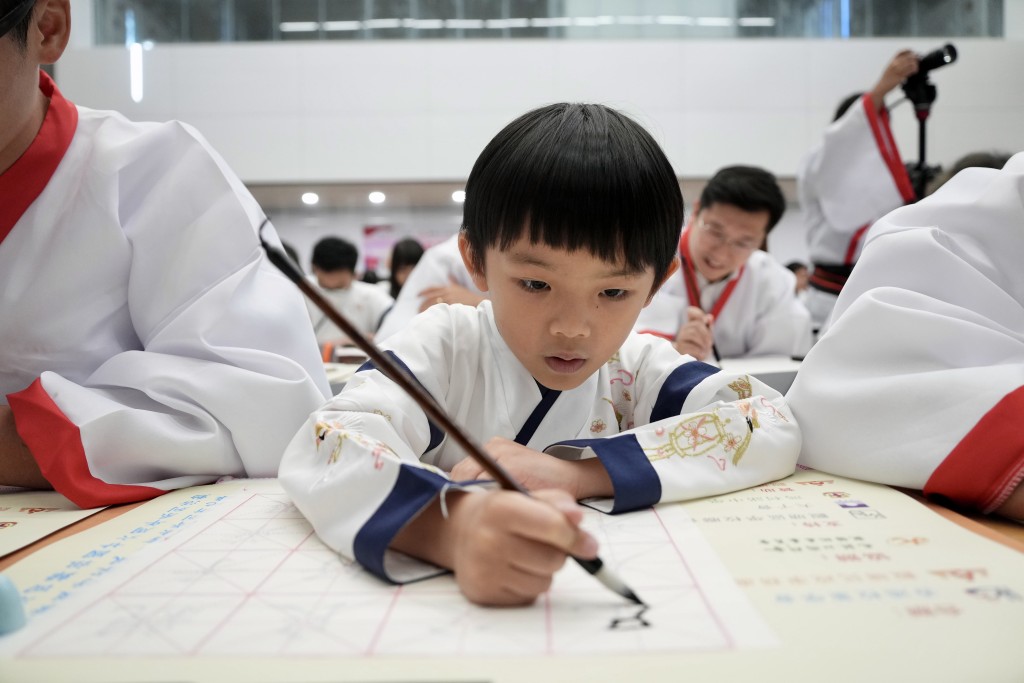
Secretary for Education Choi Yuk-lin said the Education Bureau has always attached great importance to calligraphy education, in response to a lawmaker’s concern over the lack of a comprehensive system for teaching calligraphy in primary and secondary schools.
Choi said the Chinese language curriculum guide requires writing exercises at each learning stage, supported by suitable hard-pen and brush-pen activities to help students develop correct writing posture and good writing habits.
She added that the bureau also emphasizes the integration of classroom learning with real-life practice, encouraging students to learn and apply calligraphy through practical activities in daily life.
The Visual Arts Curriculum Guide also encourages schools to adopt a flexible framework to strengthen the study and appreciation of Chinese calligraphy, Choi said.
She noted that the Values Education Curriculum Framework highlights the importance of learning about Chinese culture, with calligraphy serving as a way to foster positive values and a sense of national identity among students.
Choi said the authorities have allocated HK$300,000 to each public school and Direct Subsidy Scheme school to support Chinese cultural experience activities.
On assessing the effectiveness of calligraphy education, she said authorities monitor results through factors such as participation figures, school-based questionnaires, classroom observations, and a citywide systematic assessment of secondary students’ handwriting performance.
Regarding whether Hong Kong could draw reference from the mainland, Choi said she noted that calligraphy is taught weekly in the Chinese language curriculum for primary students from grades three to six and is also integrated into the arts curriculum.
However, she said differences in curriculum systems, lesson time, and teacher resources between the two places would have to be carefully considered.