Read More
Themis Qi
ADVERTISEMENT
SCROLL TO CONTINUE WITH CONTENT
China's new government debt will total 11.86 trillion yuan (HK$12.68 trillion) as the country pursues a forceful economic growth goal of about 5 percent this year, with the focus on domestic consumption and technology innovation amid a cloudier outlook for global trade.
Of the total debt target, Beijing set this year's fiscal deficit goal at 5.66 trillion yuan, or around 4 percent of gross domestic product, according to the annual work report Premier Li Qiang delivered to the national parliament yesterday. The target is 1.6 trillion yuan more than the previous year.
The package also includes 4.4 trillion yuan of new special local notes for local governments, higher than last year's 3.9 trillion yuan.
In addition, the government will issue 1.3 trillion yuan of ultra-long special sovereign bonds, more than the 1 trillion yuan sold last year, and an additional 500 billion yuan of special sovereign debt to beef up capital at state banks.
Some 300 billion yuan will be used for a trade-in program to subsidize consumer purchases of cars, appliances and home goods, doubling last year's amount.
Li pledged to shift the focus of economic policies to benefiting people's lives and boosting consumption. The word "consumption" was mentioned 27 times throughout the document, the most in at least a decade. But the disclosed measures for consumption remain modest, Morgan Stanley's chief China economist Robin Xing Ziqiang wrote in a note, adding that the scope of policy support and timeline is still vague.
In addition to the fiscal stimuli, Beijing added the expression "stabilizing stock and property markets" into the work report for the first time, expecting the "wealth effect" could boost consumption and consumer prices amid the country's longest streak of deflation since the 1960s.
China will expand a pilot program for financial asset investment companies to invest in equities, the National Financial Regulatory Administration announced after the work report.
The tech-driven "new quality productive factors" remained prominent focuses, as Li urged to accelerate the development of intelligent consumer electronics and manufacturing devices including connected electric vehicles, artificial intelligence-enabled phones and smart robots.
The strong tech focus signals continued fierce Sino-US tech competition ahead, said Lynn Song, chief economist for Greater China at ING.
The financial regulator will expand the piloting of allowing tech firms to borrow money for their merger and acquisitions.
Though the repeated GDP growth goal signals greater confidence of China's top policymakers, "it remains to be seen how effective measures will be to stabilize foreign trade and investment" amid the ongoing tariff hikes and de-risking from China, said Song.
themis.qi@singtaonewscorp.com
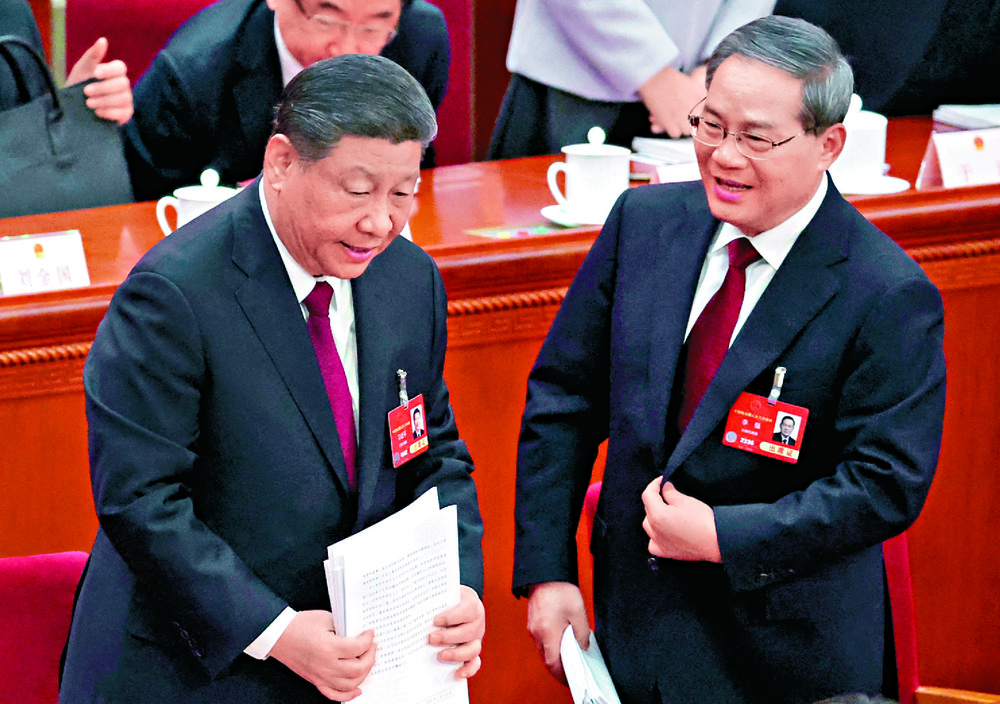
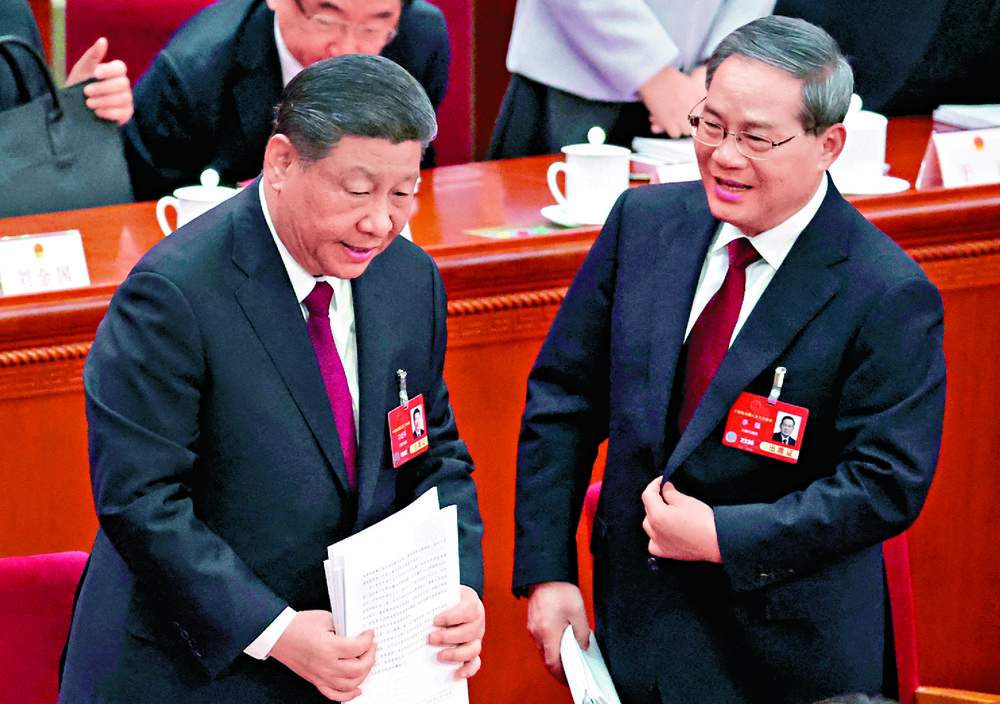
Xi Jinping and Li Qiang in parliament. Policies will benefit people's lives, according to Li. REUTERS