Read More






Night Recap - September 21, 2026
4 hours ago





John Lee and CY Leung lead pallbearers for Tung Chee-hwa
20-09-2026 15:54 HKT



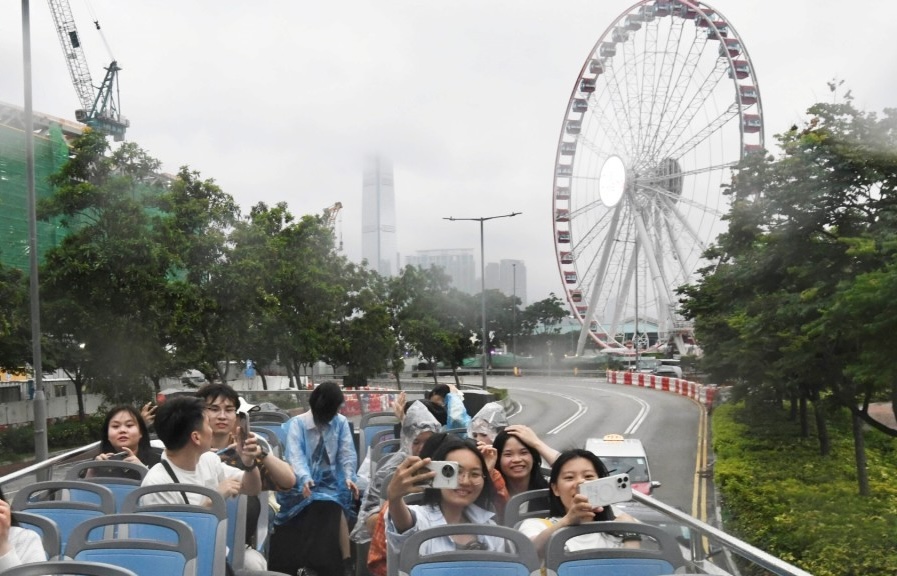
Spending by visitors to Hong Kong last year fell 44 percent from 2018 levels, while residents’ real spending overseas rose 10 percent over the same period, according to data published by the Legislative Council.
A LegCo Research Office publication showed that Hong Kong received 50 million visitor arrivals last year, equivalent to about three-quarters of the peak recorded in 2018.
Total visitor spending stood at HK$197.5 billion, down 44 percent from 2018.
Average spending by overnight visitors fell 17 percent to HK$5,503 per person, while spending by same-day visitors dropped 48 percent to HK$1,139.
Lawmaker Perry Yiu Pak-leung said on a radio program that the decline in visitor spending was part of a global trend and that Hong Kong should focus on encouraging tourists to stay longer and spend more.
He said average spending of more than HK$5,000 by overnight visitors was already a relatively strong level, while the increasing proportion of transit and short-stay visitors had naturally brought down average spending.
Travel patterns have also changed since the pandemic, with visitors increasingly seeking experiences and in-depth itineraries rather than focusing primarily on shopping.
Yiu said Hong Kong could step up efforts to attract more international visitors from markets outside the mainland, particularly Southeast Asian countries such as Vietnam, Indonesia and Thailand.
He also suggested staging more events targeting different visitor markets, citing Le French May and the Thai New Year Water Festival in Kowloon City as examples.
With more overseas travelers opting for multi-destination trips, including itineraries that combine mainland cities with Hong Kong, Yiu said closer cooperation with mainland tourism destinations could also help channel more international visitors to the city.
Some travelers are already arriving in Hong Kong from the mainland by high-speed rail, he added.
Meanwhile, weak visitor spending has also weighed on the domestic retail market.
Real consumption of goods, including food and consumer products, was 25 percent lower last year than in 2018, while total retail sales value fell 22 percent.
Discretionary categories that are more dependent on tourist demand recorded some of the sharpest declines. Department store sales were down 43 percent from 2018, while sales of jewelry and watches fell 39 percent and clothing and footwear dropped 32 percent.