





Read More


Night Recap - July 17, 2026
3 hours ago




Taobao-backed PapaHome to launch massive lifestyle flagship in Causeway Bay
16-07-2026 19:12 HKT
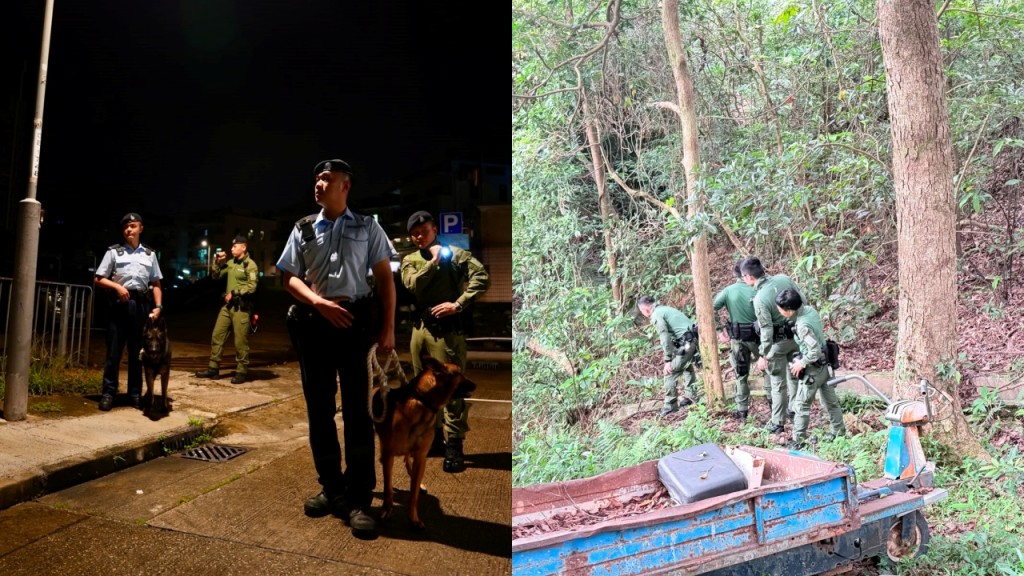
Police launch anti-burglary operation in Tseung Kwan O and Sai Kung
16-07-2026 03:17 HKT


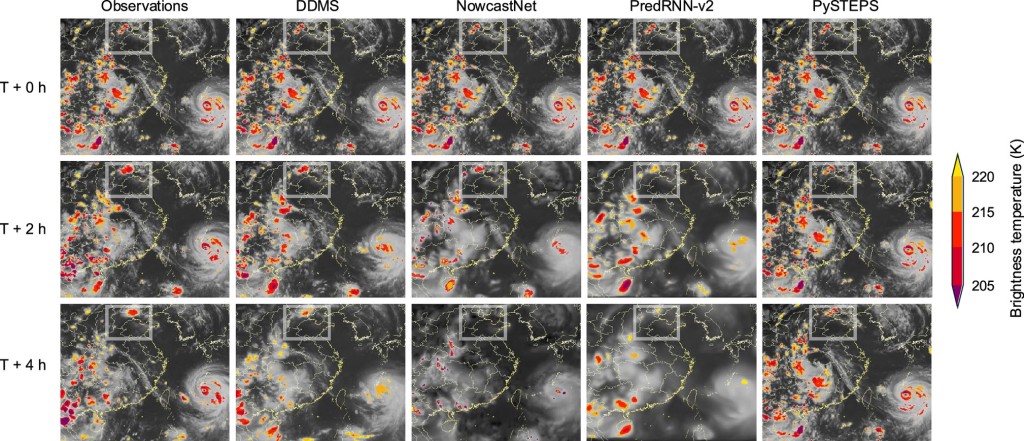
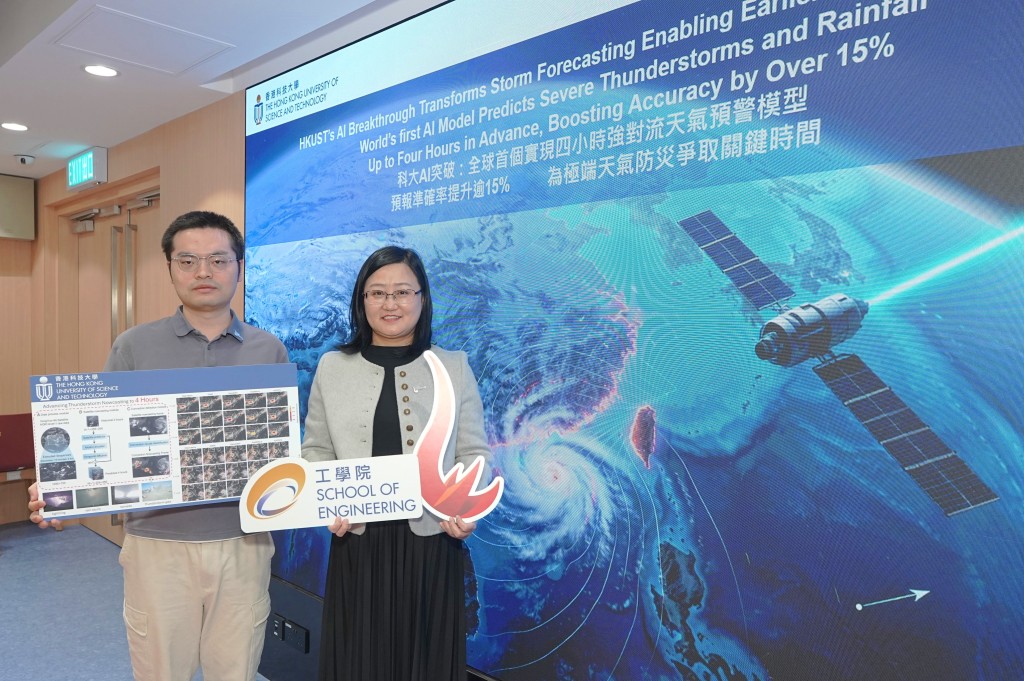
A research team at the Hong Kong University of Science and Technology (HKUST) has developed an artificial intelligence model capable of providing up to four hours’ advance warning of dangerous severe convective weather, including thunderstorms, black rainstorms, and sudden torrential downpours.
The system analyzes satellite data and updates its forecasts every 15 minutes, covering an area of around 20 million square kilometers spanning China, South Korea, and Southeast Asia.
According to the research team, the model demonstrates particularly strong performance in the two- to four-hour forecasting window, with average accuracy during this critical period improving by about 8 percent. For localized areas of around 48 square kilometers, forecast accuracy can improve by more than 15 percent.
Researchers said conventional weather forecasting relies mainly on numerical models that simulate atmospheric conditions. Such models involve high computational costs and are easily affected by the chaotic nature of the atmosphere and gaps in observational data. As a result, accurate prediction of thunderstorms and heavy rain is typically limited to about 20 minutes to two hours in advance.
To address these limitations, the team injected noise into training data so that the model learns to reverse-generate high-quality forecast information, enabling more stable and reliable predictions.
The researchers also noted that traditional ground-based radar systems can only detect reflectivity signals once cloud systems have developed to a sufficient size. By contrast, the new AI model uses satellite data, allowing it to detect early-stage convection and cloud formation, enabling earlier and more comprehensive forecasts.
The system employs a deep diffusion model for satellite data, with one branch constructing deterministic forecasts and another modeling stochastic components for calibration.
The team estimates that it will take at least several months before the model can be integrated into the Hong Kong Observatory’s operational forecasting system. In the meantime, researchers plan to further refine the model using the Observatory’s data, with the goal of achieving improved performance before the summer.
They also hope the model can eventually be adapted to work with different satellite data sources, expanding its coverage and application range.