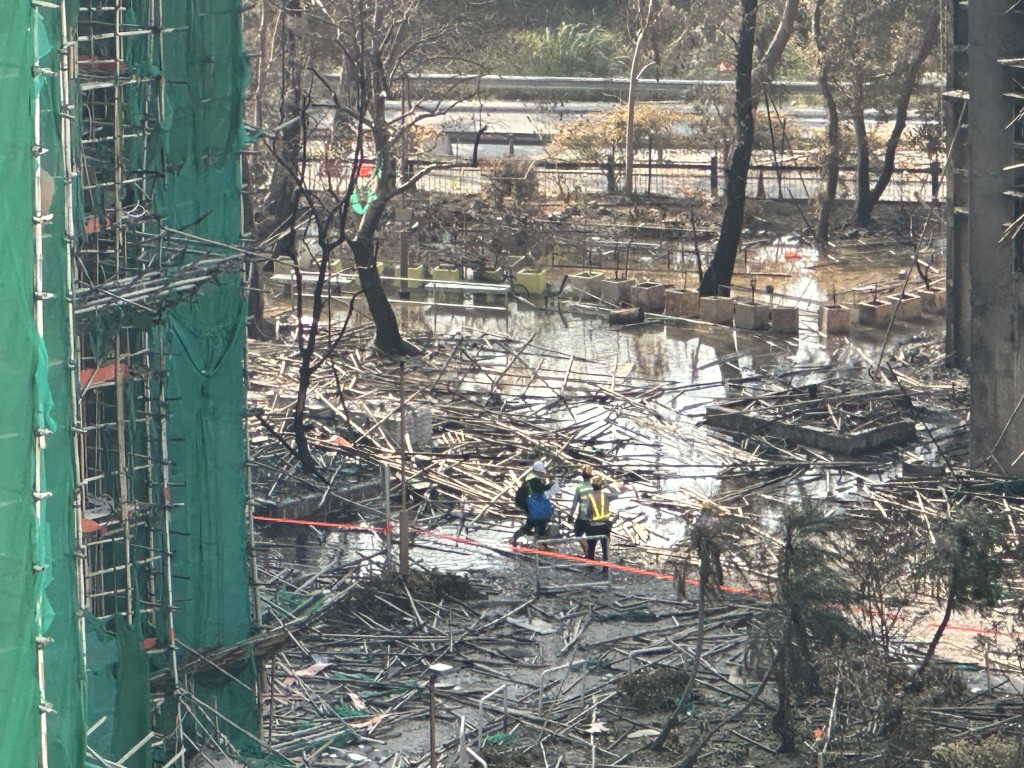
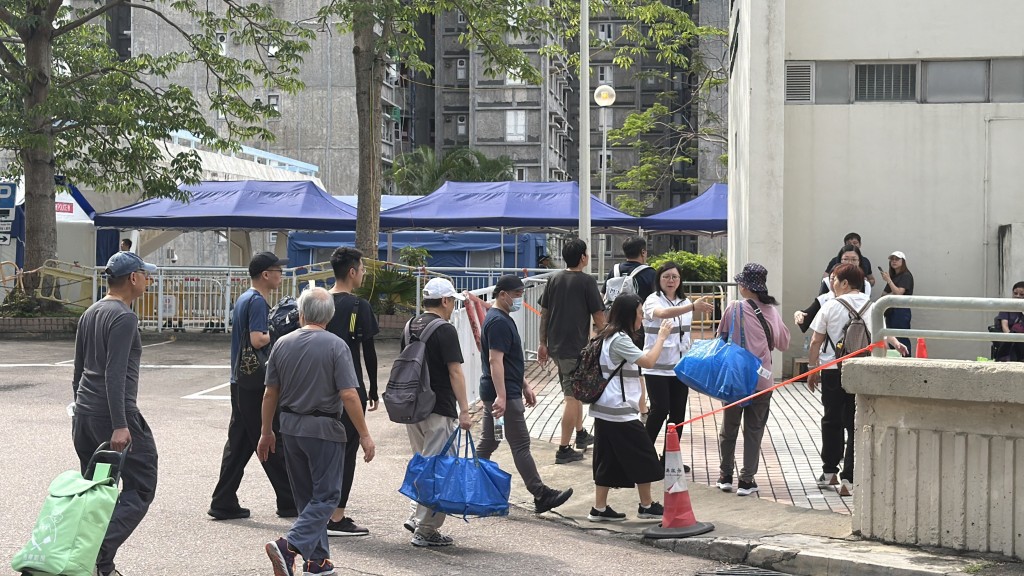
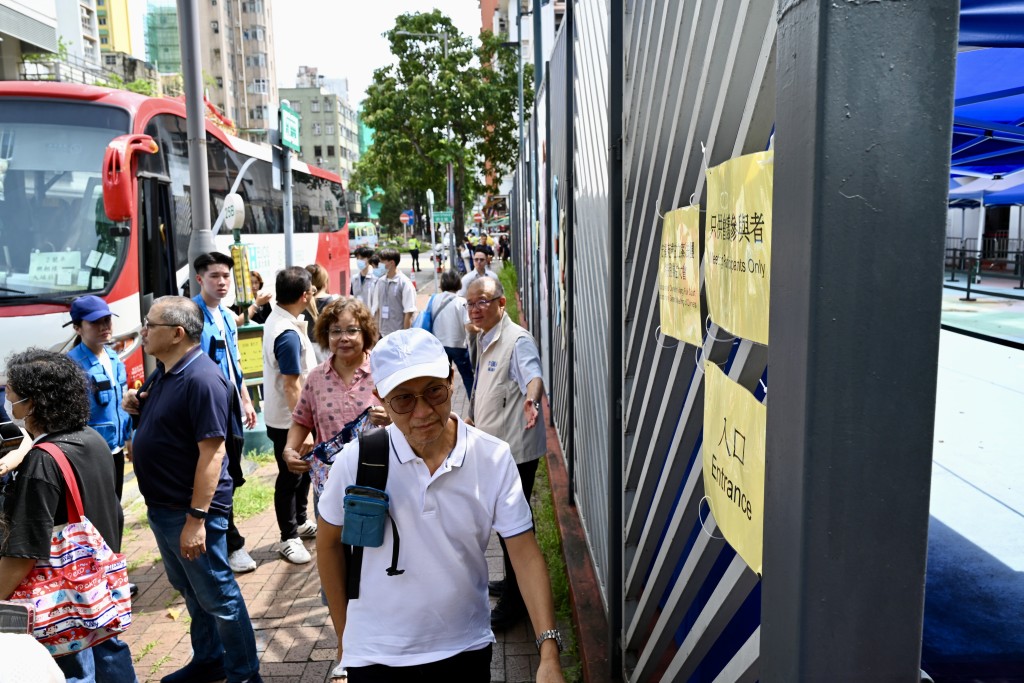
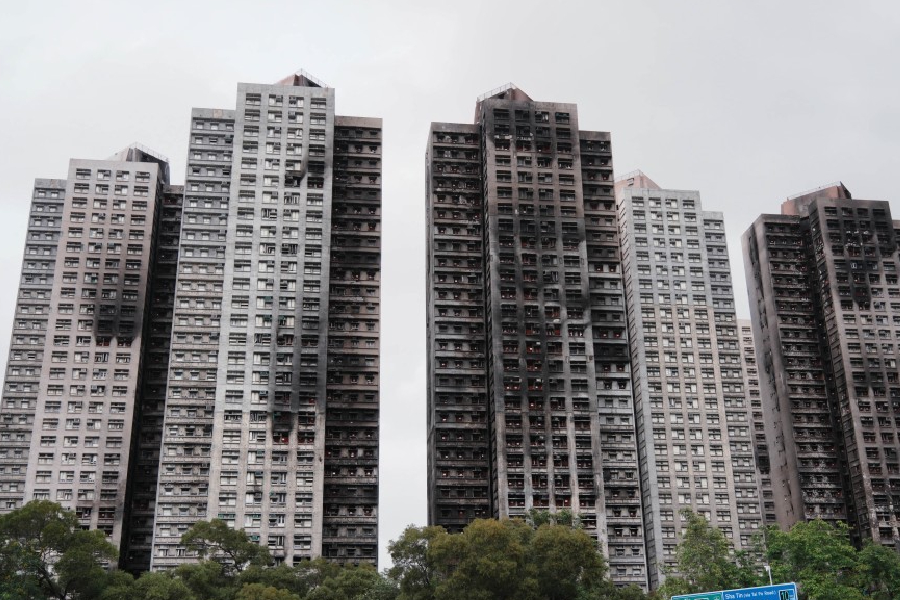
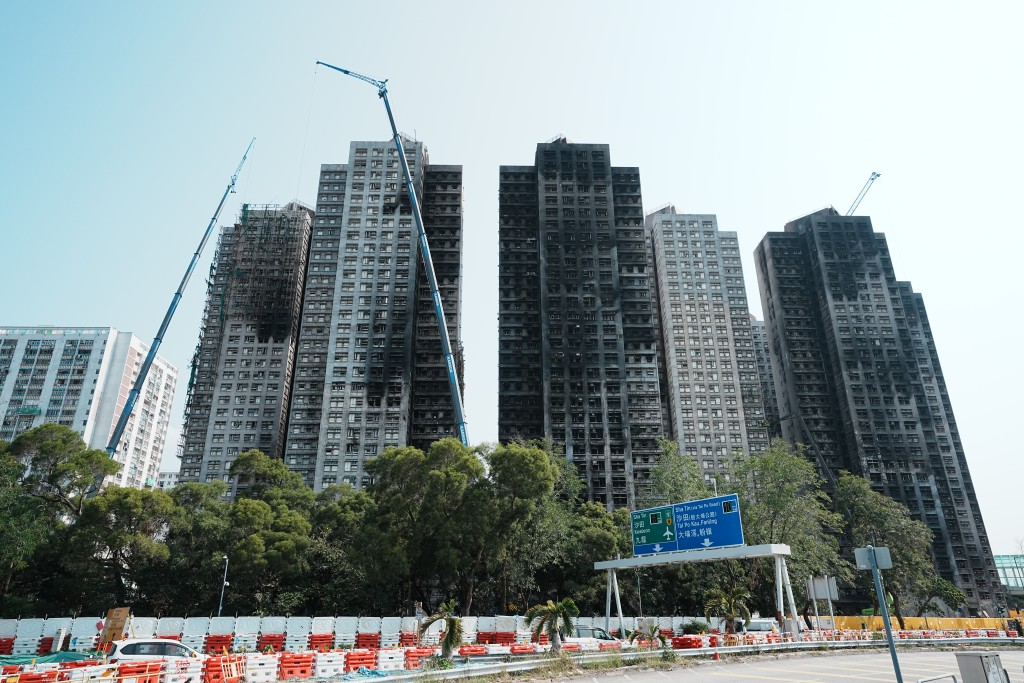
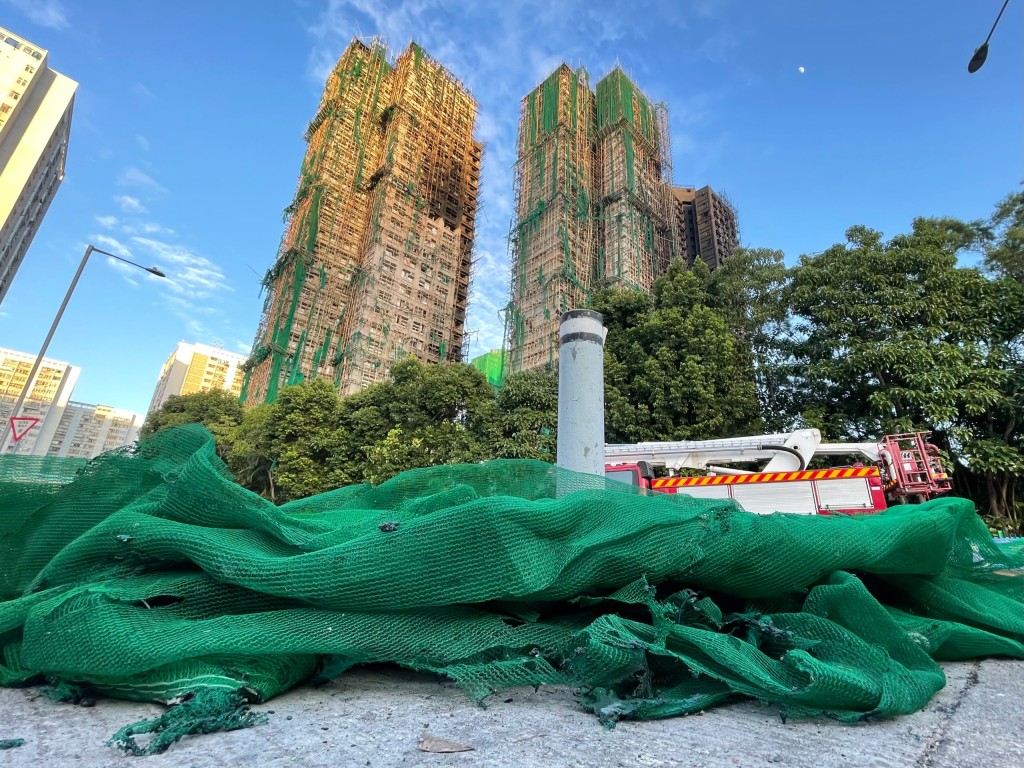
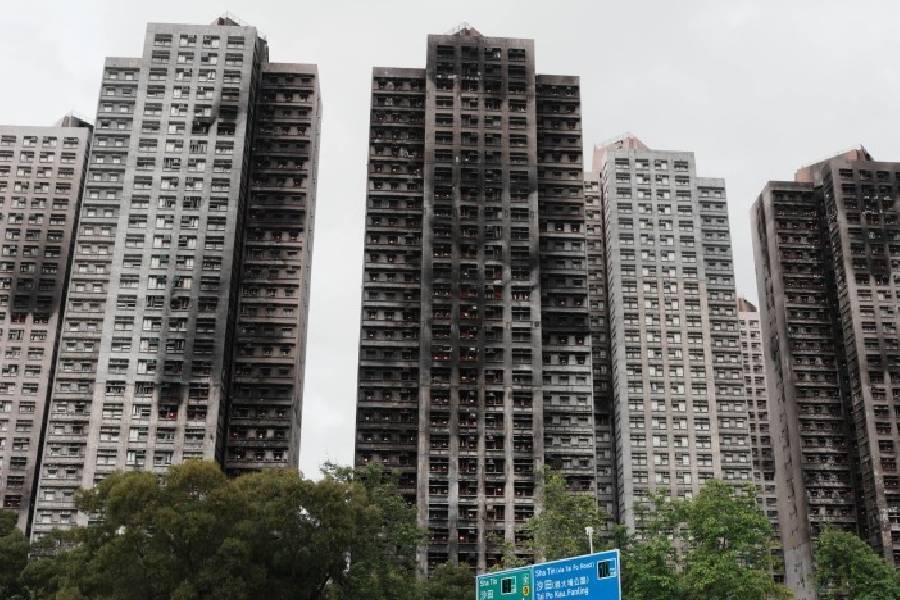
An independent team from the Housing Department will start drilling concrete core samples as early as next week at Wang Fuk Court in Tai Po to determine how severely the building’s structure was weakened by the intense level-five fire that swept through the estate.
Engineers explained that once temperatures inside the building reached around 500 degrees, both concrete and reinforcing steel would have begun to suffer damage, with concrete spalling or cracking.
At 1,000 degrees, the steel bars inside could lose strength and become soft.
The core samples will reveal the true extent of that deterioration.
Edward Chan, former chairman of the structural division of the Hong Kong Institution of Engineers, said heavily affected units will require more samples to be taken.
If tests show the concrete no longer meets the original design strength, reinforcement plans will be drawn up. Temporary propping can be installed quickly to ensure the block is not in immediate danger of collapse, while longer-term repairs are planned.
Repairs could range from adding extra steel to existing beams and columns to completely rebuilding the most seriously damaged sections.
Although the process is complicated and will take time, Chan stressed that proper restoration work can fully return the building to its original safety standard.
He added that visible signs such as large cracks, spalled concrete or sagging floors would already indicate where steel reinforcement has expanded and broken its bond with the surrounding concrete.
While localised floors clearly suffered extreme heat, the overall stability of the 36-year-old block is unlikely to have been compromised unless the fire severely damaged load-bearing columns on the lowest levels.
Rebuilding the entire estate from scratch is considered highly unlikely.
Chan pointed out that demolition and reconstruction would require completely new designs, foundation checks and approvals, creating far more disruption than targeted repairs for the hundreds of families who live there.