Read More




Night Recap - May 27, 2026
6 hours ago







Hong Kong a conduit for mainland, French firms
26-05-2026 06:00 HKT


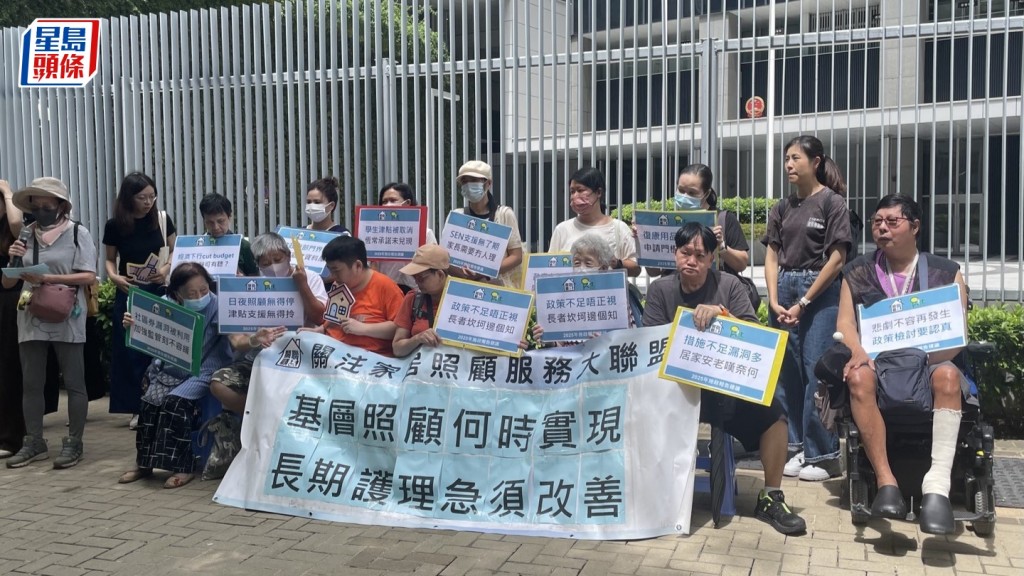
As Hong Kong prepares for the 2025 Policy Address, advocacy groups are urging the government to reinstate the HK$2,500 student subsidy and revise support policies for caregivers.
During a petition held outside government headquarters on Wednesday, parents expressed concern over the cancellation of the HK$2,500 student grant, which has left many low-income families struggling to cover rising school-related expenses.
Introduced in 2019 as a non-means-tested subsidy, the grant was designed to help parents with educational costs. The government’s decision to cut the program is expected to save approximately HK$2 billion per year.
One mother, surnamed Li from Kwai Tsing District, explained that the sudden withdrawal of the subsidy has made budgeting more difficult for low-income households.
She noted that her child’s textbooks alone cost around HK$2,300, leaving little from the former grant—only enough for one uniform priced at HK$600—once other essentials like shoes and medical expenses are taken into account.
Another parent, who gave the pseudonym Ma, lives with her two children in a subdivided flat in Sham Shui Po. She shared that school uniforms and books cost nearly HK$5,000 per academic year. Over the past five years, these expenses were fully covered by the student subsidy.
Ma expressed frustration over the cancellation, noting that her family of four depends solely on the income of her husband, a professional driver.
To make ends meet, she has begun working part-time on weekends since the beginning of the month.
Sze Lai-shan, deputy director of the Society for Community Organization, acknowledged that other forms of financial aid are available but emphasized that the current economic slowdown has placed additional strain on low-income families.
She called for targeted short-term assistance to help households manage these challenges.
Advocacy groups also stressed the need for better support policies for caregivers. Although there are roughly 10,000 caregivers registered in the government’s database, the groups criticized the system for being “passive,” as it does not allow caregivers to register independently.
They recommended integrating interdepartmental data to expand the database and proposed enabling voluntary registration through the Hospital Authority’s mobile app, as well as conducting outreach among public housing residents.
The groups also highlighted the lack of emergency assessment mechanisms for caregivers, which complicates the allocation of resources.
A 78-year-old caregiver surnamed Cheng, who looks after her chronically ill husband, described her difficulties under the current policy, which prevents her from receiving additional support while she already collects an elderly allowance—further straining their finances.
Advocates urged the government to strengthen long-term care services and support for vulnerable groups, even as it focuses on promoting economic development.
Lawmaker Tik Chi-yuen of the social welfare sector opposed cutting welfare programs due to the current fiscal deficit, describing it as a temporary situation. He urged the government to prioritize support for grassroots citizens once public finances stabilize.
After collecting feedback from the community, Tik submitted more than 80 pages of recommendations to the Chief Executive, calling for prompt attention to these urgent issues.