Read More
Three among four "principal offenders" found by the court in the city's largest trial for subversion case under the national security law have been given prison term deductions for their roles as accomplice witnesses for the prosecution.
ADVERTISEMENT
SCROLL TO CONTINUE WITH CONTENT
Three judges for the case – Andrew Chan Hing-wai, Alex Lee Wan-tang and Johnny Chan Jong-herng – wrote in the judgment that the seriousness of the offense depended on many factors, including the degree of planning, the ways and means employed, the number and extent of the attacks, the number of people involved, the potential harms generated, and the actual outcomes and consequences.
The court found Benny Tai Yiu-ting, Au Nok-hin, Andrew Chiu Ka-yin and Ben Chung Kam-lun to be the "principal offenders" based on their roles and degrees of participation in the subversion plan, and adopted a starting point of 15 years imprisonment for Tai, Au and Chiu, and 12 years imprisonment for Chung.
"The customary one-third discount was given to each of them for their timely plea," the judgment wrote. "Further deductions were also given to D2-D4 (Au, Chiu and Chung) for their assistance to the prosecution by giving evidence at the trial, their "ignorance of the law," and their past contribution to public service."
The judges wrote that Tai essentially "advocated for a revolution" by publishing a series of articles over months that traced his thinking, even though in a letter seeking a shorter sentence, Tai said the steps were "never intended to be used as blueprint for any political action."
The second-longest sentence was handed to Owen Chow Ka-shing -- at seven years and nine months – as the court said he was an active participant in the subversion plan as he was one of the drafters of the so-called "IWR Declaration" which the court saw it constitute as an aggravating factor in the case.
The judges added that Chow had attended all the group's coordination meetings, election forums and press conferences and "was putting every effort" to ensure the plan goes forward.
The judges said in their verdict that the activists' plans to effect change through the unofficial primary would have undermined the government's authority and create a constitutional crisis, and rejected the reasoning from some defendants that the scheme "was doomed to fail and that a lighter sentence should be imposed."
The judges also highlighted that a great deal of time, resources, and money had been devoted to organizing the primary election.
"When the Primary Election took place on the 10 and 11 July, no one had remotely mentioned the fact that the Primary Election was no more than an academic exercise and that the Scheme was absolutely unattainable," the judgment read. "In order to succeed, the organizers and participants might have hurdles to overcome, that, however, was expected in every subversion case where efforts were made to overthrow or paralyze a government."
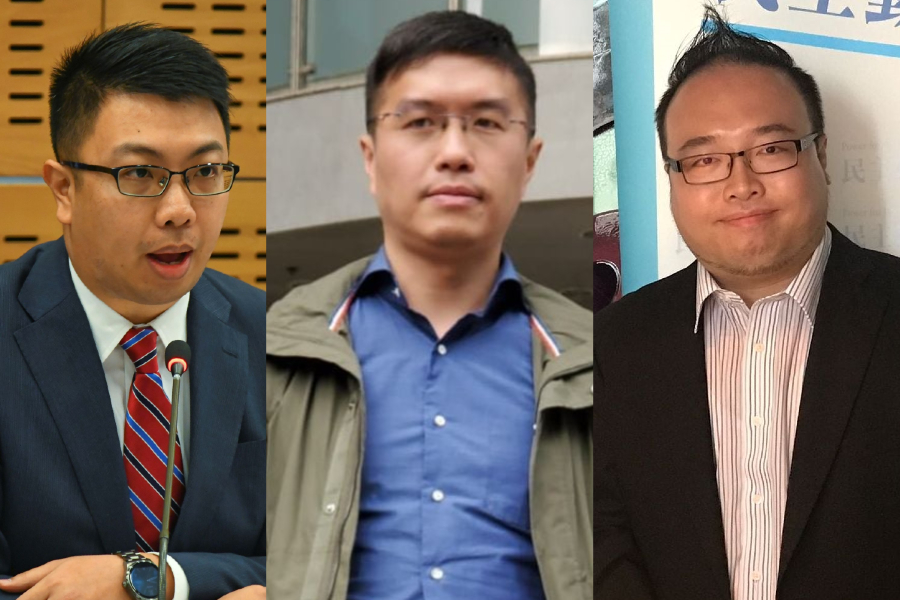
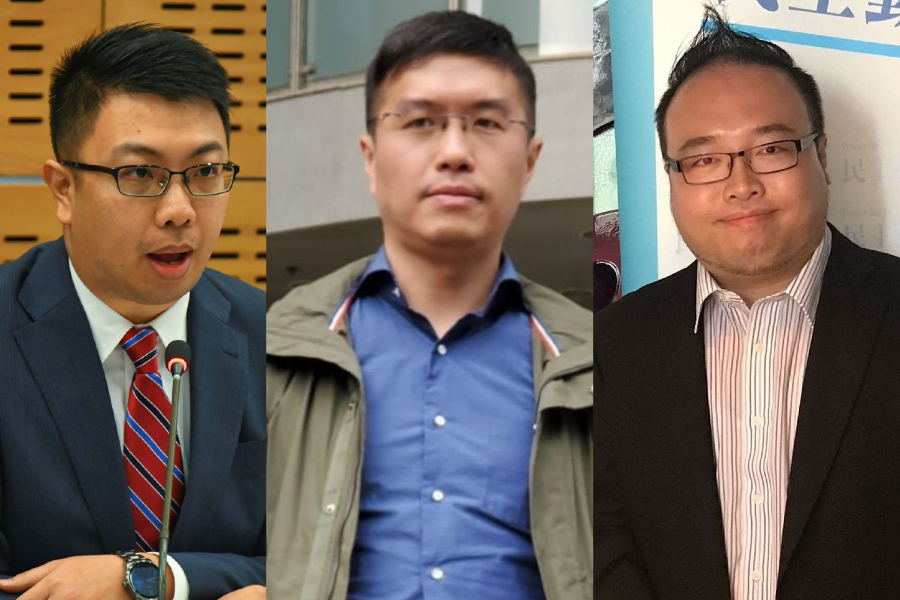
(From left) Ben Chung Kam-lun, Au Nok-hin, Andrew Chiu Ka-yin (File Photo)