Read More




UK denies BN(O) visas to Hongkongers with protest convictions: report
23-09-2026 18:59 HKT
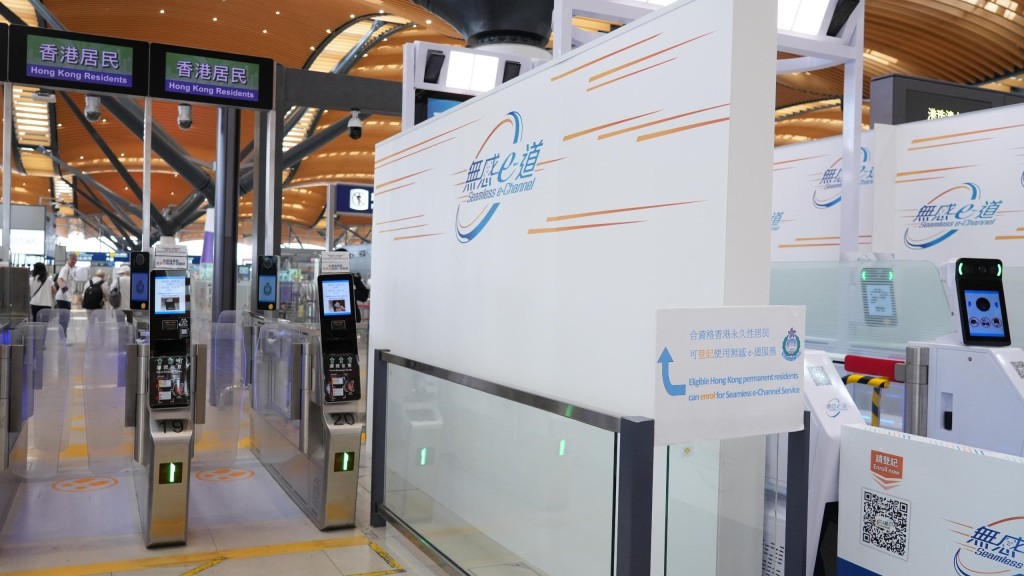
Hong Kong relaxes eligibility for HZMB Seamless e-Channel service
24-09-2026 20:01 HKT


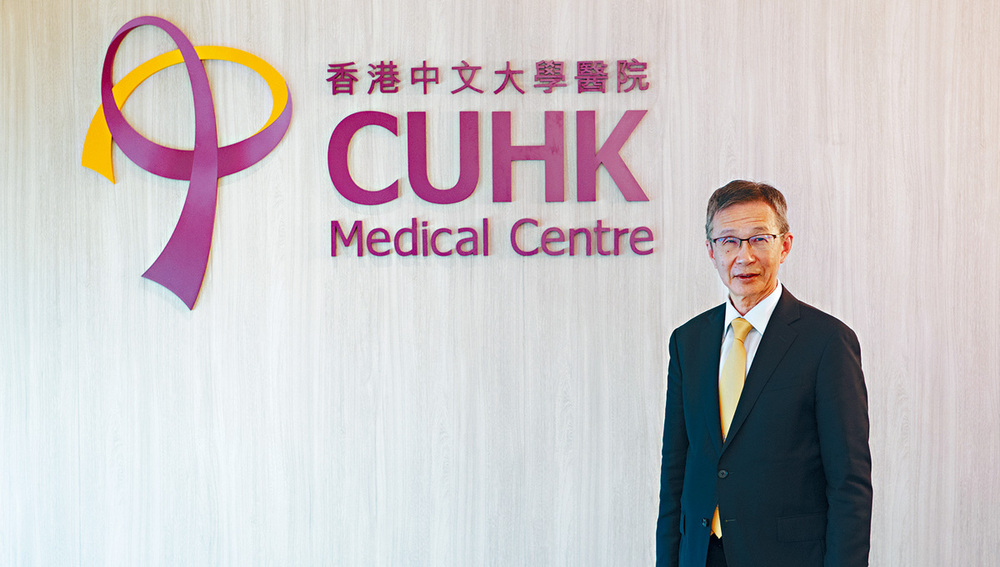
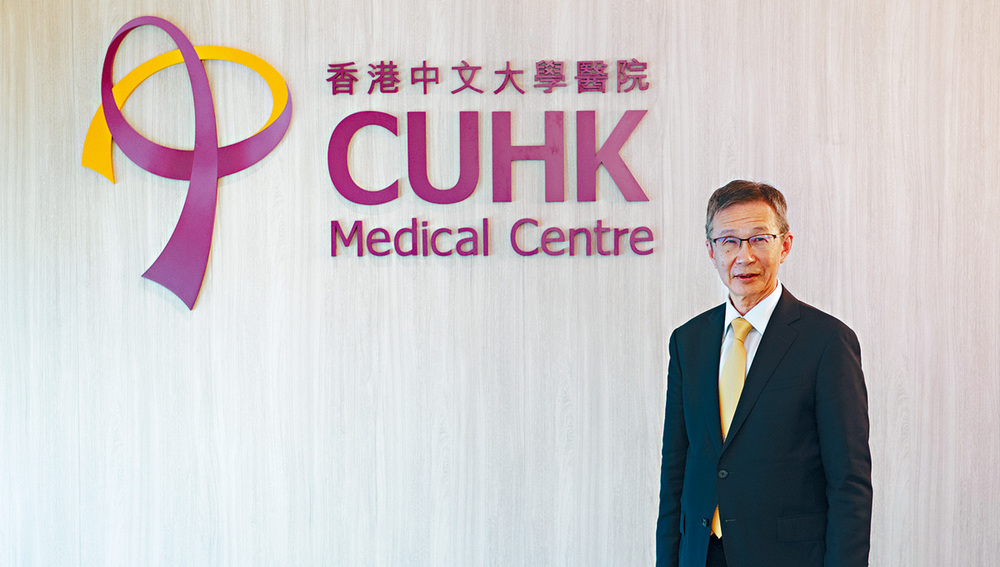
Opened since 2021, CUHK Medical Centre (CUHKMC) is a non-profit, private teaching hospital wholly owned by The Chinese University of Hong Kong (CUHK). With a social mission to bridge the service gap between the private and public healthcare systems in Hong Kong, it has progressively developed into a full-service, quality hospital with transparent and affordable package fees that are welcomed by patients. In an interview with The Standard, Dr Hong FUNG, Chief Executive Officer of CUHKMC, outlines a series of new developments in its expanding healthcare service to the community.
Assisted Reproduction Centre
Dr FUNG observes that in common with global trends, Hong Kong faces the problem of a declining birth rate that is far below the necessary rate for natural population replenishment. “We have, in fact, one of the lowest birth rate in the world,” he notes. “This is due to a combination of factors, including people opting to stay single, late marriages, and infertility. Currently, we have about 8,000 infertility couples per year that need help.”
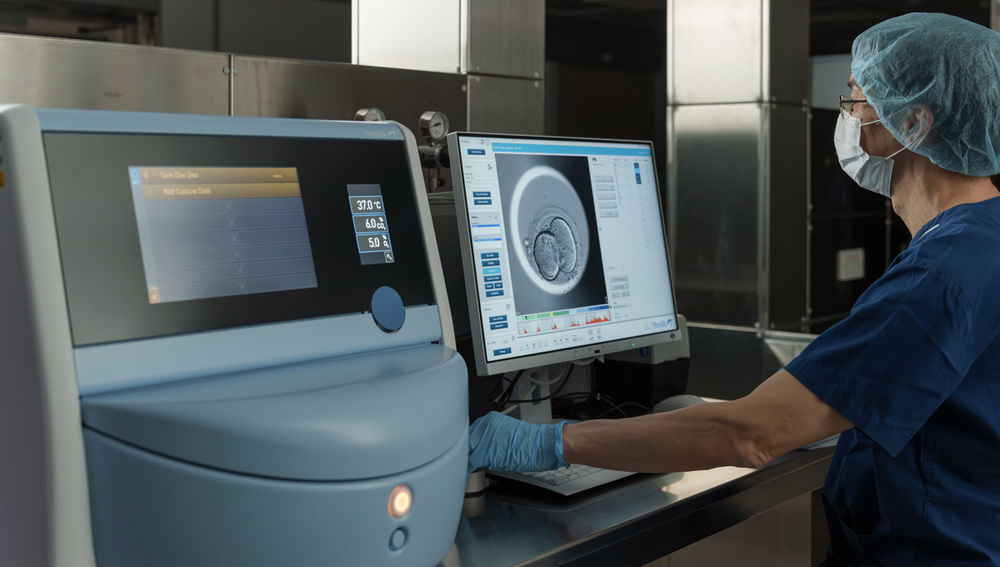
As the latest fully-operational medical centre at CUHKMC, the Assisted Reproduction Centre (ARC) is staffed by a specialised team comprising reproductive specialists, andrologists, embryologists and specialty nurses, providing professional infertility assessment and diagnostic tests, and devising a personalised treatment plan.
It offers state-of-the-art treatment with its cutting-edge equipment and the application of the latest technology like Artificial Intelligence (AI). “This facilitates our embryologist, for instance, to select the best embryos for implantation with the help of an embryoscope, thereby boosting our success rate,” he explains.
To help preserve the fertility of patients with sign of declining functions of the ovary, the ARC provides an ovarian tissue freezing service. It also provides freezing services for sperm, eggs or embryo as needed.
Dr FUNG points out that the ARC provides a discreet service that also addresses infertile couples’ physical and psychological conditions. “In general, the success rate is between 30 to 50%, so it’s very challenging,” he says. “But we soldier on regardless with our trials and hope for a positive outcome.” Dr FUNG reveals that in the future, CUHKMC will, subject to the clients’ needs, offer Chinese medicine for improvement of health through the Integrative Medicine Clinic.
Clinical Neuroscience Centre
About 60% of dementia cases are due to Alzheimer’s Disease (AD) which can be treated adopting a combination of medical or non-medical approaches, says Dr FUNG. The medical approach focuses on early diagnosis that could arrest the development of the ailment.
At CUHKMC, the Clinical Neuroscience Centre (CNC) has introduced the Single Molecule Array technology by means of an advanced digital equipment that identifies biomarkers like Tau protein and neurofilaments with higher sensitivity. Furthermore, with the help of AccuBrain, the CNC can make use of AI to better analyse MRI images to determine the state of dementia at an early stage.
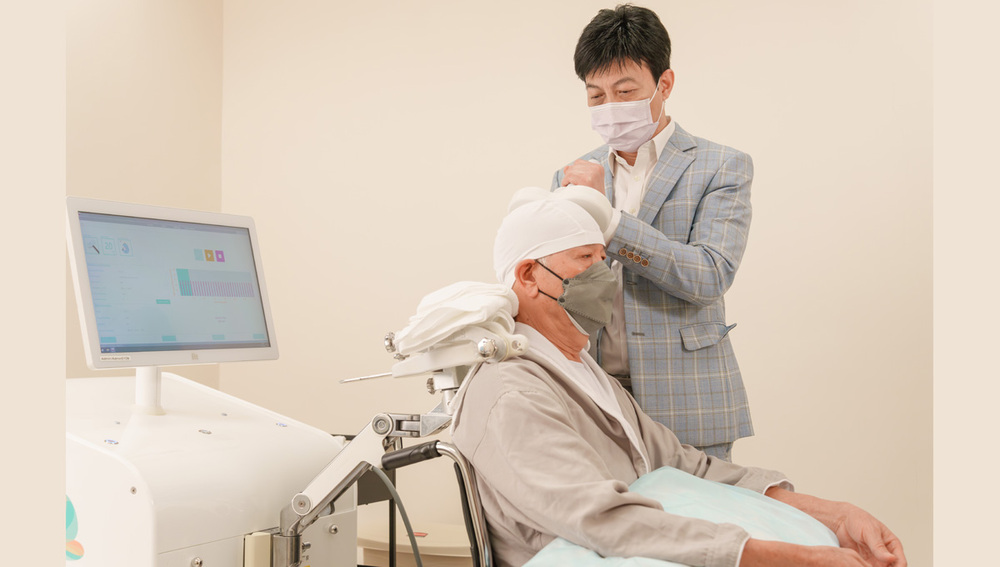
In a non-medical approach, patients are monitored on their general behaviour, habits and F&B intake. Good results have been achieved with physiotherapists using Transcranial Magnetic Stimulation (TMS), robotics, Exoskeleton and Virtual Reality (VR) technologies.
The CNC will work with The Charles K. Kao Foundation for Alzheimer’s Disease and the Department of Medicine & Therapeutics of CUHK Faculty of Medicine to establish a Registry of screening and prevention of early AD using the protocol of the BEAT AD project. The BEAT AD project involves the use of AI-assisted retinal imaging screening for early AD and provision of tailor-made advice to patients on prevention of AD.
Dr FUNG notes that, about 60% of the dementia cases are due to AD. According to an earlier Lancet report, about 40% of the dementia cases can be prevented or delayed in progress from early diagnosis and treatment, hence the importance of setting up the CNC.
Elderly Clinic
The newly-opened Elderly Clinic provides a cross-disciplinary geriatric care service that meets increasing demands in the community due to greater longevity, says Dr FUNG.
The team comprises geriatric specialists, speech therapists, dietitians and geriatric nurses. Their comprehensive assessment and tailor-made treatment are especially helpful to the elderly with swallowing or nutrition problems.
By raising the elderlies’ health awareness, the Clinic aims to improve their health status and quality of life, and, at the same time, alleviate the burden of their carers.
Package fees
Dr FUNG notes that patients are often troubled by the uncertainty of charges for hospital care. For the sake of transparency and to help patients better prepare their budget, CUHKMC has introduced package fees covering 139 day procedures, and 228 inpatient procedures.
Aside from its nearly 300 beds in inpatient wards and outpatient clinics at the Hospital right next to the University MTR station, there are also satellite centres at Tsim Sha Tsui, Central and Shek Mun for patients’ convenience.
Community healthcare
Looking at the overall healthcare status in Hong Kong, Dr FUNG says it is difficult to ensure that the private care and public care systems complement each other in looking after an ageing community. “This is where medical institutions like CUHKMC come in with its crucial role in bridging the service gap,” he notes.
“We continue to confront challenges like rising costs, especially in medicine and staff salary; and resources are stretched due to staff shortages and insufficient beds,” he observes. “As the saying goes, ‘prevention is better than cure’, it is therefore of paramount importance for us to bolster healthcare at the community level so that ailments are detected at an early stage for timely intervention.”