Read More


Night Recap - May 27, 2026
4 hours ago







Hong Kong a conduit for mainland, French firms
26-05-2026 06:00 HKT
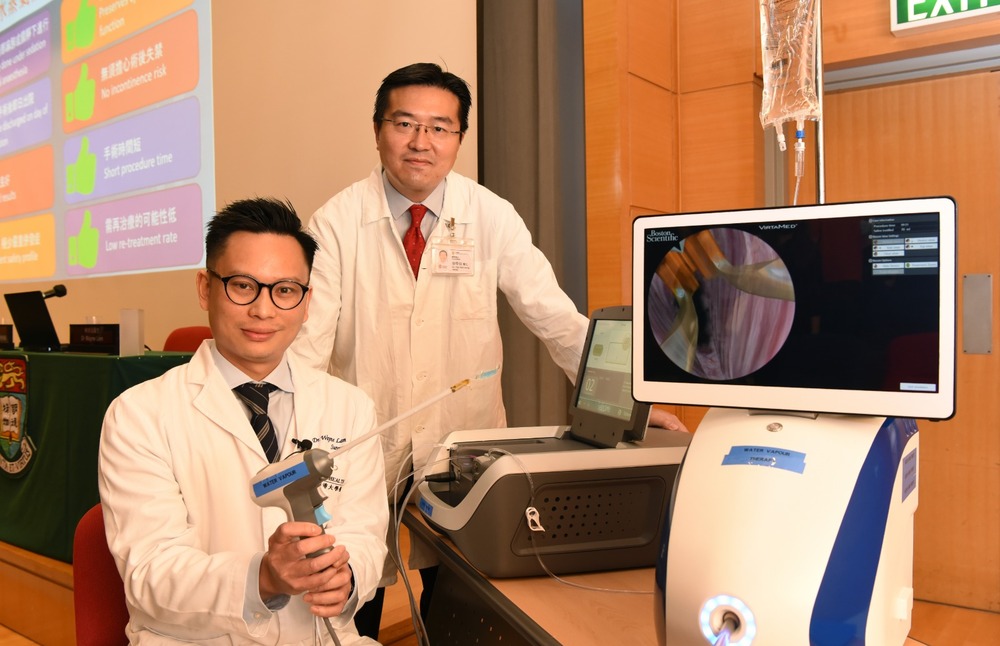
University of Hong Kong researchers has introduced Asia’s first water vapour thermal therapy for patients with prostate gland enlargement.
Unlike traditional surgeries, male patients will not see their ejaculatory function affected after the treatment.
Prostate gland enlargement, also known as benign prostatic hyperplasia, is extremely common where about 60 percent of men aged 70 or above are affected in the Chinese population.
It is frequently associated with progressive development of lower urinary tract symptoms, such as frequent urination, difficulty to hold urine and recurrent urinary tract infections.
Complete inability to urinate could happen in severe cases, which could cause serious kidney injury.
Water vapour thermal therapy is a water based therapy system, which utilizes the principles of steaming to shrink the prostate tissue.
Wayne Lam, clinical assistant professor in division of urology, department of surgery in the university's medical school, said it is a minimally-invasive surgical treatment where it can be done within five to 10 minutes under minimal anaesthesia. Because of that, patients can be discharged on the day of operation.
Besides, Lam also said that about 90 percent of the patients could preserve ejaculatory function, especially for young men.
During the surgery, an endoscope will be inserted through the patient's urethra to identify the enlarged prostate.
Afterwards, a needle will be punctured and inject sterile steam into the prostate.
Lam took steaming vegetables as an example.
“While steaming vegetables, there’s steam inside the covered pot, and that the steam will only stay inside the pot to cook the vegetables,” Lam said.
“However, when the vegetables are overcooked, they will shrink; the same principle applies to the therapy,” he added.
Traditional surgeries serving the same purpose takes approximately 60 minutes. It also requires patients to be hospitalized after the surgery for two to four days.
Moreover, a vast majority of patients will also develop permanent ejaculatory dysfunction after surgery, which is a serious concern for men, said Lam.
The researchers hoped the new tech could be introduced in public hospitals in a year.